

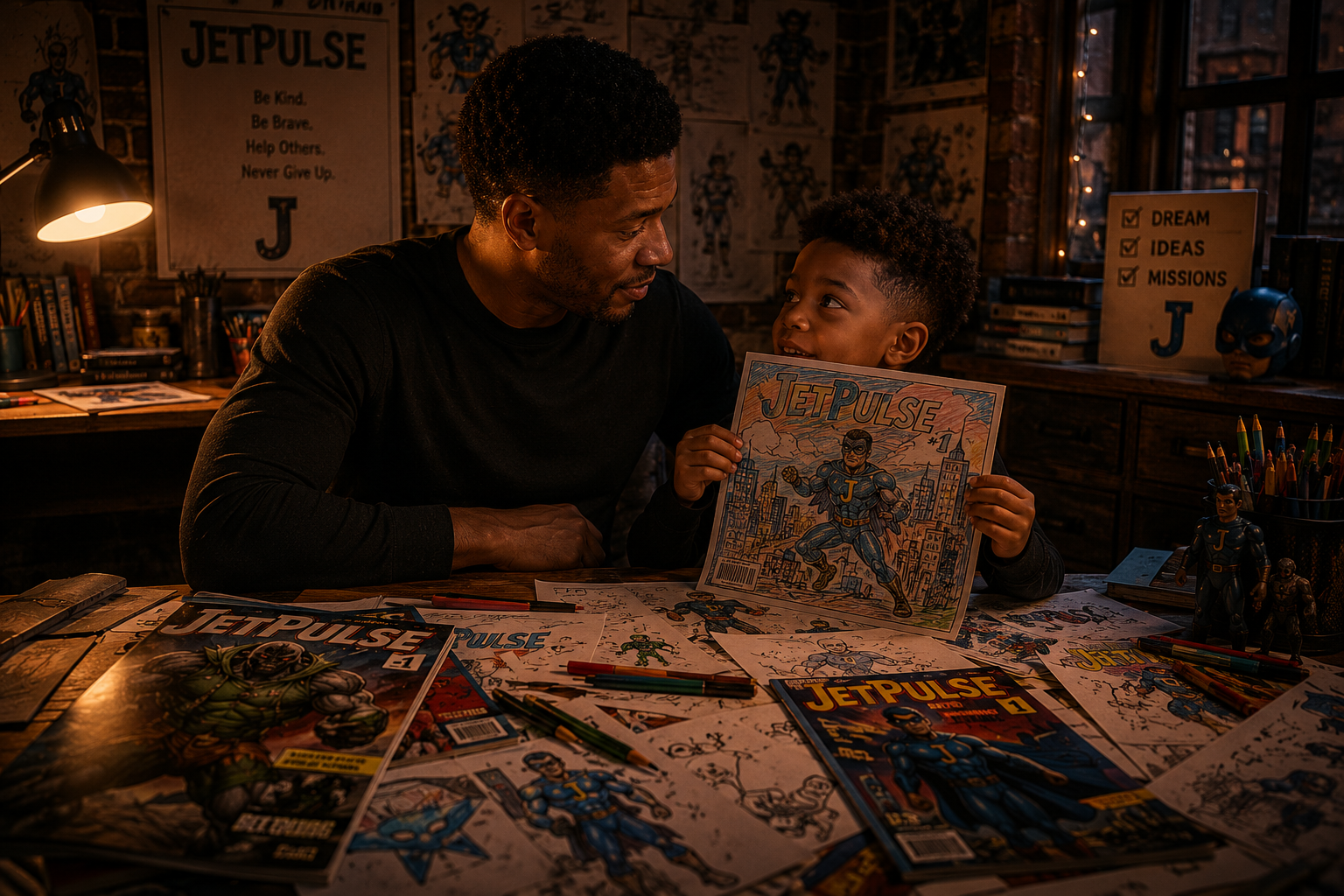
How Drawing Helps Children Express Emotions: A Father's Journey Using Art to Understand His Son
Today, when I look back at the countless drawings Jake created over the years, I don't just see superheroes.
I see confidence growing.
I see imagination expanding.
I see communication developing.
I see a father learning to understand his son in ways he never expected.
Every picture told part of our story.
Every story brought us a little closer together.
That's why I still believe one of the most powerful conversations a parent can have with a child doesn't always begin with a question.
Sometimes it begins with a blank sheet of paper, a pencil, and the simple invitation:
"Show me what's in your imagination."
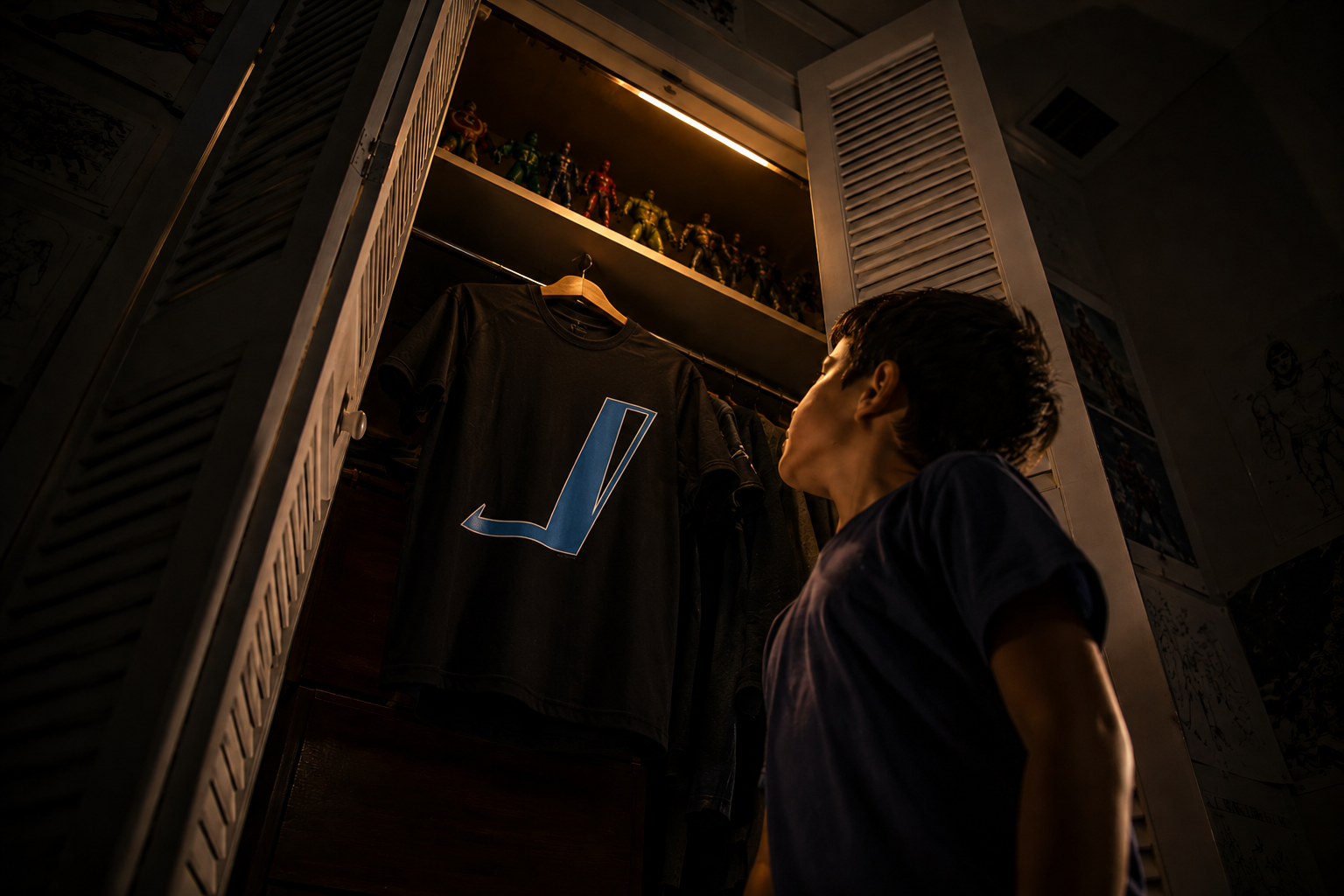
How Comics Help Children Develop Social Skills:
When I look back on our journey, I realize comics gave us much more than entertainment.
They gave us conversations.
They gave us stories.
They gave us opportunities to explore emotions, relationships, and problem solving.
They gave Jake a way to express ideas.
And they gave me a better understanding of how he saw the world.
Today, I still believe every child has stories worth telling.
Sometimes those stories begin with a pencil, a blank page, and a few comic panels.
And sometimes those panels become bridges to communication, confidence, and connection.
Visual Storytelling Activities for Autistic Children: How Pictures Became a Bridge to Communication
Looking back, visual storytelling became one of the most important tools in our autism journey.
It helped transform interests into communication.
Communication into confidence.
And confidence into growth.
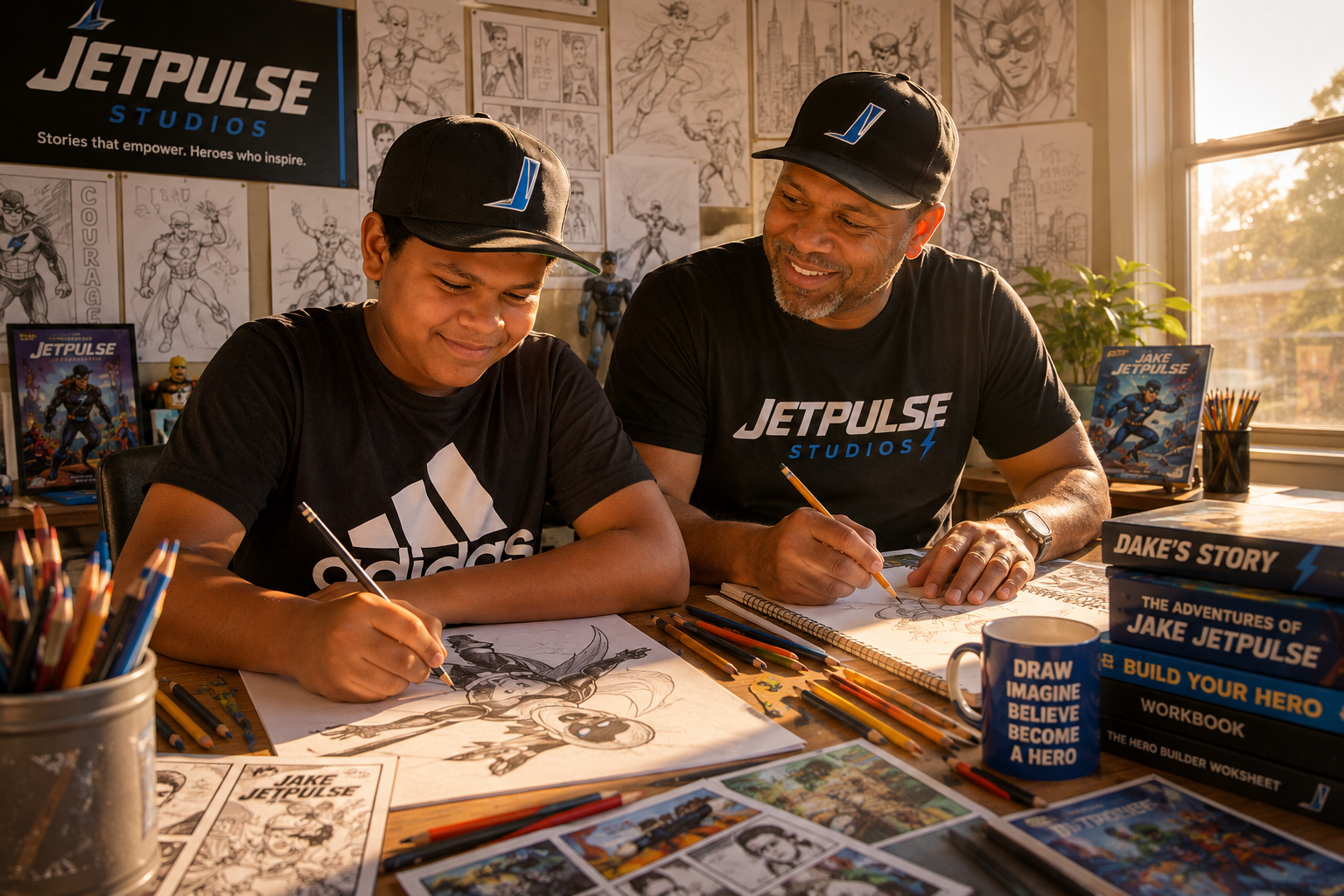
What began with a few superhero sketches eventually became stories, comics, books, workshops, and Jetpulse itself.
But at its core, visual storytelling remains something simple.
It's a way for children to share who they are.
A way to communicate ideas.
A way to explore emotions.
And a way to remind us that every child has a story worth telling.
Sometimes they just need a different way to tell it.
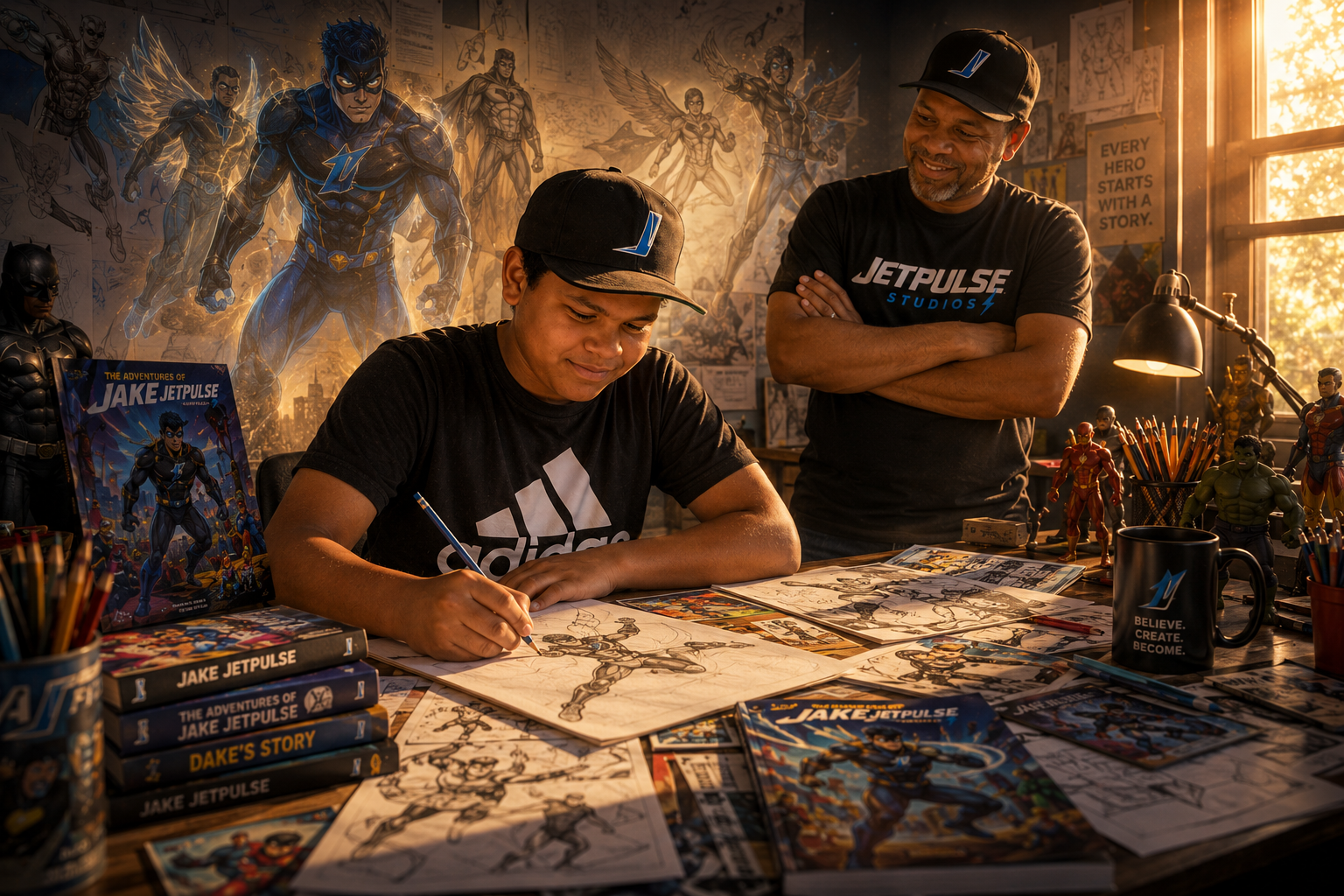
The Power of Special Interests in Autism: How My Son's Love of Superheroes Became a Path to Growth
ooking back, I don't think Jetpulse would exist without special interests.
Jake's love of superheroes led to stories.
Stories led to art.
Art led to communication.
Communication led to confidence.
Confidence led to growth.
And growth led us here.
What started as a fascination with superheroes became something much bigger.
It became a bridge between a father and his son.
It became a way to communicate.
A way to connect.
A way to learn.
And a way to discover strengths that were there all along.

How Superheroes Help Children Build Confidence: What My Son Taught Me About Strength, Identity, and Self-Belief
As parents, our job isn't to create confidence for our children.
Our job is to help them recognize the strengths they already possess.
Sometimes that happens through sports.
Sometimes through music.
Sometimes through academics.
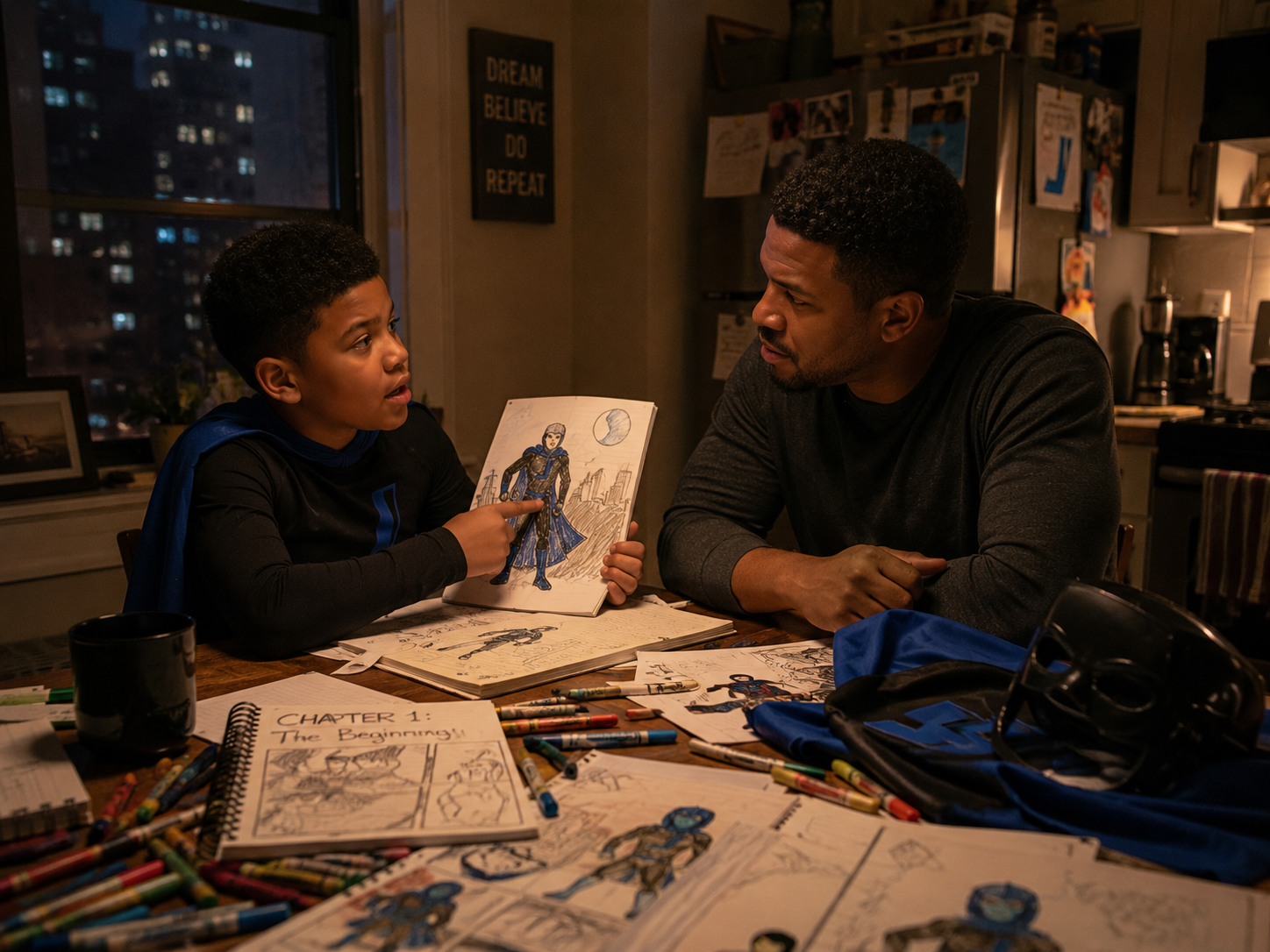
And sometimes through a child sitting at a table drawing superheroes.
Why Storytelling Works for Children with Autism: The Unexpected Tool That Helped My Son Connect
When I look back on our journey, I realize that storytelling gave us more than creative memories.
It gave us connection.
It gave us understanding.
It gave us a shared language.
Every hero Jake created taught us something.
Every story opened a door.
Every character became another opportunity to communicate.
Today, storytelling remains one of the foundations of everything we do at Jetpulse.
Because stories aren't just entertainment.
Stories help us understand ourselves.
Stories help us understand each other.
And sometimes, a simple story can help a child find their voice.
Art Therapy for Neurodivergent Kids: How Drawing Helped My Son Find His Voice
If you're raising a neurodivergent child, I encourage you to explore creativity together.
Pick up a pencil.
Grab a piece of paper.
Create a character.
Tell a story.
You may discover, as I did, that some of the most important conversations happen long before a single word is spoken.
And sometimes, a child's greatest superpower begins with a simple drawing.
The Connection Between Superheroes, Imagination, and Emotional Growth in Autistic Children
At the heart of every superhero story is a simple message.
Growth is possible.
Challenges can be overcome.
Mistakes do not define us.
We are capable of becoming stronger than we were yesterday.
That message matters for every child.
For autistic children, it can be especially meaningful.
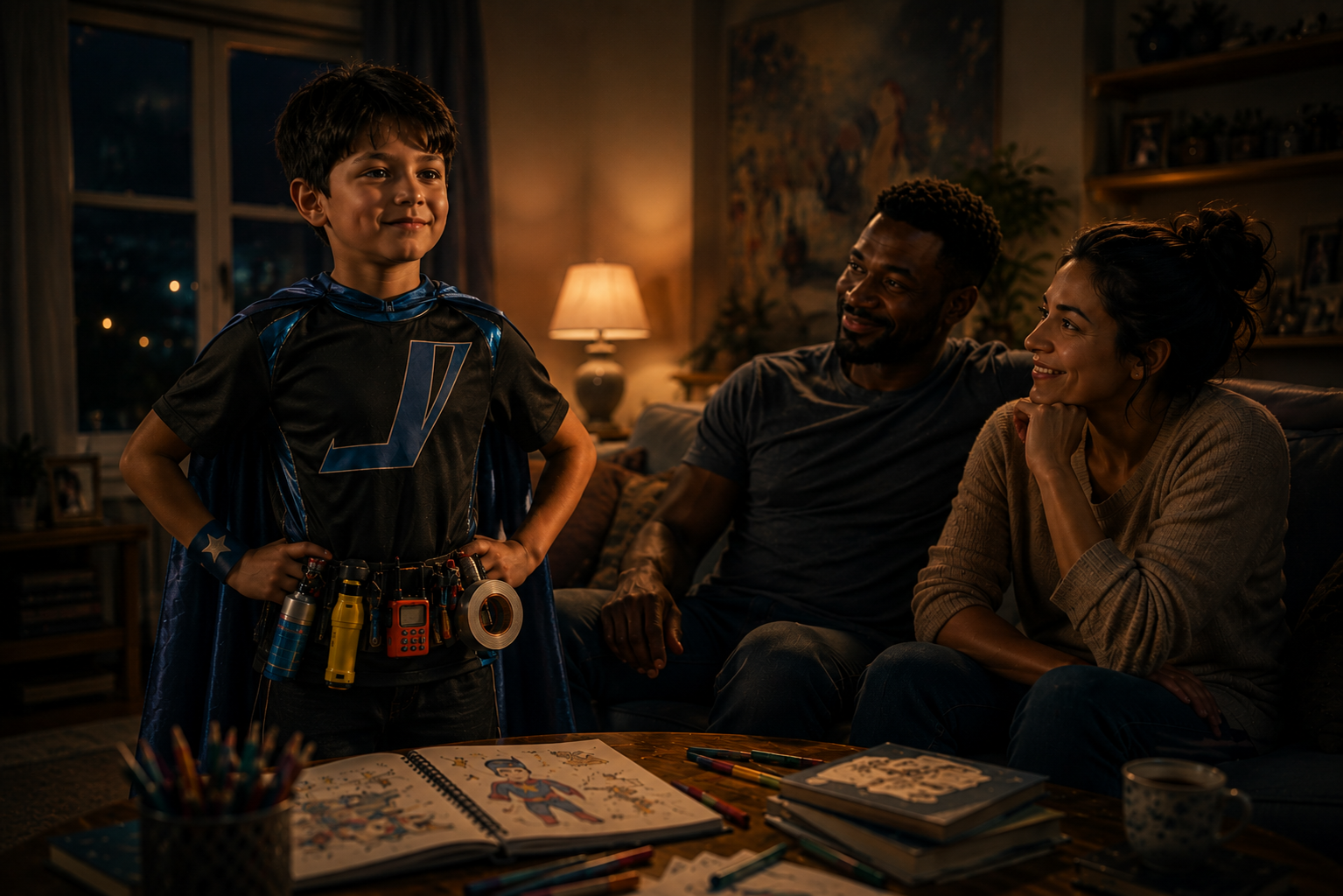
Superheroes give children a framework for exploring courage, resilience, kindness, and self-confidence.
Imagination provides the space where those lessons can grow.
The costumes, powers, gadgets, and adventures are fun.
But they aren't the real superpower.
The real superpower is what happens inside a child when they begin to believe that their differences have value, their voice matters, and their story is worth telling.
That belief can change everything.
How Drawing Helps Autistic Children Express Emotions They Can't Put Into Words
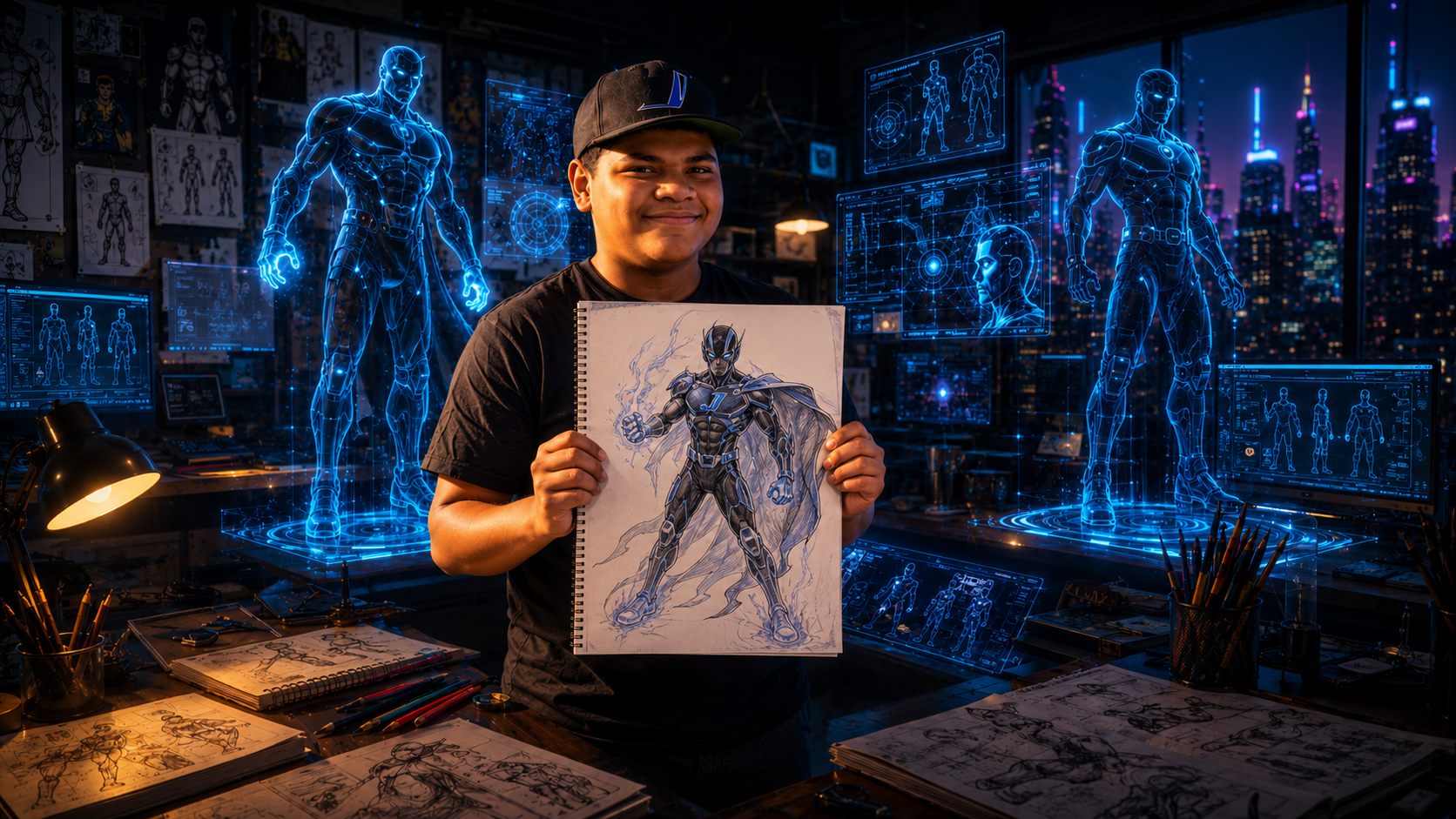
At its core, drawing gives autistic children another way to be seen.
Not every child will express emotions through conversation.
Not every child will communicate through writing.
Not every child will feel comfortable sharing what they're feeling out loud.
But many children will draw.
And when they do, they are often telling us far more than we realize.
Every line, every character, every invented world may contain a small piece of their inner experience.
As parents, our job isn't to interpret every detail perfectly.
Our job is to pay attention.
To stay curious.
To listen.
To create opportunities for expression.
Because sometimes the most important conversations don't begin with words at all.
Sometimes they begin with a pencil and a blank sheet of paper.
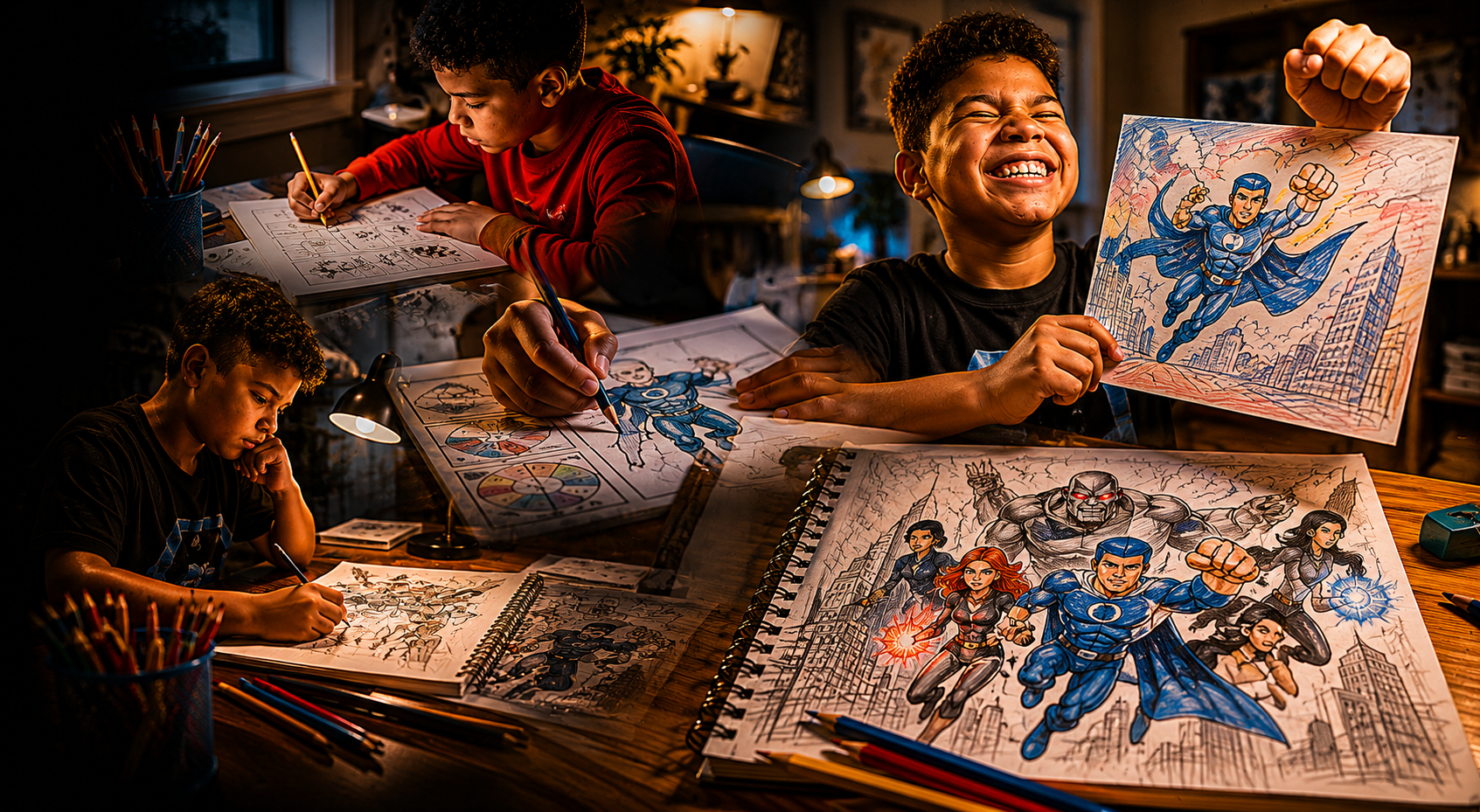
25 Art Therapy Activities for Autistic Children That Build Confidence and Communication
If you're looking for creative activities for autistic children, start small.
Grab some paper.
Pick up a pencil.
Ask a question.
Create a character.
Tell a story.
You don't need to be an artist.
You don't need special training.
You simply need to create opportunities for expression.
Because sometimes children don't need another lecture.
Sometimes they need another language.
And creativity can become that language.
Through drawing, storytelling, imagination, and art, children can discover new ways to communicate, build confidence, and share who they are with the world.
That's a lesson my son taught me years ago.
And it's one I'll never forget.
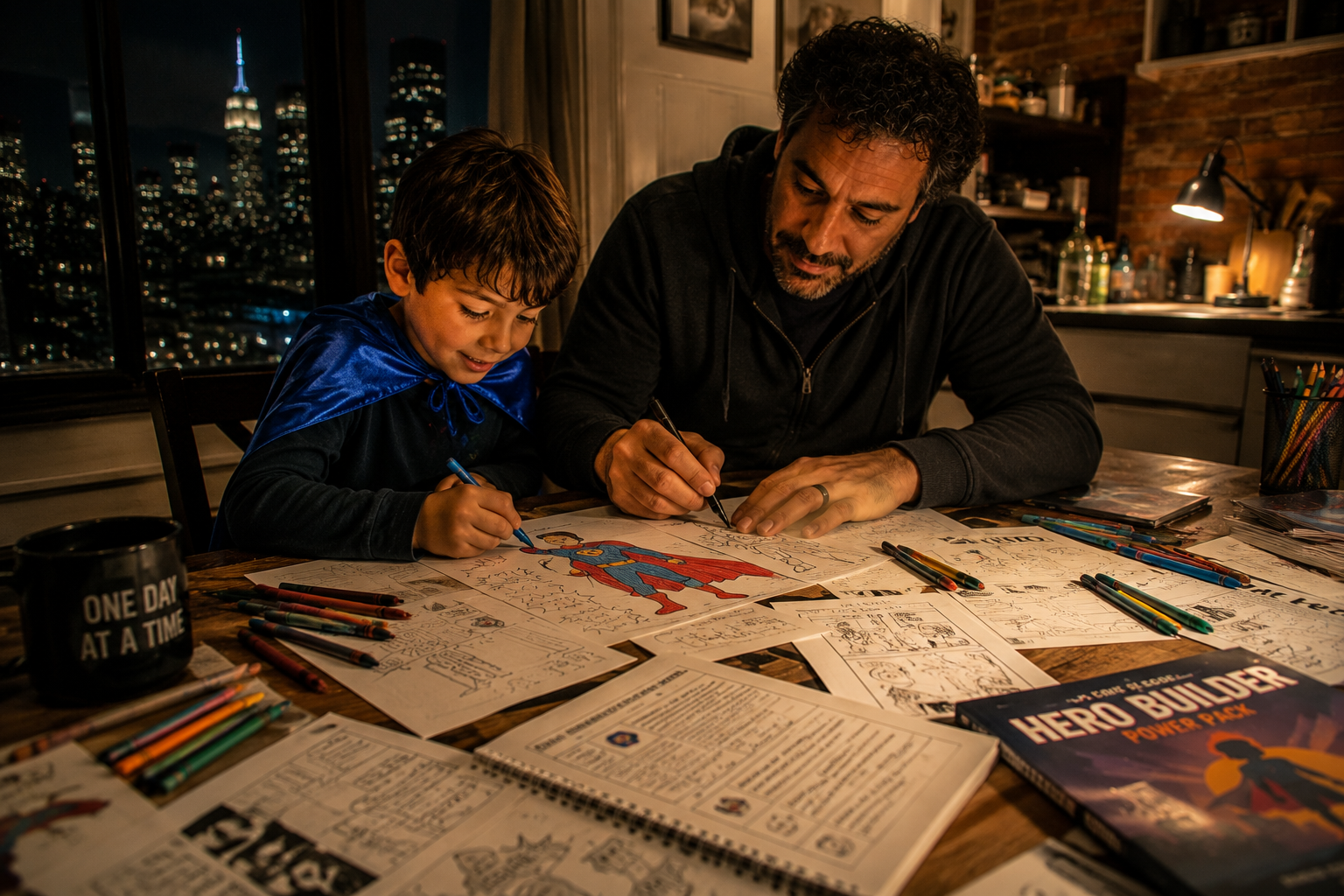
Why Art Therapy Works For Autistic Children
Whether it's drawing superheroes, creating comic books, telling stories, or simply coloring together at the kitchen table, creativity gives children another way to be seen and understood.
Sometimes a drawing is just a drawing.
And sometimes it's the beginning of a conversation that changes everything.

The Life You Keep Postponing
He began telling me about opportunities he'd had over the years. Good opportunities. Real opportunities. The kind that could have changed the trajectory of a person's life.
A promotion.
A business opportunity.
A chance to move somewhere new.
A relationship.
A few risks that, looking back, seem obvious.
But at the time, he passed on all of them.
"I don't know," he said, shaking his head. "It just didn't feel right."
I asked him what he meant.
His answer was surprisingly simple.
"It didn't look the way I thought it would."
That sentence stayed with me.
Not because it was unusual.
Because it was painfully familiar.
Most people imagine that dreams arrive with music playing in the background.
They imagine certainty.
Why Traditional Discipline Didn't Work for My Autistic Son
If there's one thing I wish someone had told me years ago, it's this:
Before reacting to a behavior, ask yourself one simple question.
"What is my child trying to communicate right now?"
Not every behavior is defiance.
Not every outburst is disrespect.
Not every shutdown is stubbornness.
Sometimes children are communicating the only way they know how.
Once I started looking at behavior through that lens, I stopped seeing problems that needed punishment.
I started seeing opportunities for connection.
And for my son, that made all the difference.

The Price of Permanent Truce
silence is not peace when it costs you your self-respect. That’s the part people don’t understand until years disappear.
When you avoid necessary conflict to maintain temporary calm, you are not escaping war. You are simply relocating the battlefield inward.
The conflict you refuse to address externally eventually becomes the war you live with internally.
That war starts affecting everything.
Your sleep.
Your focus.
Your patience.
Your physical health.
Your confidence.
Your ability to think clearly.
Your sense of identity.
And eventually, the truth you keep suppressing doesn’t disappear anymore.
It becomes a ghost.

Reclaiming Peace Is a Quiet, Heavy Business
Truly seeing another human being eye to eye requires a completely different level of emotional effort.
It requires listening without preparing your defense while they speak.
It requires compromise.
It requires accountability.
It requires the ability to sit in discomfort long enough to understand another person’s pain without immediately making yourself the victim of it.
That kind of emotional labor is difficult. Most people would rather avoid it entirely. And honestly, I understand why.
Real conversations are terrifying.
Not because they destroy relationships…
but because they expose them.
They reveal whether two people are genuinely trying to understand each other or simply trying to win. That’s why silence can feel so heavy.
Because underneath the silence usually lives a truth that both people already feel but haven’t fully said out loud yet.

The Conversation That Never Finished: Losing My Cousin Al and Carrying His Legacy Forward
What made me happiest was seeing him inspired. Al wanted to create his own wrestling YouTube channel.
His own podcast.
A place where he could build a wrestling community—talk dream matches, live stream events, debate eras, and connect with fans who loved the sport as much as he did.
He looked at what I built with Jetpulse…
and wanted to build something of his own. And I was ready to help him. We had already started preparing. I was gathering equipment. Planning his recording setup.
Helping him build what could have been one of the coolest projects of his life. We were days away.
Days.
And then…he was gone.
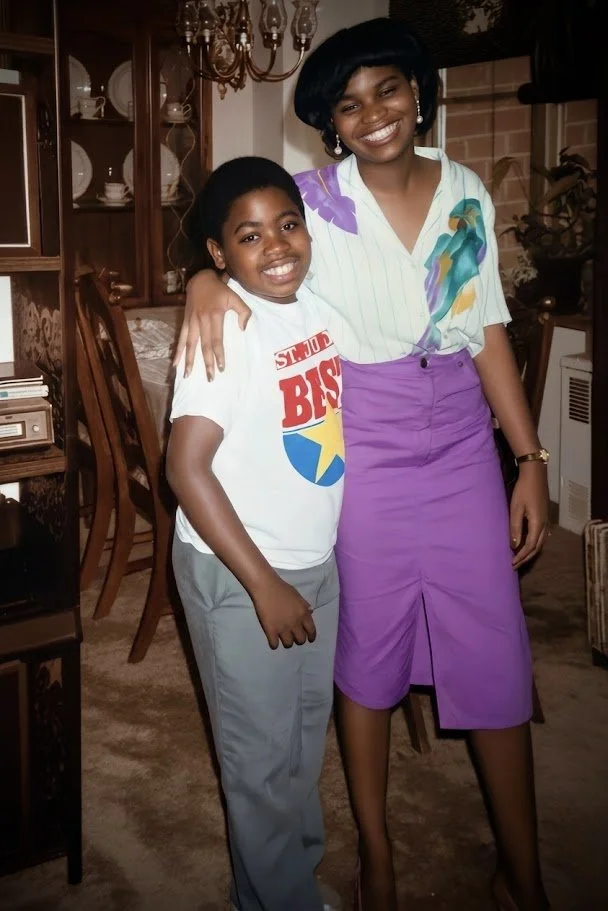
I Was Holding It Together… But I Was Falling Apart: How I Rebuilt My Life After Loss
In November 2025, we found out she was sick. Not “we’ll figure it out” sick.
Final stage.
The kind of news that doesn’t feel real when you hear it. The last time I saw her… I didn’t recognize her body. But I recognized her voice.
And that was enough. The last words we said to each other were simple:
“I love you, cuz.”
“I love you too.”
On February 2nd… she was gone.
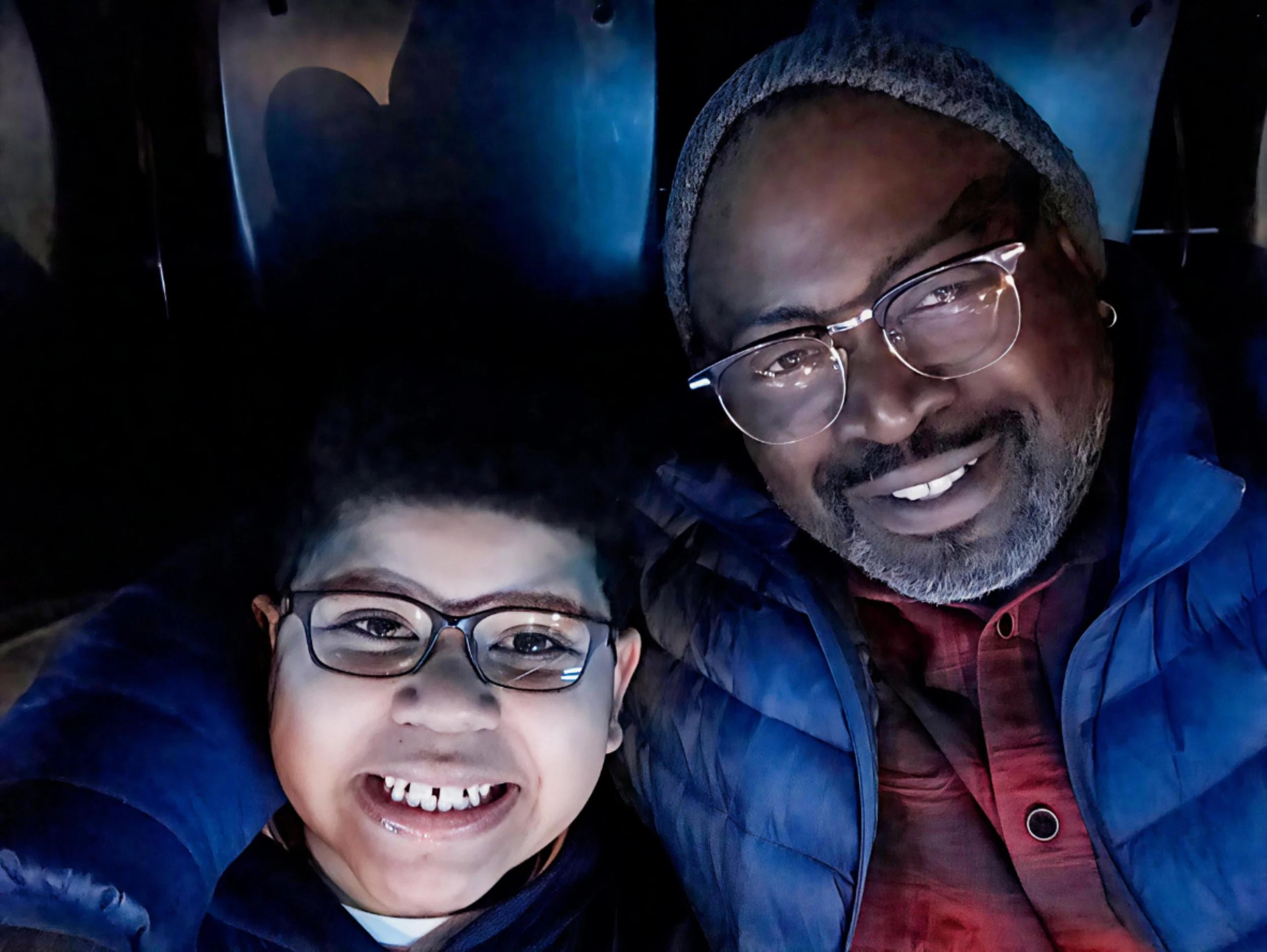
Why Every Autism Parent Reaches a Breaking Point (And How to Fight Back)
When you are raising an autistic child, the world often feels like it’s shrinking. You might feel like you’re on a short leash, navigating a never-ending cycle of autism parenting burnout and caregiver stress. I know that heavy feeling in your chest—the one that says you have to be the "buffer" for everyone else's needs while your own dreams stay on the shelf. I’ve been in that loop of over-functioning and complying with a life that felt like it wasn't mine. I fought my way out, and I want to show you that even if you can’t physically walk away right now, you can reclaim your mind.
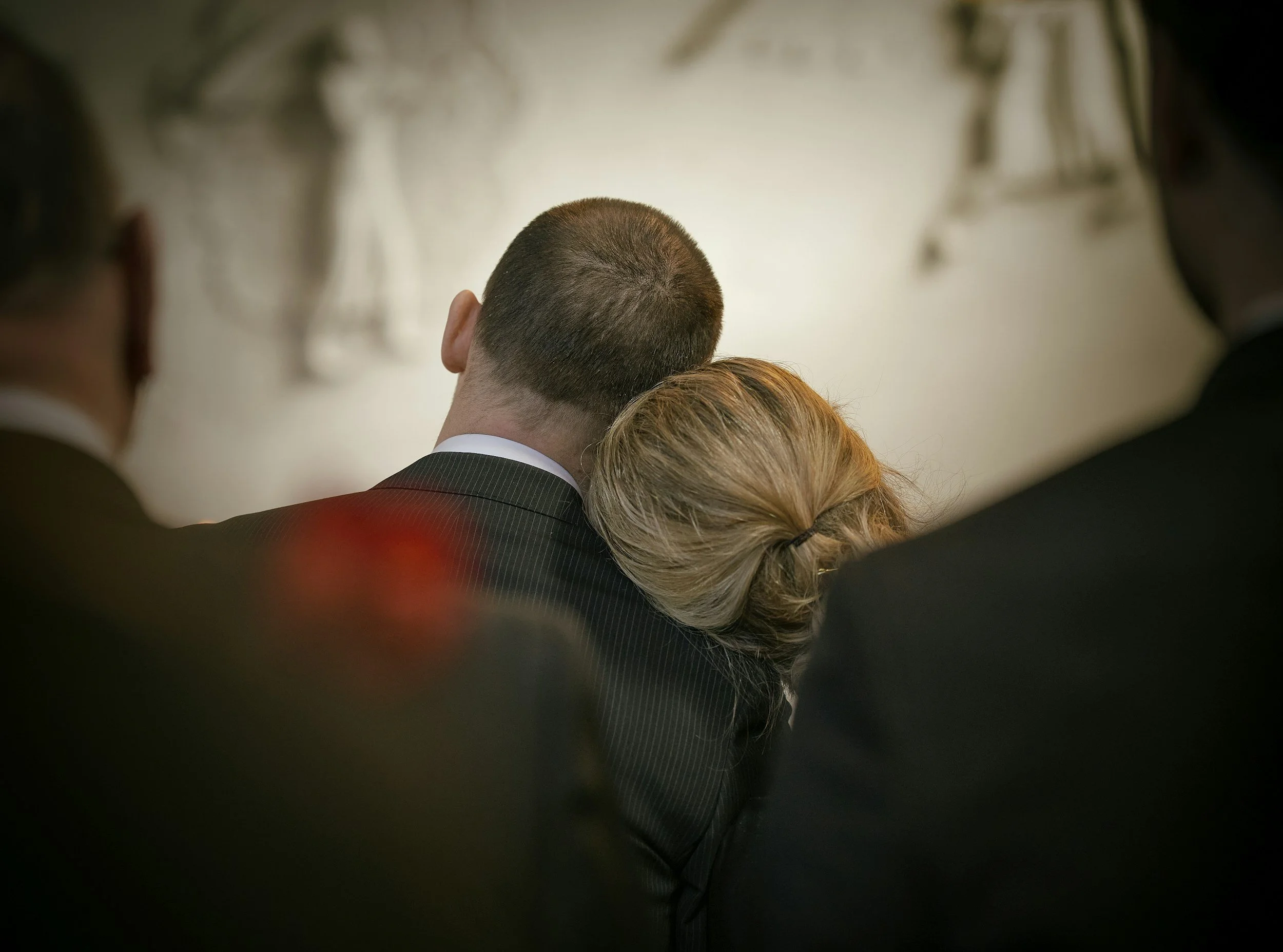
Helping an Autistic Child Understand Grief and Loss
Grief is difficult for any child to understand. For autistic children, it can be even more confusing—because the emotional language adults use doesn’t always match how they process the world.

What Is Social Emotional Learning (SEL)?
Social Emotional Learning (SEL) is the process through which children learn to understand and manage their own emotions, develop empathy for others, and build skills that help them form healthy relationships and make responsible decisions. SEL skills don’t come automatically — they are learned and practiced over time in supportive environments.