The Price of Permanent Truce
Confrontation, Boundaries, and the Parable of the Front Yard
Reclaiming your peace is a quiet, heavy business.
Most people think peace arrives like fireworks or sunlight breaking through clouds. They think it feels triumphant. Loud. Victorious.
It doesn’t.
Real peace often arrives like an empty room after everyone finally leaves. It is quiet enough for you to hear your own nervous system again. Quiet enough to notice how exhausted you’ve actually become from carrying emotional static that never belonged to you in the first place.
And once you get accustomed to that silence, something strange begins to happen: your vision clears.
You start seeing people differently.
You start recognizing how many human beings are walking around trapped inside invisible wars they refuse to acknowledge. Not because they are weak. Not because they are stupid. But because somewhere along the line they confused avoiding conflict with preserving peace.
Those are not the same thing.
In fact, most of what people call “keeping the peace” is actually fear wearing a polite mask.
And fake peace always sends a bill eventually.
I realized this recently during a long walk through my neighborhood.

I met a man named Francis.
Francis is turning 84 this June. Sweet guy. Lifelong Brooklyn soul. One of those old-school neighborhood men whose face already tells you he’s lived through enough hardship to earn the right to speak softly.
When I saw him, he was standing outside in his front yard beneath a brutal afternoon sun, tending to his property while Parkinson’s disease worked against every movement in his legs.
The medication helps him manage it.
But not enough to make it easy.
His body trembled while he worked. Every motion looked negotiated. Measured. Heavy.
And still… there he was.
Outside.
Visible.
Participating in his own life.
That image stayed with me longer than I expected.
Because Francis wasn’t hiding behind curtains waiting for the world to become easier before he decided to engage with it again. He wasn’t surrendering himself to bitterness, isolation, or self-pity.
He was standing directly inside his reality.
Heat.
Pain.
Age.
Limitations.
Discomfort.
All of it.
There was something deeply human about watching him stand in the sunlight refusing to disappear.
And strangely enough, that image immediately made me think about another man entirely.
A lifelong friend.
Someone I’ve known for decades.
Someone whose life slowly transformed into the exact opposite of what I witnessed in Francis’ front yard.
My friend is not physically trapped.
But spiritually? Emotionally? Psychologically?
He’s become a prisoner inside his own home.
And the frightening part is that it didn’t happen overnight.
That’s how these situations usually work.
Emotional imprisonment rarely arrives like an explosion. It arrives slowly. Quietly. One compromise at a time.
One swallowed boundary.
One avoided confrontation.
One uncomfortable truth postponed for “another day.”
Until eventually the atmosphere of the home changes completely.
The place that was supposed to become sanctuary becomes territory under occupation.
And once that happens, people start shrinking inside their own lives.
That’s what I watched happen to my friend.
Years ago, he still sounded like himself. He laughed louder. Moved differently. There was energy in him. Momentum. Presence.
Now?
Now every conversation feels filtered through exhaustion.
His home has become an emotional battleground dominated by tension, avoidance, and unresolved conflict. Someone entered the space, took over the emotional atmosphere of the environment, and refuses to leave. And instead of confronting the invasion directly, my friend adapted himself around it.
That’s what broke my heart the most.
Not the conflict itself.
The adaptation.
Watching someone slowly reorganize their entire nervous system around surviving tension instead of resolving it.
You can feel it the second you walk into environments like that.
The air feels heavy.
Nobody fully relaxes.
Nobody fully speaks honestly.
Every interaction feels measured.
Every conversation feels monitored.
People start walking on emotional eggshells inside spaces that were supposed to protect their peace.
And over time, the human spirit starts making dangerous bargains just to survive the discomfort.
“I’ll tolerate this a little longer.”
“I don’t want to make things worse.”
“I’ll deal with it eventually.”
“I just want peace.”
But silence is not peace when it costs you your self-respect.
That’s the part people don’t understand until years disappear.
When you avoid necessary conflict to maintain temporary calm, you are not escaping war.
You are simply relocating the battlefield inward.
The conflict you refuse to address externally eventually becomes the war you live with internally.
That war starts affecting everything.
Your sleep.
Your focus.
Your patience.
Your physical health.
Your confidence.
Your ability to think clearly.
Your sense of identity.
And eventually, the truth you keep suppressing doesn’t disappear anymore.

It becomes a ghost.
You can feel that ghost in people.
You hear it in the pauses between their words.
You see it in their posture.
In their exhaustion.
In the way they stare into space after conversations end.
Some people become so accustomed to suppressing themselves that they no longer remember what emotional freedom even feels like.
They stop participating in their own lives.
That’s why Francis affected me so deeply.
Because despite the Parkinson’s…
despite the age…
despite the brutal heat pressing down on his body…
he was still standing in his front yard under the sun.
Still engaging with life.
Still negotiating directly with reality.
Still visible.
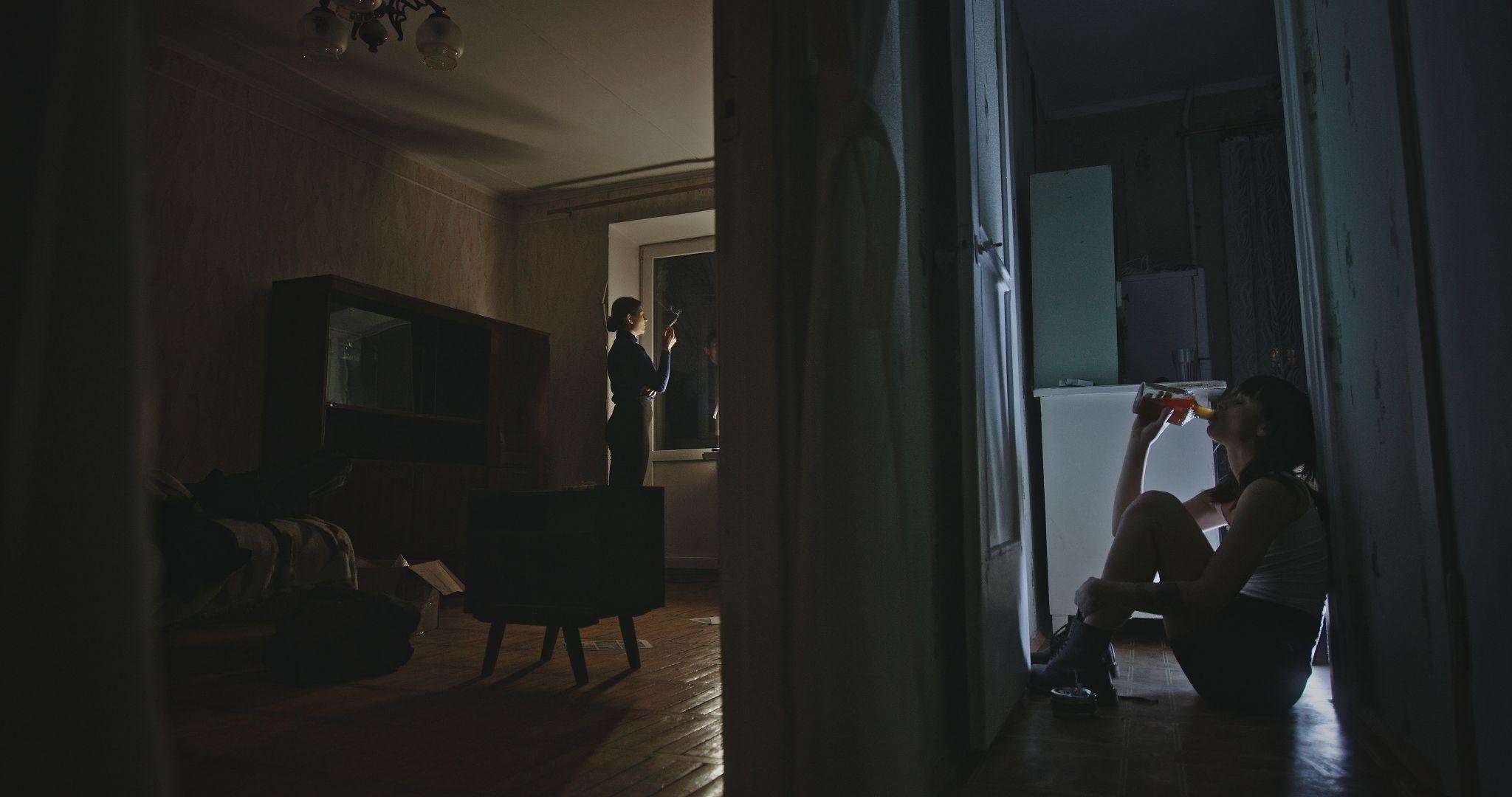
Meanwhile, somewhere else, another man with a physically capable body had emotionally disappeared behind closed doors because he became terrified of the confrontation required to reclaim his peace.
That inversion haunted me.
One man’s body was failing, but his spirit remained active.
The other man’s body was functional, but his spirit had gone into survival mode years ago.
And I think a lot of people quietly live this way.
Not just in marriages or relationships.
In friendships.
Families.
Workplaces.
Entire lifestyles.
People become emotional hostages to unresolved tension because they are terrified of the temporary violence honesty might create.
So they negotiate against themselves.
Day after day.
Year after year.
Until the compromise becomes identity.
That’s the real danger.
Because once a person loses the ability to draw a boundary, speak honestly, or protect their own emotional perimeter, they begin abandoning themselves in slow motion.
And the human body keeps score.
You see it in chronic stress.
In anxiety.
In hypervigilance.
In insomnia.
In emotional numbness.
In overthinking.
In quiet resentment.
In nervous systems that never fully power down.
People think avoiding confrontation protects peace.
But unresolved tension is expensive.
It drains momentum.
Clouds judgment.
Distorts relationships.
Poisons environments.
And slowly fractures the foundation of a person’s inner world.
I think that’s why I’ve become so protective of peace lately.
Not fake peace.
Not performative peace.
Not “everybody smile and pretend everything is fine” peace.
Real peace.
The kind built on honesty.
Alignment.
Boundaries.
Truth.
Clarity.
Because once you’ve watched enough people emotionally disappear inside situations they were too afraid to confront, you begin understanding something very important:

Temporary discomfort is not the enemy.
Long-term self-abandonment is.
The irony is that most difficult conversations people avoid are terrifying for maybe a few hours… a few days… maybe a few weeks.
But the emotional prison created by avoiding them can last decades.
That’s a devastating trade.
And the longer people remain trapped inside those environments, the harder it becomes to even remember who they were before survival mode took over.
That’s why the image of Francis standing in his front yard matters so much to me.
He reminded me that courage is not always loud.
Sometimes courage is simply refusing to disappear.
Sometimes courage is standing directly inside your reality — limitations and all — and continuing to participate in your own existence anyway.
That takes strength too.
Real strength is not pretending nothing hurts.
Real strength is stepping onto the pavement, looking your reality dead in the eye, and deciding that your peace deserves protection.
Even if honesty creates friction.
Even if boundaries upset people.
Even if confrontation temporarily shakes the atmosphere.
Because eventually you realize something:
A permanent truce that costs you your sanity was never peace to begin with.
It was surrender.
So if you are lone-wolfing a massive emotional burden right now because you’re afraid of what honesty might disrupt, stop running from it.
Take a hard look at your perimeter.
Ask yourself what parts of your life have become occupied territory.
Ask yourself where you’ve been negotiating against your own spirit just to keep the room quiet.
Ask yourself whether the version of peace you’re protecting is actually destroying you slowly.
Then clear the air.
Protect your boundaries.
Fix your frequency.
Reclaim your front yard.
Because life is far too short to disappear inside a house that no longer feels like home.