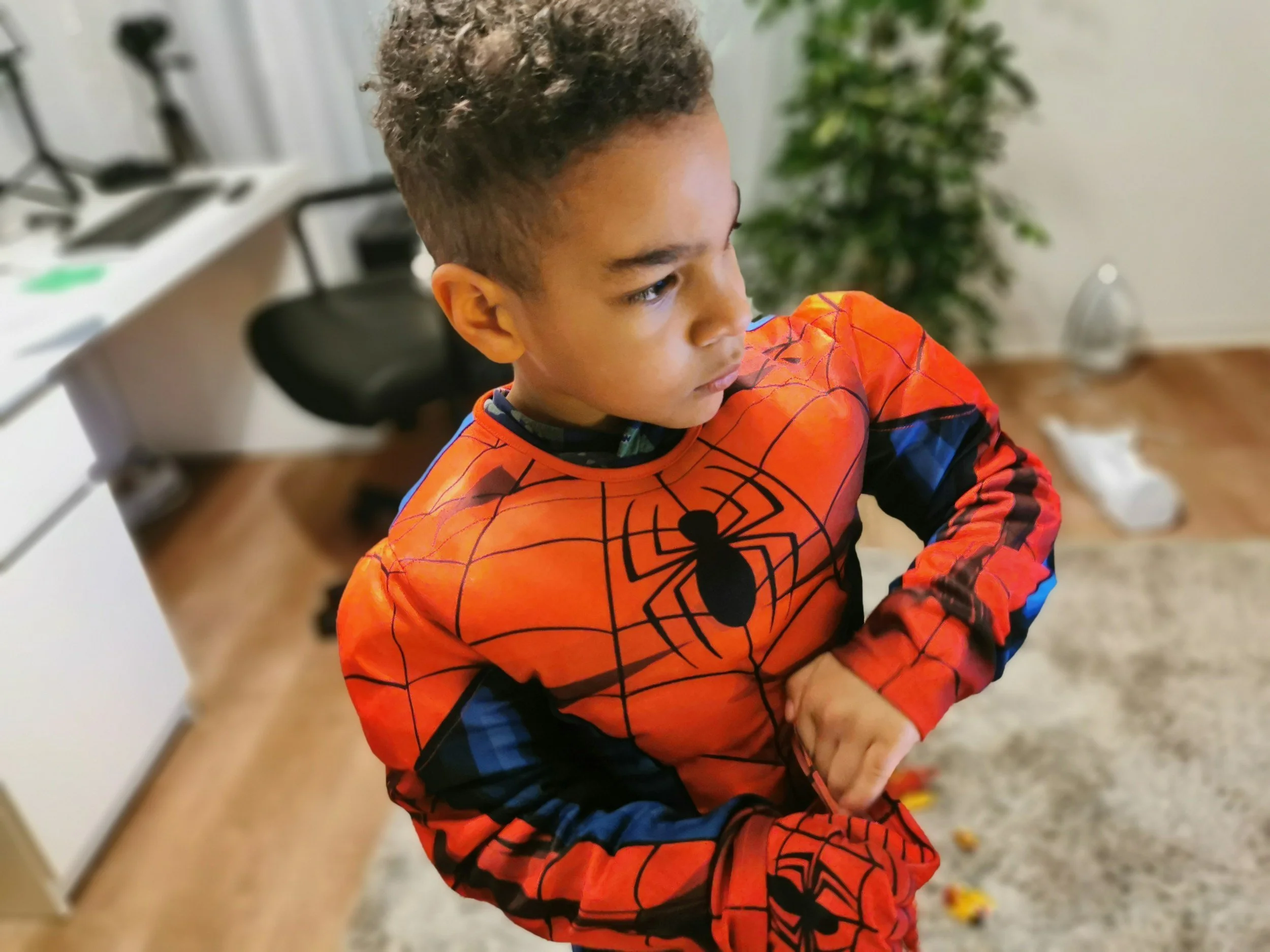
A father's journey discovering how drawings, comics, and characters became a bridge to communication, confidence, and connection.
When my son Jake was diagnosed with autism at three and a half years old, one of the biggest challenges we faced was communication.
Like many parents, I wanted to help him express his thoughts, share his feelings, and connect with the world around him.
But over time, I learned something important.
Communication doesn't always begin with words.
Sometimes it begins with pictures.
Sometimes it begins with a drawing.
Sometimes it begins with a character.
And sometimes it begins with a story.
Looking back, I realize that visual storytelling became one of the most powerful tools we used to encourage communication, creativity, confidence, and connection.
It wasn't something I planned.
It wasn't part of a formal program.
It simply grew from Jake's interests and strengths.
Today, visual storytelling remains one of the most effective ways I know to engage autistic children in meaningful communication and self-expression.

What Is Visual Storytelling?
Visual storytelling is the process of communicating ideas, emotions, events, or experiences through images.
Instead of relying entirely on spoken or written language, visual storytelling uses:
Drawings
Pictures
Comics
Storyboards
Characters
Symbols
Visual sequences
For many autistic children, visual information is often easier to process than verbal information.
Visuals provide structure.
Visuals provide clarity.
Visuals create opportunities for expression when words are difficult.
That was certainly true for Jake.
Why Visual Storytelling Works for Many Autistic Children
Many autistic individuals are visual thinkers.
Temple Grandin famously described herself as thinking in pictures.
While every autistic child is different, many children process information more effectively when they can see it.
Visual storytelling works because it combines several strengths:
It Reduces Communication Pressure
Sometimes children know exactly what they want to say but struggle to find the words.
A drawing can communicate an idea immediately.
It Creates Structure
Stories have a beginning, middle, and end.
Visual stories make that structure easier to understand.
It Encourages Creativity
Children are free to create characters, worlds, and adventures without worrying about being right or wrong.
It Makes Abstract Ideas Concrete
Emotions, friendships, challenges, and experiences can become visible through images.
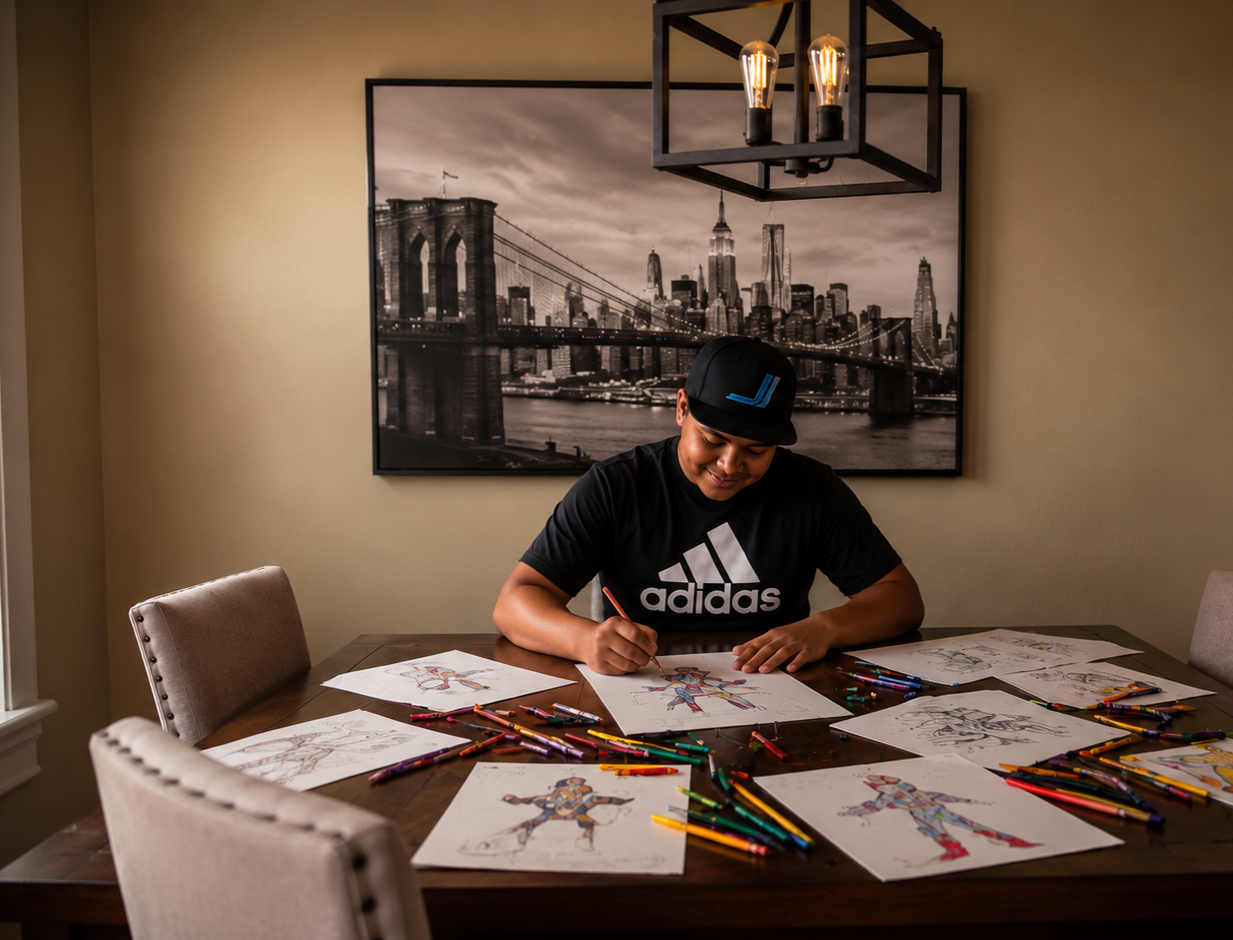
How Visual Storytelling Started in Our Home
For Jake, it all began with superheroes.
Like many autistic children, he developed a deep interest in a specific topic.
He loved superheroes.
He loved their powers.
He loved their adventures.
He loved the stories they told.
At first, he simply enjoyed watching and reading those stories.
Then something changed.
He began creating his own.
He started drawing heroes.
Designing costumes.
Inventing powers.
Creating villains.
Developing storylines.
What looked like play was actually something much deeper.
Jake was building stories.
And through those stories, he was communicating.
Why Pictures Often Speak Louder Than Words
One lesson Jake taught me is that communication comes in many forms.
As parents, we often focus on spoken language.
We ask questions.
We encourage conversations.
We practice communication skills.
Those things matter.
But sometimes children communicate more clearly through images than through words.
A picture can reveal:
Interests
Feelings
Fears
Goals
Strengths
Experiences
When Jake created a hero facing a challenge, that challenge often reflected something meaningful.
When he designed a character with specific strengths, those strengths often represented qualities he admired.
The drawings became conversation starters.
The stories became opportunities to connect.
How Visual Storytelling Supports Communication
Visual storytelling encourages communication naturally.
Instead of asking direct questions, parents can explore the story together.
For example:
Who is this character?
What is happening?
What challenge are they facing?
How will they solve the problem?
These questions feel less intimidating because the focus isn't on the child.
The focus is on the story.
Yet the communication skills being practiced are very real.
Children are learning:
Sequencing
Description
Perspective
Problem solving
Narrative skills
All while having fun.
Visual Storytelling Activities for Autistic Children
Parents often ask me where to start.
The good news is that visual storytelling doesn't require artistic talent.
The goal isn't to create perfect artwork.
The goal is to create opportunities for communication.
Here are some activities that worked in our home.

Create a Four-Panel Comic
Divide a page into four boxes.
Label them:
Beginning
Problem
Solution
Ending
Encourage your child to create a simple story.
This activity strengthens sequencing skills and narrative thinking.
Design a Superhero
Ask your child to create a hero.
Questions might include:
What's their name?
What powers do they have?
What challenges do they face?
Who do they help?
This activity encourages imagination while opening the door to meaningful conversations.
Draw an Emotion
Ask your child:
"What would happiness look like?"
"What would frustration look like?"
"What color would excitement be?"
This helps children explore emotions visually.
Storyboarding Daily Experiences
Create a visual timeline of an event.
Examples:
A trip to the park
A birthday party
A school activity
This encourages reflection and communication.
Finish the Story
Draw the beginning of a scene and ask your child to continue it.
This encourages creativity and problem solving.
Visual Storytelling and Emotional Growth
One of the most powerful aspects of visual storytelling is its ability to support emotional development.
Emotions can be difficult to explain.
Many children struggle to identify what they're feeling.
Stories create a safe space for emotional exploration.
Children may find it easier to discuss a character's feelings than their own.
A hero who feels nervous before a challenge.
A character who feels lonely.
A villain who feels frustrated.
These discussions often become opportunities to explore emotions in a comfortable and engaging way.
Why Comics Became Such a Powerful Tool
As Jake grew older, comics became a natural extension of visual storytelling.
Comics combine:
Art
Storytelling
Character development
Communication
Every comic panel tells a story.
Every character expresses emotion.
Every sequence encourages understanding.
What I love most about comics is that they make storytelling accessible.
Children don't need to write long paragraphs.
They can tell a story one image at a time.
For many autistic children, that's incredibly empowering.

What Visual Storytelling Taught Me as a Father
Perhaps the biggest lesson I learned is that communication doesn't always look the way we expect.
As parents, it's easy to focus on what children struggle with.
Visual storytelling reminded me to focus on what Jake did well.
He imagined.
He created.
He drew.
He told stories.
Those strengths became the foundation for growth.
The more I followed his interests, the more opportunities for learning appeared.
The more opportunities appeared, the more confidence grew.
And the more confidence grew, the more communication followed.
A Message to Parents
If your child enjoys drawing, creating characters, building worlds, or telling stories, pay attention.
Those interests may be more powerful than you realize.
You don't need expensive supplies.
You don't need artistic training.
You don't need to create perfect stories.
You simply need to create opportunities.
A pencil.
A piece of paper.
A conversation.
Sometimes that's enough to begin building meaningful connections.
Final Thoughts
Looking back, visual storytelling became one of the most important tools in our autism journey.
It helped transform interests into communication.
Communication into confidence.
And confidence into growth.
What began with a few superhero sketches eventually became stories, comics, books, workshops, and Jetpulse itself.
But at its core, visual storytelling remains something simple.
It's a way for children to share who they are.
A way to communicate ideas.
A way to explore emotions.
And a way to remind us that every child has a story worth telling.
Sometimes they just need a different way to tell it.

Led Bradshaw is a father, author, illustrator, and the founder of Jetpulse Studios, an educational media company dedicated to helping children build confidence through creativity, storytelling, and visual learning. Inspired by his son Jake's autism diagnosis, Led developed a unique approach that combines art, superhero storytelling, and character creation to support communication, emotional growth, and self-expression.
Over the past several years, Led has created comics, workbooks, and educational resources used by families, educators, and neurodivergent learners. His family's journey has been featured by Good Morning America, The Today Show, News 12, Good Day New York, and other national media outlets. He is also the recipient of an Emmy Award for his work helping share Jake's story and advocating for autism awareness.
Through The Jetpulse, Led shares practical parenting insights, creative activities, and real-world strategies drawn from his experiences raising a son with autism. His mission is simple: help families discover their strengths, build confidence, and create meaningful connections through creativity.