How Drawing Helps Children Express Emotions: A Father's Journey Using Art to Understand His Son
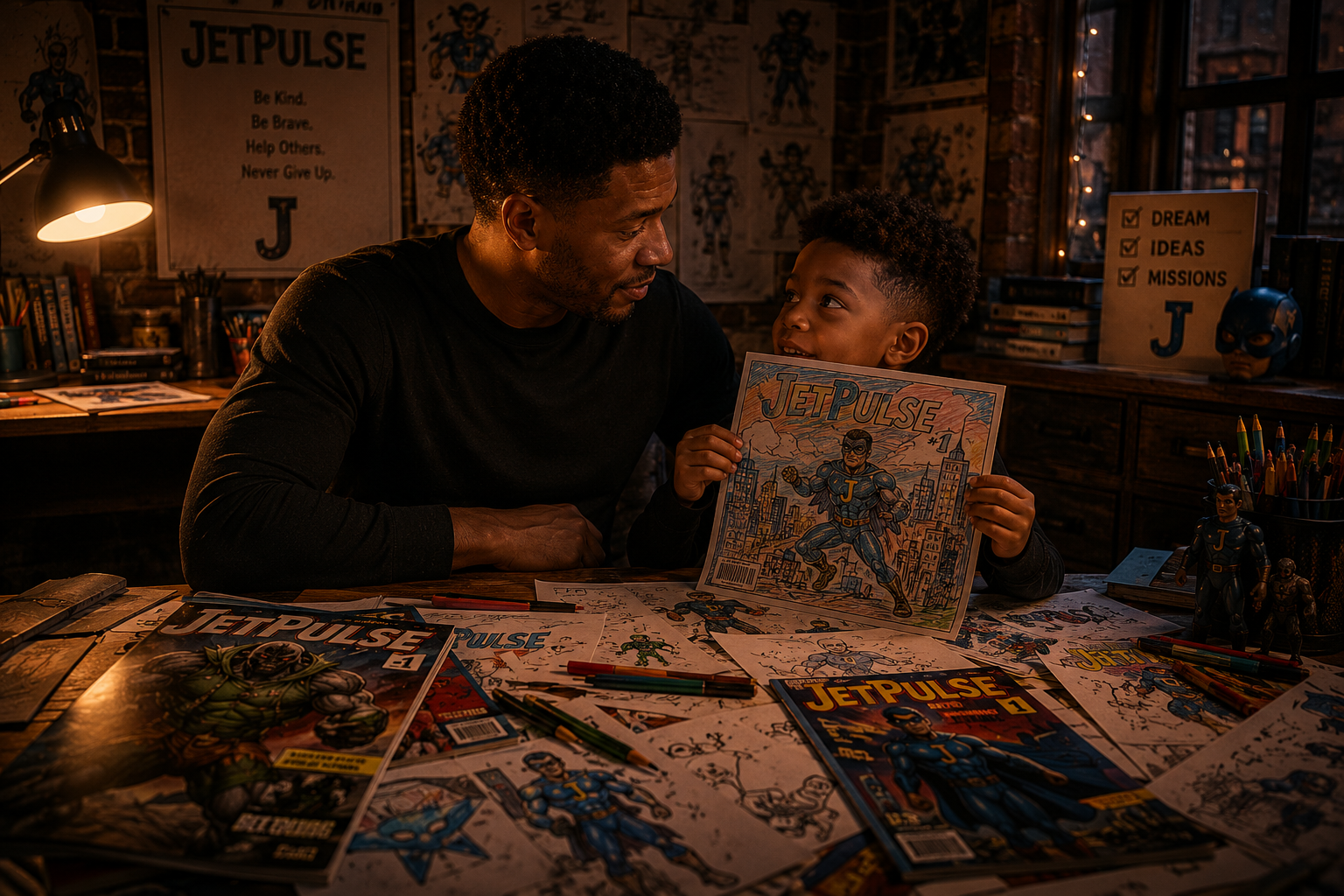
When my son Jake was diagnosed with autism at three and a half years old, one of the hardest things for me as a father wasn't the uncertainty of the diagnosis.
It was not knowing what he was feeling.
Like every parent, I wanted to know when he was happy, when he was frustrated, when something scared him, or when he needed comfort. But I quickly realized that emotions don't always come out as words.
Sometimes they come out as silence.
Sometimes they come out as behavior.
And sometimes they come out through a simple drawing.
Over the years, I learned that art wasn't just something Jake enjoyed.
It became one of the ways I began to understand him.
A pencil and a blank sheet of paper often revealed more than a long conversation ever could.
That realization completely changed the way I looked at creativity.
Drawing wasn't just an activity anymore.
It became a bridge between my son's inner world and mine.
Why Emotional Expression Can Be Difficult
Every autistic child is unique, but many experience emotions just as deeply as anyone else.
The difference is that expressing those emotions can be challenging.
Sometimes the words simply aren't there.
Sometimes emotions feel overwhelming.
Sometimes it's easier to keep those feelings inside than to explain them.
As parents, it's easy to assume our children aren't communicating.
But often, they're communicating in ways we haven't learned to recognize yet.
For Jake, one of those ways was drawing.
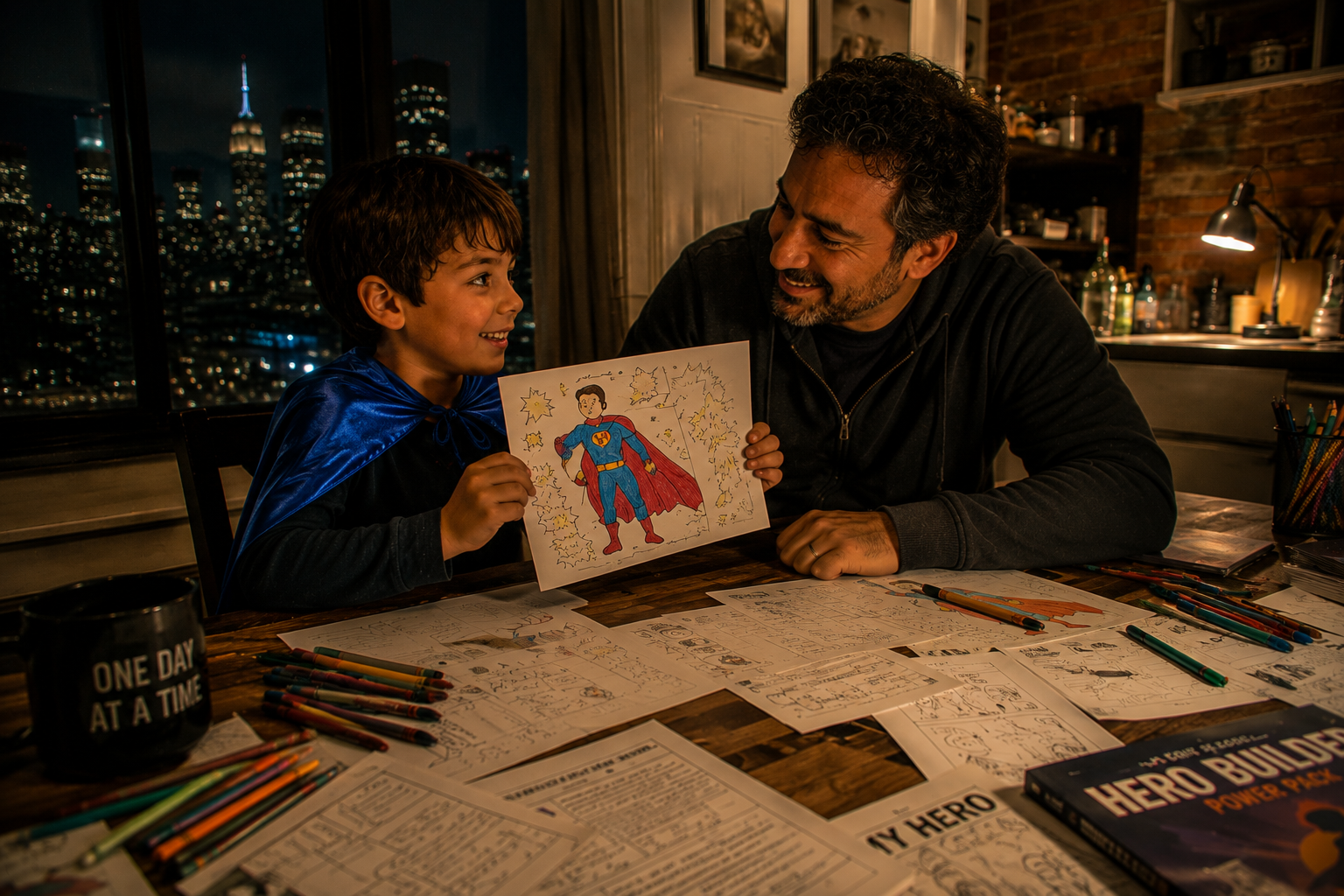
The Day I Started Looking at the Pictures Differently
When Jake was younger, I admired his artwork because it was creative.
He loved superheroes.
He loved creating characters.
He loved imagining adventures.
Like many parents, I focused on how impressive the drawings looked.
Then one day I realized I had been asking the wrong question.
Instead of asking,
"Is this a good drawing?"
I began asking,
"What is this drawing telling me?"
That simple shift changed everything.
Suddenly I wasn't just looking at artwork.
I was looking at communication.
Every Drawing Tells a Story
Children rarely create something without a reason.
Sometimes that reason is simple fun.
Sometimes it's imagination.
But many times, especially for children who communicate visually, their drawings become reflections of what they're thinking and feeling.
A hero standing alone.
A battle against an enormous villain.
A character protecting someone weaker.
A city being rebuilt after destruction.
Those weren't just scenes.
They often represented ideas, fears, hopes, and experiences.
The pictures gave us something to talk about.
Art Removes the Pressure
One of the things I appreciated most about drawing was that it removed the pressure of having the "right" answer.
There wasn't a test.
There wasn't a conversation that had to happen perfectly.
Jake could simply create.
While he drew, conversations happened naturally.
I'd ask questions like:
"What made your hero decide to do that?"
"Why is the villain angry?"
"What happens next?"
Those questions were about the story.
But often, they led to conversations about emotions.
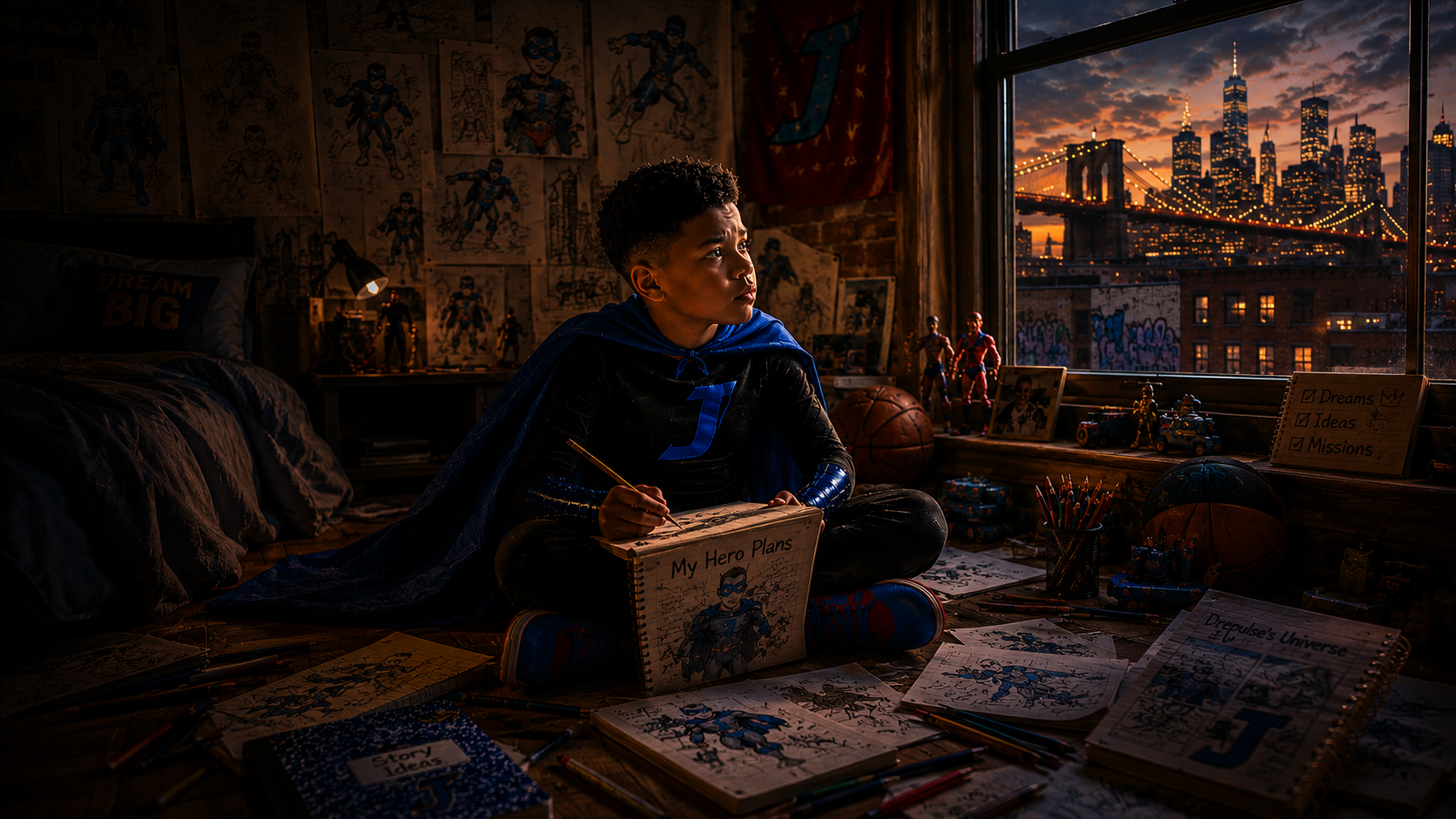
Why Visual Expression Works
Many autistic children process information visually.
Pictures often communicate ideas more clearly than spoken language.
Drawing slows the world down.
It gives children time to organize thoughts.
It allows them to communicate without feeling rushed.
Most importantly, it gives parents something tangible to explore together.
Instead of asking,
"How do you feel?"
you can ask,
"Tell me about this character."
The difference is subtle.
But for many children, it feels much safer.
What Drawing Taught Me About Listening
One of the biggest parenting lessons I learned is that listening isn't limited to hearing words.
Sometimes listening means paying attention to:
The stories children create.
The characters they invent.
The colors they choose.
The scenes they draw.
The ideas they return to again and again.
Children are constantly communicating.
We simply have to become better observers.
Jake taught me that.
Activities That Encourage Emotional Expression Through Drawing
Here are a few activities that worked well in our home.
Draw Today's Adventure
Instead of asking about the day, invite your child to draw the most memorable part.
Afterward, ask questions about the picture rather than the event itself.
Emotion Superheroes
Create heroes based on different emotions.
A Courage Hero.
A Calm Hero.
A Hope Hero.
Ask what powers each one would have.
Finish the Scene
Begin drawing the first part of a picture.
Invite your child to finish the story.
This encourages creativity while opening opportunities for conversation.
Draw a Safe Place
Ask your child to draw somewhere they feel completely safe.
Talk about what makes that place special.
The Feelings Comic
Create a simple four-panel comic showing:
A challenge
A feeling
A solution
A positive ending
This helps children connect emotions with problem-solving.
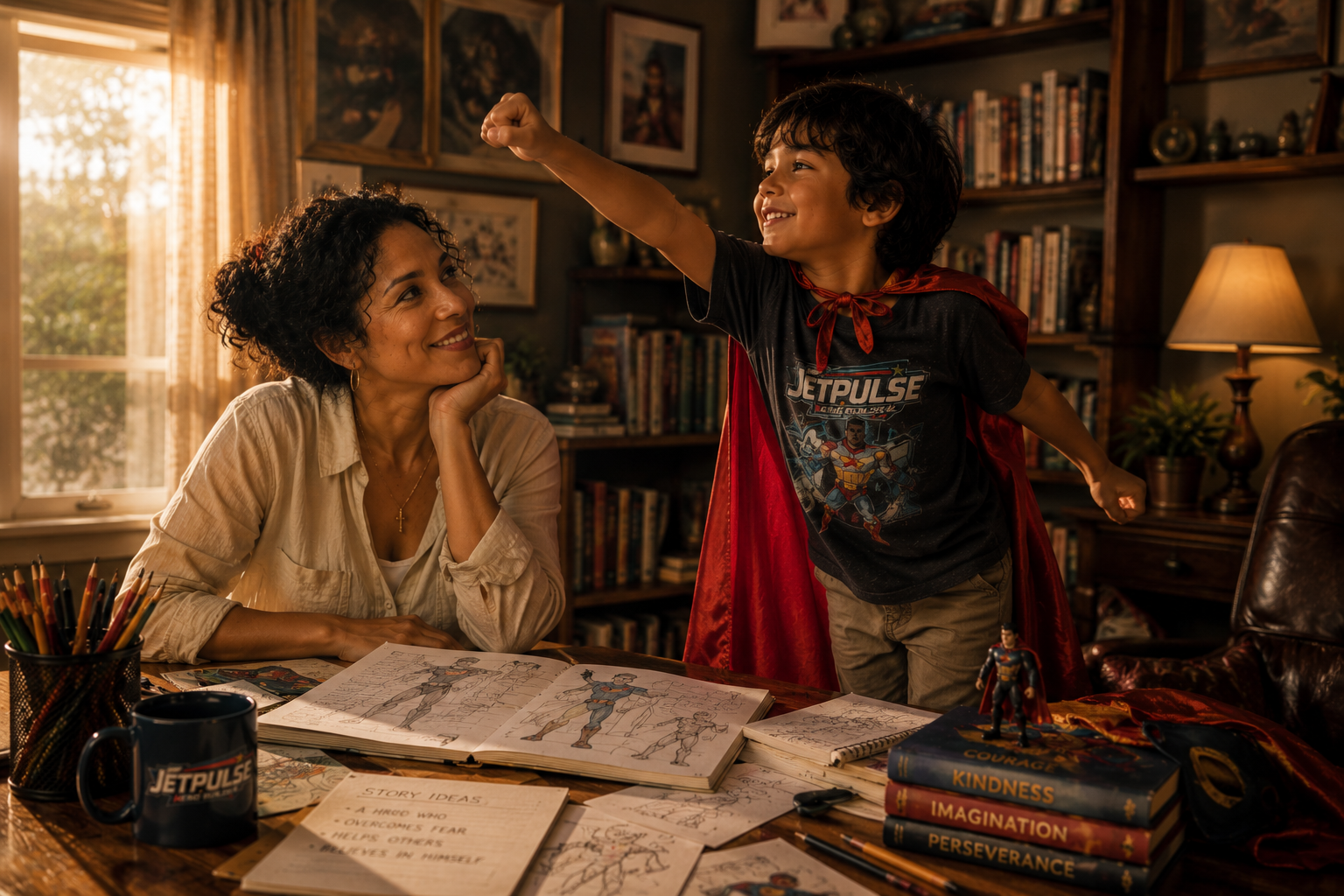
Progress Doesn't Always Look the Way We Expect
As parents, we often measure progress through milestones.
More words.
Better conversations.
Improved social interaction.
Those things matter.
But sometimes progress looks quieter.
A child who begins drawing more confidently.
A character that suddenly smiles.
A comic where two heroes learn to work together.
Those moments matter too.
They're signs that children are processing the world in meaningful ways.
What This Journey Taught Me
Looking back, I realize I wasn't teaching Jake to communicate only through art.
Jake was teaching me how to communicate with him.
That may be the greatest lesson of all.
Parenting isn't only about teaching our children.
It's also about learning new ways to understand them.
When I stopped expecting communication to look only one way, I began noticing it everywhere.
In drawings.
In stories.
In superheroes.
In imagination.
Those became our conversations.
Those became our connection.
A Message to Parents
If your child enjoys drawing, don't worry about creating perfect artwork.
Don't worry about staying inside the lines.
Don't worry about artistic ability.
Pay attention instead to what they're creating.
Ask questions.
Be curious.
Celebrate their imagination.
Sometimes a simple drawing becomes the beginning of an important conversation.
Sometimes it becomes a window into your child's world.
And sometimes it reminds us that communication isn't always spoken.
Sometimes it's drawn.
Final Thoughts
Today, when I look back at the countless drawings Jake created over the years, I don't just see superheroes.
I see confidence growing.
I see imagination expanding.
I see communication developing.
I see a father learning to understand his son in ways he never expected.
Every picture told part of our story.
Every story brought us a little closer together.
That's why I still believe one of the most powerful conversations a parent can have with a child doesn't always begin with a question.
Sometimes it begins with a blank sheet of paper, a pencil, and the simple invitation:
"Show me what's in your imagination."

Led Bradshaw is a father, author, illustrator, and the founder of Jetpulse Studios, an educational media company dedicated to helping children build confidence through creativity, storytelling, and visual learning. Inspired by his son Jake's autism diagnosis, Led developed a unique approach that combines art, superhero storytelling, and character creation to support communication, emotional growth, and self-expression.
Over the past several years, Led has created comics, workbooks, and educational resources used by families, educators, and neurodivergent learners. His family's journey has been featured by Good Morning America, The Today Show, News 12, Good Day New York, and other national media outlets. He is also the recipient of an Emmy Award for his work helping share Jake's story and advocating for autism awareness.
Through The Jetpulse, Led shares practical parenting insights, creative activities, and real-world strategies drawn from his experiences raising a son with autism. His mission is simple: help families discover their strengths, build confidence, and create meaningful connections through creativity.