How Drawing Helps Autistic Children Express Emotions They Can't Put Into Words
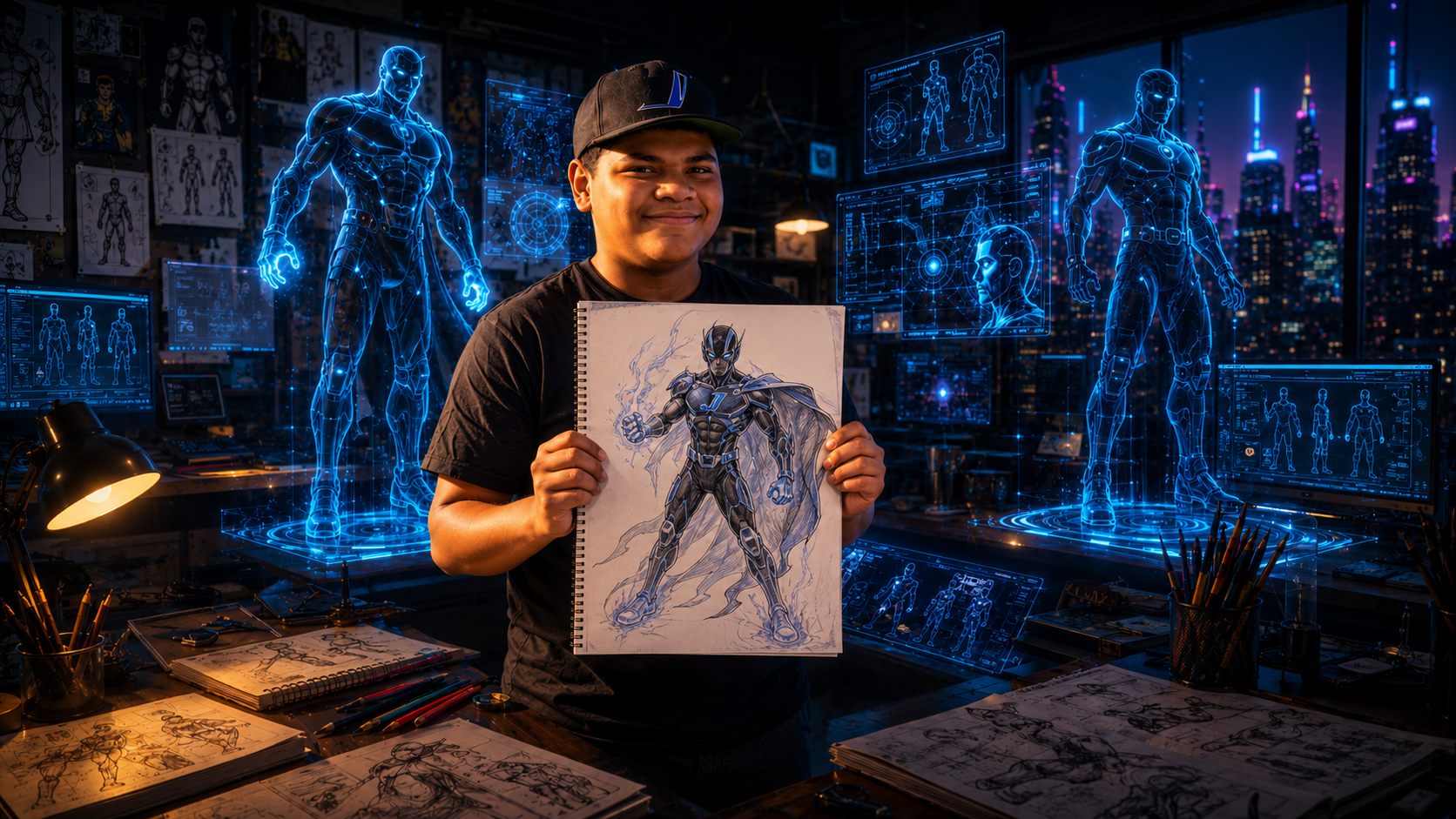
As parents, we spend countless hours trying to understand what our children are feeling.
For many autistic children, that can be especially challenging.
Sometimes the words simply aren't there. Sometimes the emotions are too big, too confusing, or too overwhelming to explain. A child may be experiencing sadness, anxiety, frustration, excitement, or fear and have no clear way to communicate what is happening inside.
That can leave parents feeling helpless.
But what if there was another language?
What if feelings could be expressed without needing the perfect words?
For many autistic children, drawing becomes exactly that.
Drawing is more than a fun activity. It can become a bridge between a child's inner world and the people who love them most. Through lines, colors, characters, symbols, and stories, children often reveal emotions they may struggle to express verbally.
As a parent of an autistic child myself, I've seen firsthand how powerful that process can be.
Why Emotional Expression Can Be Difficult for Some Autistic Children
Every autistic child is unique.
Some children communicate fluently. Others communicate with limited speech or alternative methods. Some have a rich emotional vocabulary, while others find it difficult to identify and describe what they are feeling.
Researchers often refer to this challenge as emotional awareness or emotional identification. A child may feel something intensely but struggle to label the emotion.
Imagine feeling frustrated, worried, lonely, excited, and overwhelmed all at once, but not having the words to explain it.
That experience can be incredibly difficult.
When children cannot communicate their emotions effectively, those feelings often appear in other ways:
Meltdowns
Withdrawal
Anxiety
Irritability
Aggressive behavior
Repetitive behaviors
Emotional shutdowns
The behavior is often visible.
The emotion underneath it is not.
Drawing can help uncover what words sometimes cannot.

Drawing Creates a Safe Way to Communicate
One of the biggest advantages of drawing is that it removes pressure.
There are no right answers.
No social expectations.
No fear of saying the wrong thing.
A child can simply create.
For many autistic children, this freedom feels safe.
A child who struggles to discuss a difficult day at school might draw a picture of a storm cloud.
Another child may draw a superhero fighting a giant monster.
Another may sketch a peaceful scene with animals, nature, or favorite characters.
To an outside observer, these may simply appear to be drawings.
To a parent willing to listen, they can become powerful emotional clues.
Pictures Often Reveal Hidden Feelings
Children frequently communicate through symbolism.
Adults do it too.
We write songs, tell stories, create movies, and make art to express emotions that are difficult to explain directly.
Children are no different.
A child who draws:
Broken objects
Characters hiding
Dark colors
Isolated figures
Giant obstacles
may be communicating feelings they have not yet learned to verbalize.
Likewise, children who draw:
Heroes
Adventures
Friends working together
Bright colors
Victory scenes
may be expressing confidence, hope, excitement, or resilience.
The goal is not to analyze every drawing like a psychologist.
The goal is simply to stay curious.
Ask questions.
Listen.
Allow the child to explain their creation in their own way.
Drawing Helps Build Emotional Vocabulary
Drawing can also become a teaching tool.
After completing a picture, parents can gently ask questions such as:
How is this character feeling?
What happened before this scene?
What do you think happens next?
Is anyone scared?
Is anyone happy?
What would help this character feel better?
Notice that the questions focus on the drawing rather than the child directly.
That often feels less intimidating.
Many children find it easier to discuss a character's emotions than their own.
Over time, those conversations help children develop emotional awareness and emotional vocabulary.
The Power of Visual Storytelling
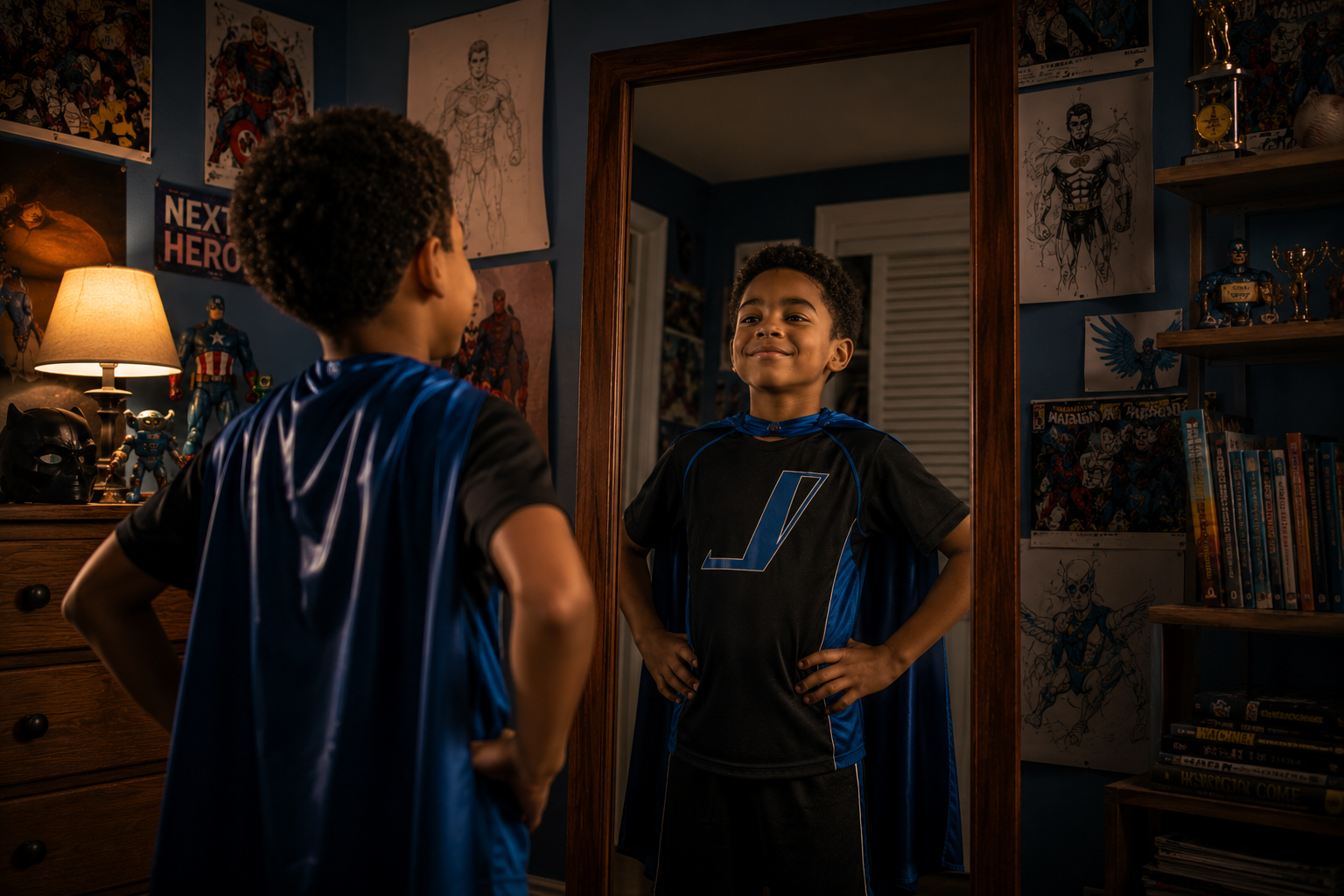
For some autistic children, drawing naturally evolves into storytelling.
A simple sketch becomes a character.
The character becomes part of a story.
The story becomes a world.
That world becomes a safe place to explore emotions.
This process is one reason visual storytelling can be so powerful.
A child can create heroes who overcome fears.
Villains who represent worries.
Friends who solve problems together.
Adventures that mirror real-life challenges.
Without realizing it, children are often working through emotions while creating stories.
They're practicing resilience.
They're exploring solutions.
They're expressing themselves creatively.
Drawing Supports Emotional Regulation
Drawing can also help children calm their nervous systems.
The repetitive movements involved in sketching, coloring, and creating artwork can be soothing.
Many parents notice that their child appears calmer while drawing.
That's because creative activities encourage focus and concentration while reducing outside stressors.
When children become absorbed in creating, they often experience a sense of control and predictability that can feel comforting.
For some children, drawing becomes a healthy coping strategy during stressful moments.
Parents Don't Need Artistic Talent
One of the biggest misconceptions about art activities is that parents need artistic ability.
You don't.
Your child is not looking for perfection.
They are looking for participation.
Stick figures work.
Simple doodles work.
Messy drawings work.
The goal isn't creating a masterpiece.
The goal is creating connection.
Some of the most meaningful conversations happen when a parent sits beside a child and simply creates alongside them.
What Matters Most
At its core, drawing gives autistic children another way to be seen.
Not every child will express emotions through conversation.
Not every child will communicate through writing.
Not every child will feel comfortable sharing what they're feeling out loud.
But many children will draw.
And when they do, they are often telling us far more than we realize.
Every line, every character, every invented world may contain a small piece of their inner experience.
As parents, our job isn't to interpret every detail perfectly.
Our job is to pay attention.
To stay curious.
To listen.
To create opportunities for expression.
Because sometimes the most important conversations don't begin with words at all.
Sometimes they begin with a pencil and a blank sheet of paper.
About the Author

Led Bradshaw is the founder of Jetpulse Studios and the father of an autistic son who inspired a creative journey through art, storytelling, and imagination. Through Jetpulse, he helps parents discover practical ways to build confidence, emotional growth, and creative expression in autistic children through drawing, visual storytelling, and superhero-inspired learning experiences.