Why Art Therapy Works For Autistic Children
Sometimes Words Aren't Enough
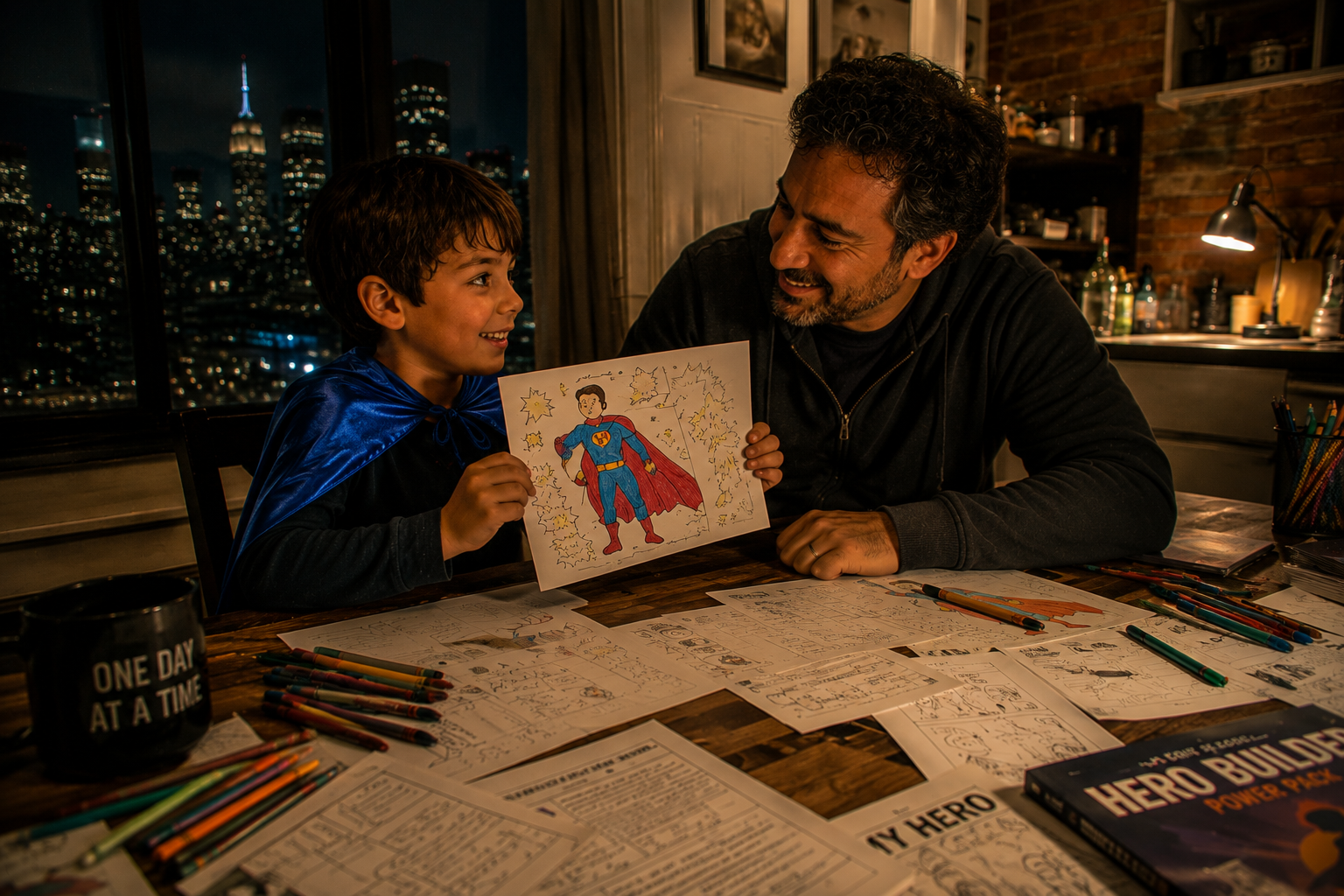
One of the biggest lessons I learned as a parent came from a simple drawing.
My son Jake was sitting at the kitchen table with a pencil in his hand. He was quiet, focused, and completely absorbed in the world he was creating on paper. At the time, he struggled to communicate many of the thoughts and feelings that were happening inside his head. Conversations could be difficult. Explaining emotions could be even harder.
But when he started drawing superheroes, something changed.
The stories began to speak for him.
The characters became extensions of his thoughts, fears, dreams, and hopes.
What I didn't realize back then was that we had stumbled onto something that many therapists, educators, and parents have been discovering for years.
Art can become a bridge.
For many autistic children, art provides a way to communicate, process emotions, build confidence, and connect with the world in ways that traditional conversations sometimes cannot.
That's why art therapy for autistic children continues to gain attention among parents, therapists, educators, and caregivers.
And honestly, it's easy to understand why.
What Is Art Therapy?
When people hear the term "art therapy," they often imagine a formal therapy office with paints, easels, and structured exercises.
Sometimes that's exactly what it looks like.
But art therapy can also happen around a kitchen table.
It can happen with crayons.
It can happen with comic books.
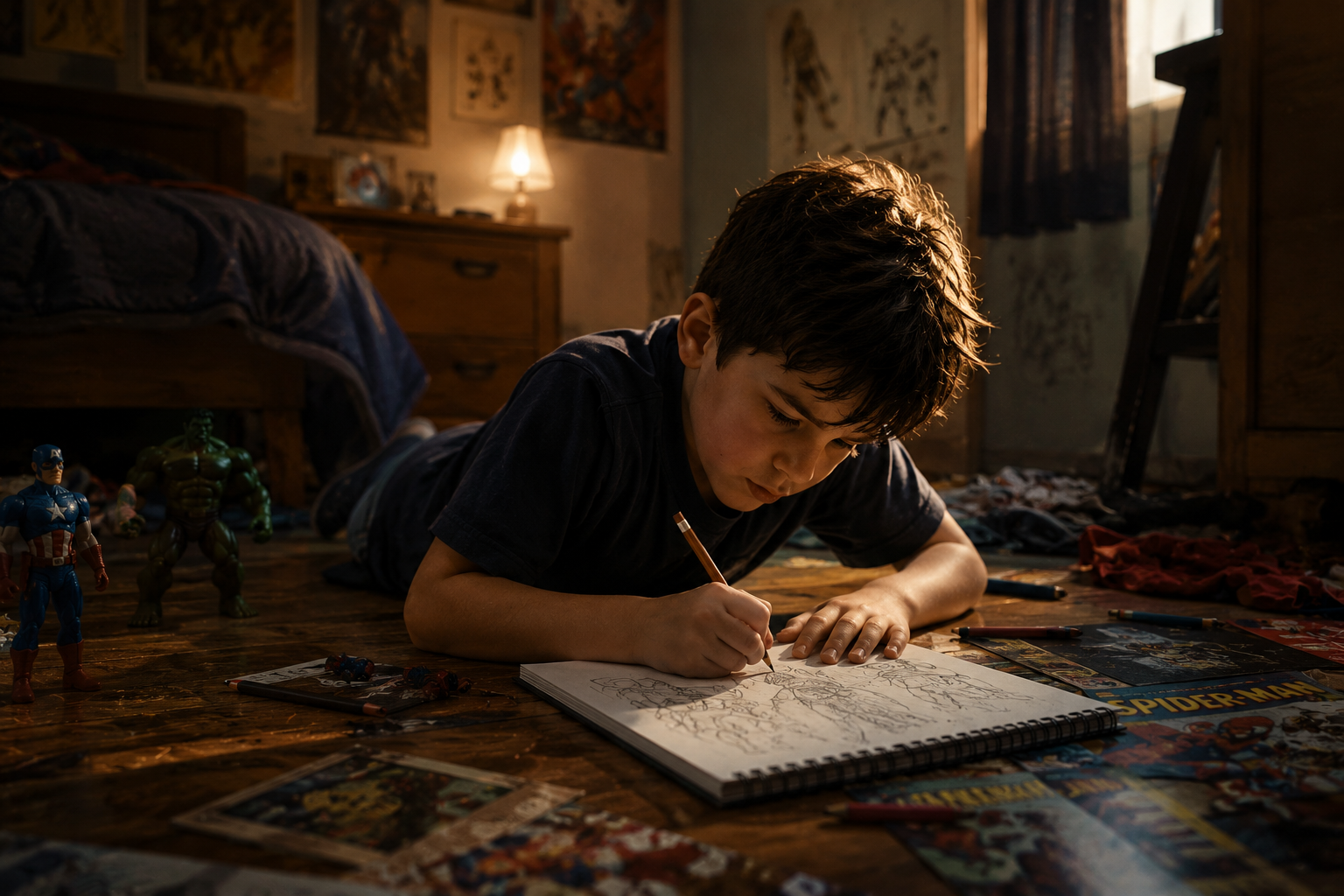
It can happen through drawing superheroes, creating characters, making stories, or building imaginary worlds.
At its core, art therapy is the use of creative expression to help a person explore emotions, communicate ideas, reduce stress, and improve overall emotional well-being.
For autistic children, creative activities often provide an alternative pathway for communication.
Instead of trying to find the perfect words, they can draw.
Instead of explaining a feeling directly, they can create a character who experiences that feeling.
Instead of discussing a challenge face-to-face, they can tell a story about a superhero overcoming obstacles.
Sometimes that indirect approach feels safer.
And because it feels safer, it becomes more effective.
Why Art Therapy Works So Well for Many Autistic Children
Every autistic child is different.
There is no single strategy that works for everyone.
But many children on the autism spectrum share challenges related to communication, emotional expression, social interaction, sensory processing, or anxiety.
Creative expression can support many of these areas simultaneously.
Art Creates a Low-Pressure Environment
Think about how difficult it can be for anyone to talk about emotions.
Now imagine being a child who is still learning how to identify those emotions.
That's not easy.
Traditional conversations often place pressure on a child to respond immediately.
Art removes much of that pressure.
There is no timer.
No audience.
No expectation to have the perfect answer.
A child can simply create.
And sometimes that's when the most meaningful communication begins.
Art Provides Visual Communication
Many autistic children are visual thinkers.
Pictures, symbols, drawings, diagrams, and visual storytelling can feel more natural than verbal communication.
A drawing can communicate an idea that might take hundreds of words to explain.
A character design can reveal interests, fears, strengths, and emotions.
A comic strip can tell a complete story about a child's experiences.
Art gives visual thinkers another language.
Art Supports Emotional Regulation
One of the biggest benefits of creative activities for autistic children is emotional regulation.
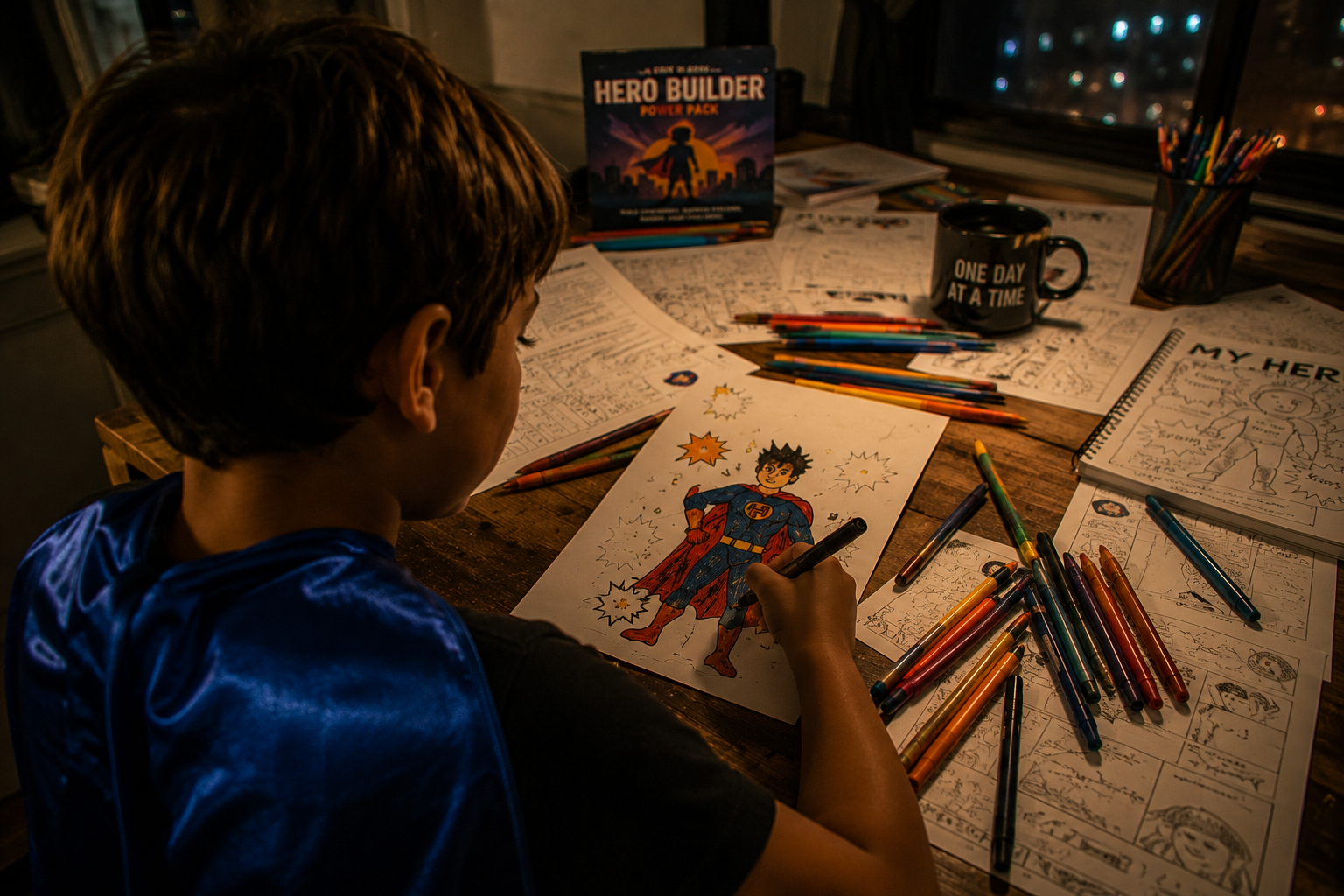
Drawing, coloring, painting, and storytelling can help children slow down and focus their attention.
The creative process itself can be calming.
Many parents notice that their child becomes more relaxed while drawing or creating.
This isn't surprising.
Creative activities encourage concentration, routine, and self-expression.
Those are powerful tools for managing stress and anxiety.
Drawing as Therapy for Kids
Drawing is often one of the most accessible forms of art therapy.
You don't need expensive supplies.
You don't need special training.
You only need paper and something to draw with.
That's one reason drawing activities are so popular among parents and educators.
When children draw, they are making choices.
They choose colors.
They choose characters.
They choose settings.
They choose stories.
Every choice becomes an opportunity for self-expression.
A child who struggles to describe feeling afraid may draw a frightened superhero.
A child experiencing frustration may create a villain that represents a challenge they are facing.
A child working through grief may tell stories about loss, friendship, and courage.
The drawing becomes a conversation.
Not because anyone forced it to be.
Because the child made it one.
The Power of Storytelling and Autism
One of the most overlooked forms of art therapy involves storytelling.
Stories help us understand the world.
They help us make sense of experiences.
They help us process challenges.
They help us imagine possibilities.
For autistic children, storytelling can be especially valuable because it allows them to explore emotions and situations from a safe distance.
Sometimes it's easier to talk about a superhero's fear than your own.
Sometimes it's easier to discuss a character's struggles than your personal challenges.
The story creates enough space for honest exploration.
That's one reason superhero storytelling became such an important part of our journey.
Through characters, adventures, and imagination, Jake was able to express thoughts and feelings that might have otherwise remained hidden.
Building Confidence Through Creativity
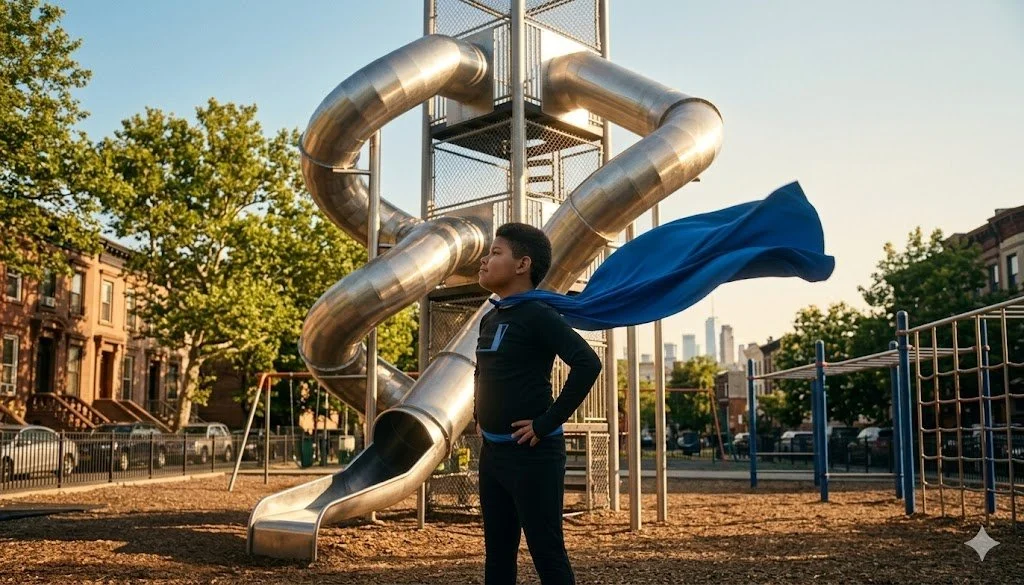
Confidence doesn't appear overnight.
It grows through experience.
Children build confidence when they succeed.
They build confidence when they create something meaningful.
They build confidence when they feel proud of their work.
Art creates those opportunities.
A finished drawing becomes evidence.
A completed story becomes evidence.
A new character becomes evidence.
Evidence that says:
"I made this."
"I created this."
"I can do hard things."
That sense of accomplishment matters.
Especially for children who spend much of their lives being reminded about challenges.
Art shifts the focus toward strengths.
Social Emotional Learning Through Art
Social emotional learning is a major focus in education today.
And for good reason.
Children need more than academic skills.
They need emotional skills too.
They need to understand feelings.
They need empathy.
They need resilience.
They need confidence.
Art naturally supports these areas.
When children create characters, they think about motivations.
When they tell stories, they explore consequences.
When they design heroes, they imagine strengths.
When they create villains, they often explore fears.
Every drawing becomes an opportunity to develop emotional awareness.
Art Therapy Activities for Autistic Children
Parents often ask where to start.
The good news is that you don't need to be an artist.
You simply need to create opportunities.
Some simple ideas include:
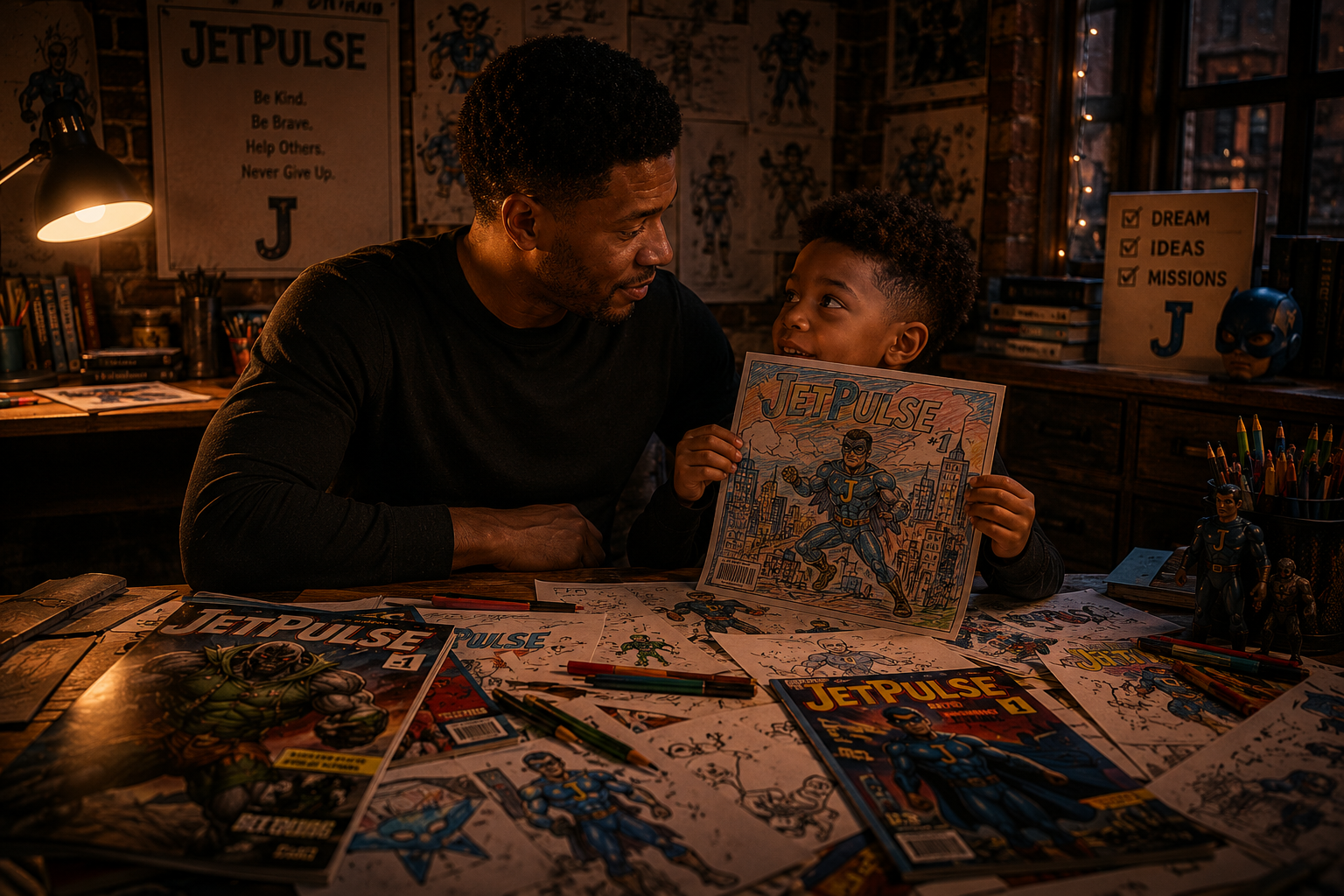
Create a Superhero Character
Ask your child:
What is your hero's name?
What powers do they have?
What challenges do they face?
What makes them special?
Draw Feelings
Create drawings that represent emotions.
What does happiness look like?
What does frustration look like?
What color is courage?
Create a Comic Strip
Help your child tell a simple story through pictures.
It doesn't have to be perfect.
It just needs to be theirs.
Design a Safe Place
Ask your child to draw a place where they feel calm, safe, and happy.
Create a Hero Journal
Combine drawing and writing into a regular creative practice.
These simple activities encourage communication, creativity, and self-reflection.
Why Parents Matter
One of the most important lessons I learned is that art isn't just about the child.
It's also about connection.
Some of our most meaningful moments happened side by side at the kitchen table.
No pressure.
No agenda.
Just creating together.
Those moments mattered.
Not because we were producing masterpieces.
Because we were spending time together.
Art became a shared experience.
A shared language.
A shared memory.
And sometimes that's exactly what families need.
Art Therapy Is Not About Creating Perfect Artists
This is important.
The goal is not to create the next great illustrator.
The goal is not artistic perfection.
The goal is expression.
The goal is communication.
The goal is confidence.
The goal is helping children discover that their thoughts, feelings, and ideas matter.
Every drawing doesn't need to be framed.
Every story doesn't need to be published.
Sometimes the value is found in the process itself.
The Hero Builder Method
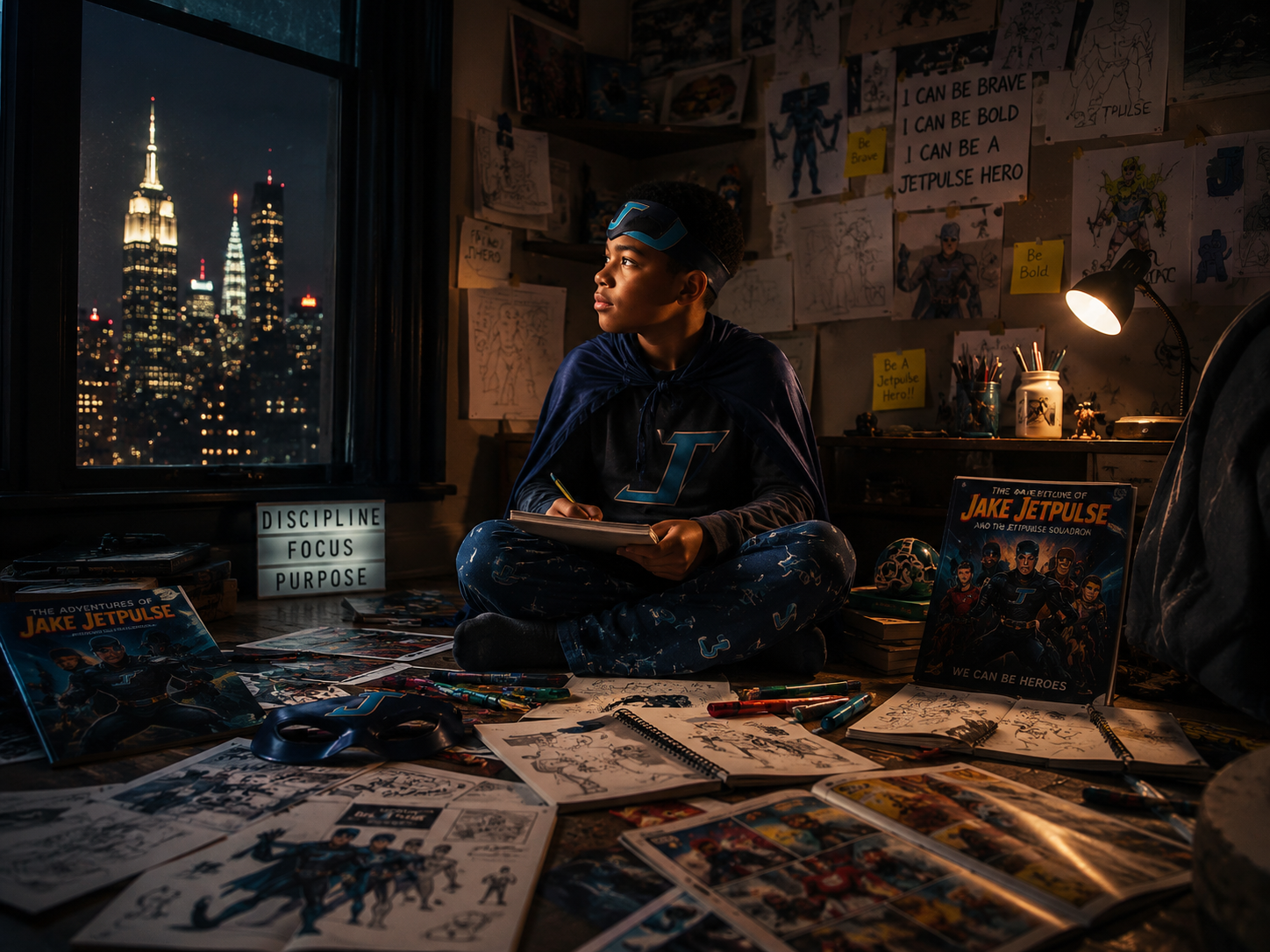
Over time, the activities that helped Jake began to form a pattern.
We noticed that superhero storytelling, drawing, creativity, and imagination consistently encouraged communication, confidence, emotional awareness, and connection.
Those experiences eventually became the foundation of what we now call the Hero Builder Method.
It wasn't created in a boardroom.
It wasn't developed through corporate research.
It grew from real experiences between a father and his autistic son.
Late nights.
Kitchen table conversations.
Sketchbooks filled with ideas.
And a belief that creativity could help bridge communication gaps.
Today, that same approach continues to help children explore emotions, build confidence, and express themselves through storytelling and imagination.
Final Thoughts
Art therapy works for autistic children because it meets them where they are.
It doesn't demand perfect words.
It doesn't force conversations before a child is ready.
It creates space.
Space for expression.
Space for imagination.
Space for confidence.
Space for growth.
Whether it's drawing superheroes, creating comic books, telling stories, or simply coloring together at the kitchen table, creativity gives children another way to be seen and understood.
Sometimes a drawing is just a drawing.
And sometimes it's the beginning of a conversation that changes everything.
About the Author

About Led Bradshaw
Led Bradshaw is a single father, author, illustrator, and founder of Jetpulse Studios. After his son Jake was diagnosed with autism at three and a half years old, Led began using creativity, storytelling, superhero characters, and visual storytelling as tools to help his son build confidence, communication skills, and emotional awareness.
What started as drawings at a kitchen table eventually grew into Jetpulse Studios, a creative platform dedicated to helping autistic, neurodivergent, and emotionally overwhelmed children express themselves through imagination, art, and storytelling.
Today, Led shares practical autism parenting strategies, creative learning activities, emotional learning tools, and personal insights from his family's journey to help other parents discover new ways to connect with their children.
When he's not writing, illustrating, or creating educational resources, you'll often find him walking Brooklyn's waterfront, developing new Jetpulse stories with Jake, or working on projects that help families build confidence through creativity.