Why Traditional Discipline Didn't Work for My Autistic Son
When my son was younger, I did what most parents do. I listened to advice. I read parenting articles.
I paid attention to what other parents were doing. And like many parents, I believed discipline was mostly about consequences.
If a child did something wrong, there should be a consequence. If a child didn't listen, there should be a consequence.
If a child acted out, there should be a consequence.
Simple enough.
At least that's what I thought.
The problem was that it wasn't working.
Not consistently.
Not in the way everyone promised it would. And the harder I pushed, the more frustrated both of us became. It took me years to understand something that changed the way I parent forever. My son wasn't giving me a hard time.
A lot of the time, he was having a hard time.
That's a very different thing.
The Advice Sounded Good on Paper
When my son was diagnosed with autism, I found myself doing what most parents do.
I searched for answers.
I wanted solutions.
I wanted someone to tell me exactly what to do.
Instead, I got a lot of generic parenting advice.
"Be consistent."
"Set boundaries."
"Follow through."
"Don't give in."
None of that advice was wrong.
The problem was that it wasn't complete.
It treated every behavior like a choice.
What I eventually learned was that some behaviors weren't choices at all.
Some were signs of overwhelm.
Some were signs of anxiety.
Some were signs of frustration.
Some were signs that my son didn't have the words to explain what was happening inside his head.
Traditional discipline often assumes a child understands exactly what's happening, why it's happening, and how to stop it.
Many autistic children don't always have that luxury.
I Was Looking at the Wrong Thing

For a long time, I focused on the behavior.
The behavior was what I could see.
The meltdown.
The frustration.
The shutdown.
The refusal.
The emotional outburst.
Those were the visible parts.
What I wasn't paying enough attention to was everything happening underneath.
What caused it?
What triggered it?
What was my son trying to communicate?
Sometimes the answer had nothing to do with defiance.
Sometimes he was overwhelmed by noise.
Sometimes a change in routine threw him off.
Sometimes he was anxious and couldn't explain why.
Sometimes he simply needed more time to process information.
The behavior was the symptom.
The real issue was underneath.
Once I started focusing on that, everything changed.
Consequences Don't Teach Skills
This was one of the hardest lessons for me.
A consequence can stop a behavior temporarily.
It doesn't automatically teach a child what to do instead.
Think about it.
If a child struggles with emotional regulation, punishing the emotional explosion doesn't magically teach emotional regulation.
If a child struggles with communication, consequences don't automatically create communication skills.
If a child is overwhelmed, punishment doesn't reduce the overwhelm.
The skill still has to be taught.
The support still has to be provided.
The child still needs tools.
That realization shifted my focus.
Instead of asking:
"How do I stop this behavior?"
I started asking:
"What skill is missing here?"
That question helped me become a better parent.
The Breakthrough Came Through Creativity
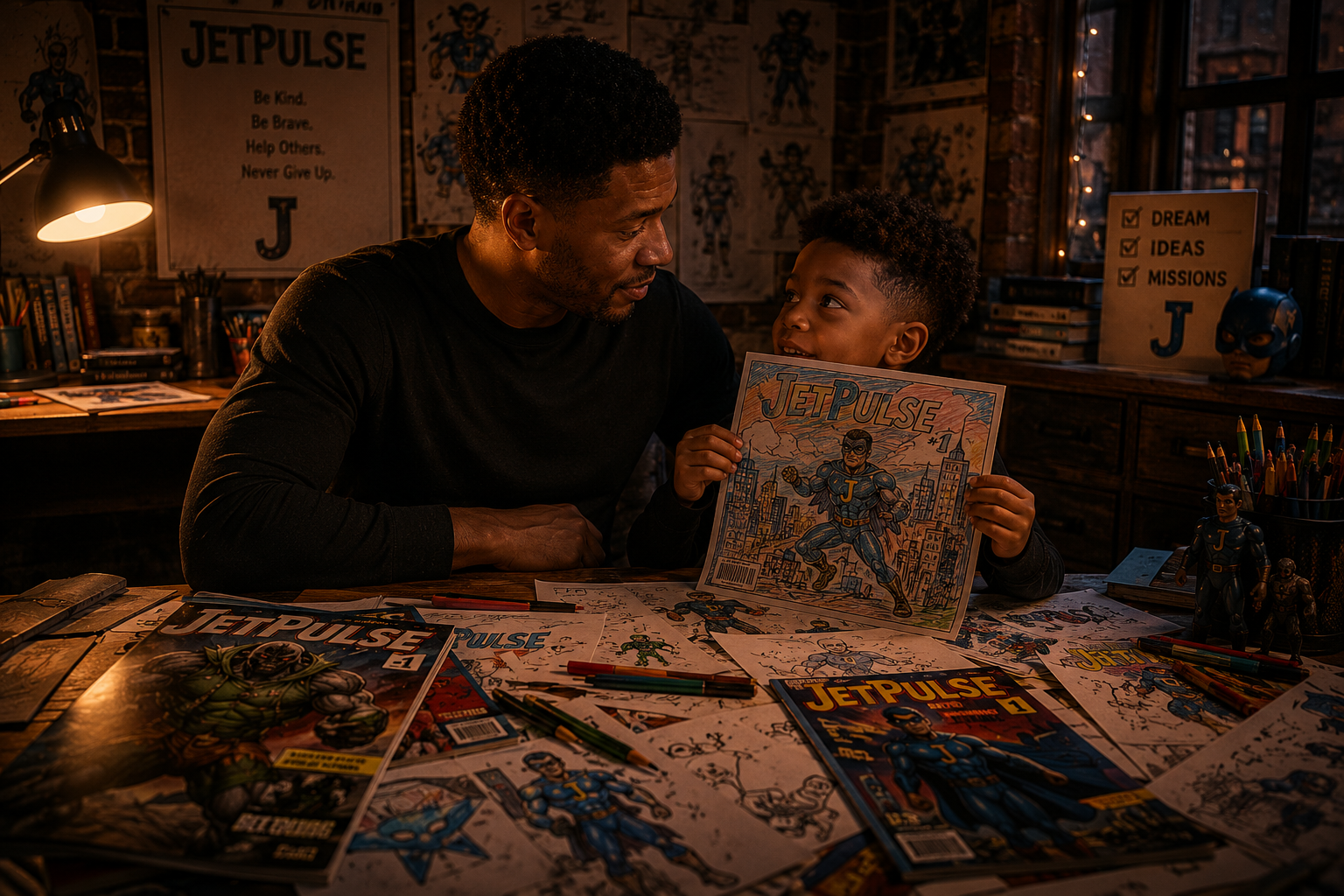
One of the biggest surprises was discovering how much easier it was for my son to communicate through creativity.
Not lectures.
Not long conversations.
Creativity.
Drawing.
Storytelling.
Superheroes.
Imagination.
When we started creating characters together, something interesting happened.
Conversations became easier.
Emotions became easier.
Ideas that felt impossible to discuss directly suddenly found their way into stories.
A superhero could be scared.
A superhero could be frustrated.
A superhero could struggle.
And somehow talking about the superhero felt safer than talking about ourselves.
That was the beginning of what eventually became the Hero Builder Method.
Not because I was trying to create a program.
Because I was trying to connect with my son.
Everything else came later.
Structure Still Matters
I want to be clear about something.
I'm not saying rules don't matter.
They do.
Children need structure.
They need boundaries.
They need accountability.
They need consistency.
But structure without understanding can create unnecessary conflict.
Children need support and expectations.
Not one or the other.
Both.
The goal isn't to eliminate discipline.
The goal is to make sure discipline is actually teaching something useful.
What Worked Better for Us
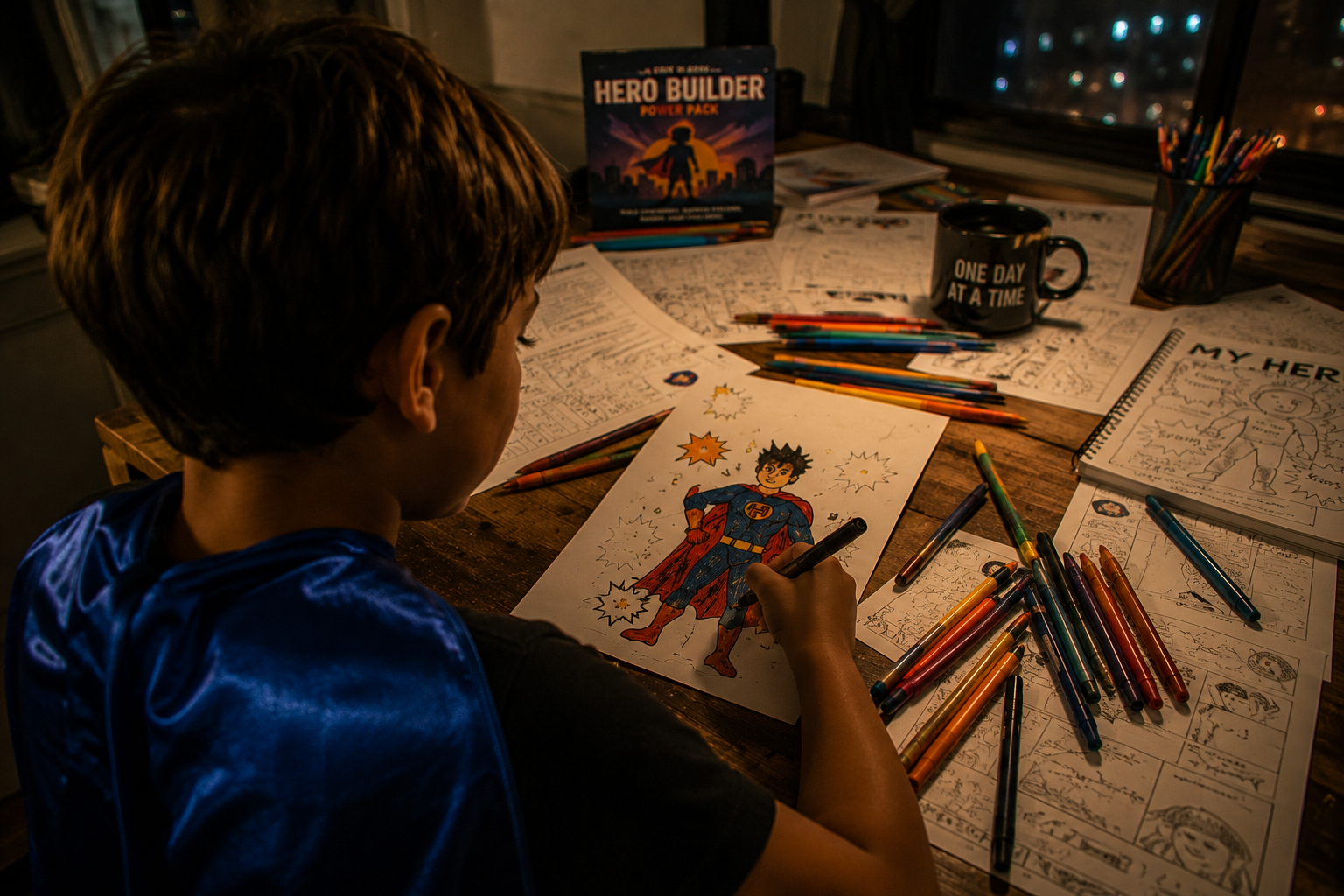
Over time, I stopped focusing on controlling every behavior.
Instead, I focused on building skills.
Communication.
Emotional awareness.
Problem solving.
Self-expression.
Confidence.
That didn't solve every challenge overnight.
Nothing does.
But it helped create a stronger foundation.
It helped us understand each other better.
And honestly, it made parenting feel less like a constant battle.
The Question That Changed Everything
If there's one thing I wish someone had told me years ago, it's this:
Before reacting to a behavior, ask yourself one simple question.
"What is my child trying to communicate right now?"
Not every behavior is defiance.
Not every outburst is disrespect.
Not every shutdown is stubbornness.
Sometimes children are communicating the only way they know how.
Once I started looking at behavior through that lens, I stopped seeing problems that needed punishment.
I started seeing opportunities for connection.
And for my son, that made all the difference.
About Led Bradshaw

Led Bradshaw is a writer, illustrator, autism advocate, and the founder of Jetpulse Lab. As a single father raising an autistic son, he discovered the power of creativity, storytelling, and imagination to help children build confidence, strengthen communication skills, and better understand the world around them.
What began as superhero drawings at a kitchen table grew into Jetpulse, a creative ecosystem of books, worksheets, educational resources, and emotional learning activities designed to help children and families connect through storytelling and self-expression.
Today, Led shares practical autism parenting insights, personal experiences, and creative learning strategies to help parents, educators, and caregivers support children's emotional growth, confidence, and resilience.