The Life You Keep Postponing

A few weeks ago, I was talking with a man in the park while our dogs wandered around pretending they had more important things to do than we did.
It started as a casual conversation. The weather. The neighborhood. The usual things people discuss when neither of them intends to say anything meaningful.
Then somehow we ended up talking about life.
Maybe that's what happens when you reach a certain age. You stop talking about where you're going and start talking about where you've been.
He began telling me about opportunities he'd had over the years. Good opportunities. Real opportunities. The kind that could have changed the trajectory of a person's life.
A promotion.
A business opportunity.
A chance to move somewhere new.
A relationship.
A few risks that, looking back, seem obvious.
But at the time, he passed on all of them.
"I don't know," he said, shaking his head. "It just didn't feel right."
I asked him what he meant.
His answer was surprisingly simple.
"It didn't look the way I thought it would."
That sentence stayed with me.
Not because it was unusual.
Because it was painfully familiar.
Most people imagine that dreams arrive with music playing in the background.
They imagine certainty.
Clarity.
A flashing sign that says, "This is it. This is the opportunity you've been waiting for."
Real life doesn't work that way.
Most opportunities arrive disguised as inconvenience.
They show up looking incomplete.
Messy.
Poorly timed.
They require effort before reward.
Faith before proof.
Action before confidence.

And because of that, people spend years waiting for a version of life that never arrives.
The perfect moment.
The perfect circumstances.
The perfect amount of money.
The perfect amount of confidence.
The perfect version of themselves.
What they're really waiting for is permission.
Permission to begin.
The problem is that nobody ever grants it.
Life doesn't hand out certificates declaring that you're finally ready.
At some point, you either move or you don't.
The strange thing about postponement is that it rarely feels dangerous.
Nobody wakes up one morning and says, "Today, I'm going to waste ten years."
That's not how it happens.
It happens quietly.
You tell yourself you'll start next month.
Then next year.
Then after things calm down.
After the kids get older.
After work gets easier.
After the finances improve.
After you're less afraid.
The delay feels reasonable every step of the way.
Until one day you look up and discover that the future you've been planning for has become the past.
I think that's one of the hardest realities of getting older.
You begin to understand that time is not moving at the speed you think it is.
When you're twenty, five years feels endless.
When you're fifty, five years disappears before you've had a chance to fully process the last five.
The calendar becomes ruthless.
Parents age.
Friends disappear.
Children grow up.
People move away.
Opportunities expire.
The clock never argues.
It simply keeps moving.
I've noticed something else over the years.
The people who carry the most regret are rarely the people who failed.
They're usually the people who never tried.
The entrepreneur whose business collapsed has a story.
The person who never started the business has a question.
The difference is enormous.
One person knows.
The other wonders.
And wondering can haunt a person for the rest of their life.
What if I had gone?
What if I had started?
What if I had said yes?
What if I had trusted myself?
The older I get, the more I believe that regret is not born from failure.
It's born from hesitation.
Failure eventually teaches you something.
Hesitation teaches you nothing.
It only steals time.
That's why the life you keep postponing deserves your attention.
Not next year.
Not when conditions improve.
Not when fear disappears.
Fear isn't going anywhere.
Neither is uncertainty.
Every meaningful chapter of your life will require you to move before you're ready.
That's the admission price.
The people we admire aren't fearless.
They're simply willing to act while fear is still sitting in the passenger seat.
Eventually, every person arrives at a crossroads.
Not the dramatic kind you see in movies.
The ordinary kind.
The kind that appears on a Tuesday morning.
The kind that asks a simple question.
How much longer are you willing to wait?
Because the truth is that life isn't standing still while you decide.
The years are moving.
The opportunities are moving.
The people you love are moving.
Everything is moving.
Everything except the dream you've locked away for someday.
And someday is a dangerous word.
Someday has buried more books than bad writing.
More businesses than bad ideas.
More adventures than bad luck.
More lives than failure ever could.
Someday is where possibilities go to disappear.
At some point, each of us has to decide whether we're going to continue postponing the life we want or begin building it.
Imperfectly.
Messily.
Without guarantees.
Without certainty.
Without permission.
Because one day, whether we like it or not, we'll all look back and evaluate the choices we made.
Not the intentions.
Not the plans.
The choices.
And when that day comes, I hope the story isn't about all the reasons you waited.
I hope it's about the moment you finally stopped.
The moment you realized that the life you wanted wasn't waiting somewhere in the future.
It was waiting for you to begin.
About Led Bradshaw
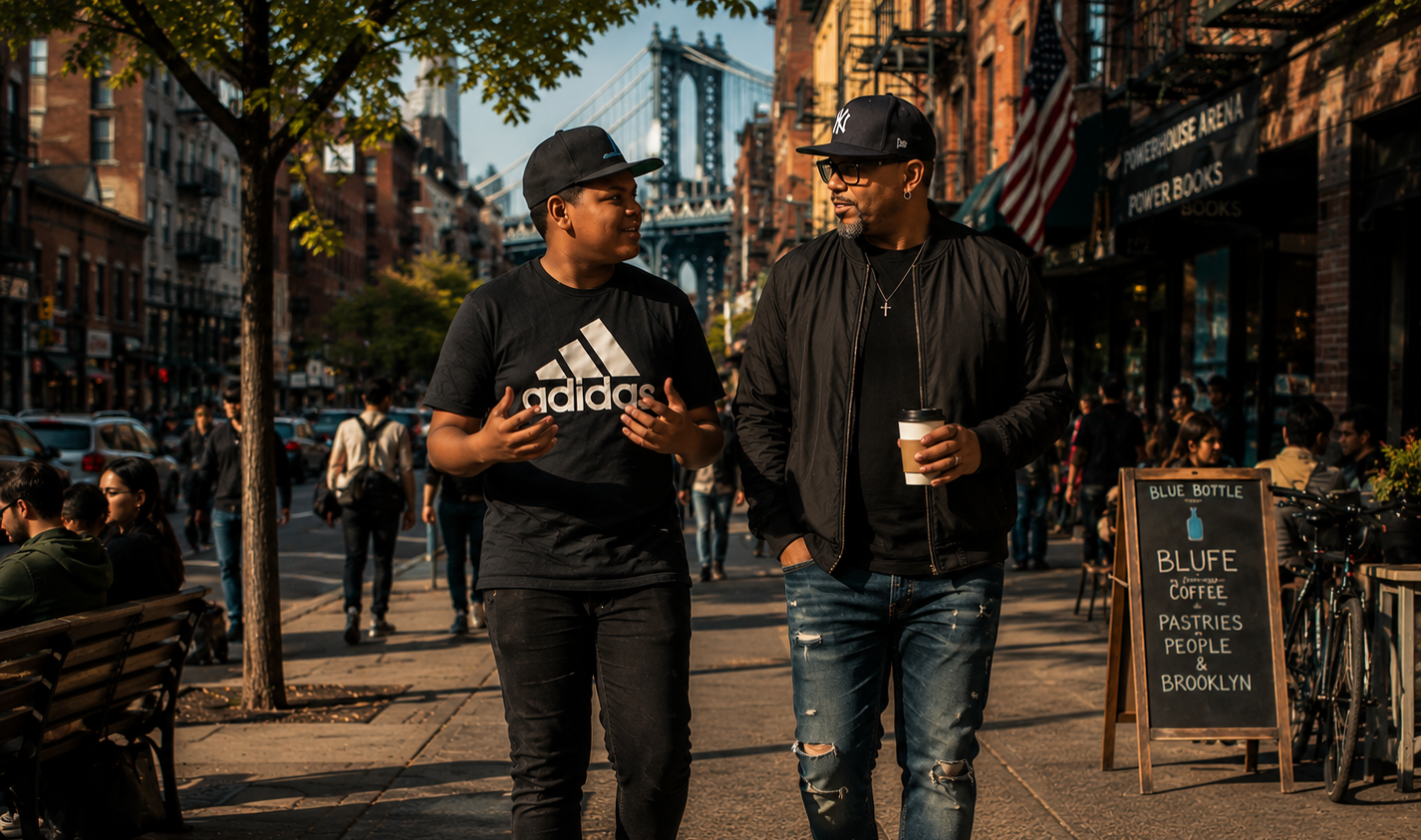
Led Bradshaw is a writer, illustrator, autism advocate, and the founder of Jetpulse Lab. As a single father raising an autistic son, he discovered the power of creativity, storytelling, and imagination to help children build confidence, strengthen communication skills, and better understand the world around them.
What began as superhero drawings at a kitchen table grew into Jetpulse, a creative ecosystem of books, worksheets, educational resources, and emotional learning activities designed to help children and families connect through storytelling and self-expression.
Today, Led shares practical autism parenting insights, personal experiences, and creative learning strategies to help parents, educators, and caregivers support children's emotional growth, confidence, and resilience.