25 Art Therapy Activities for Autistic Children That Build Confidence and Communication
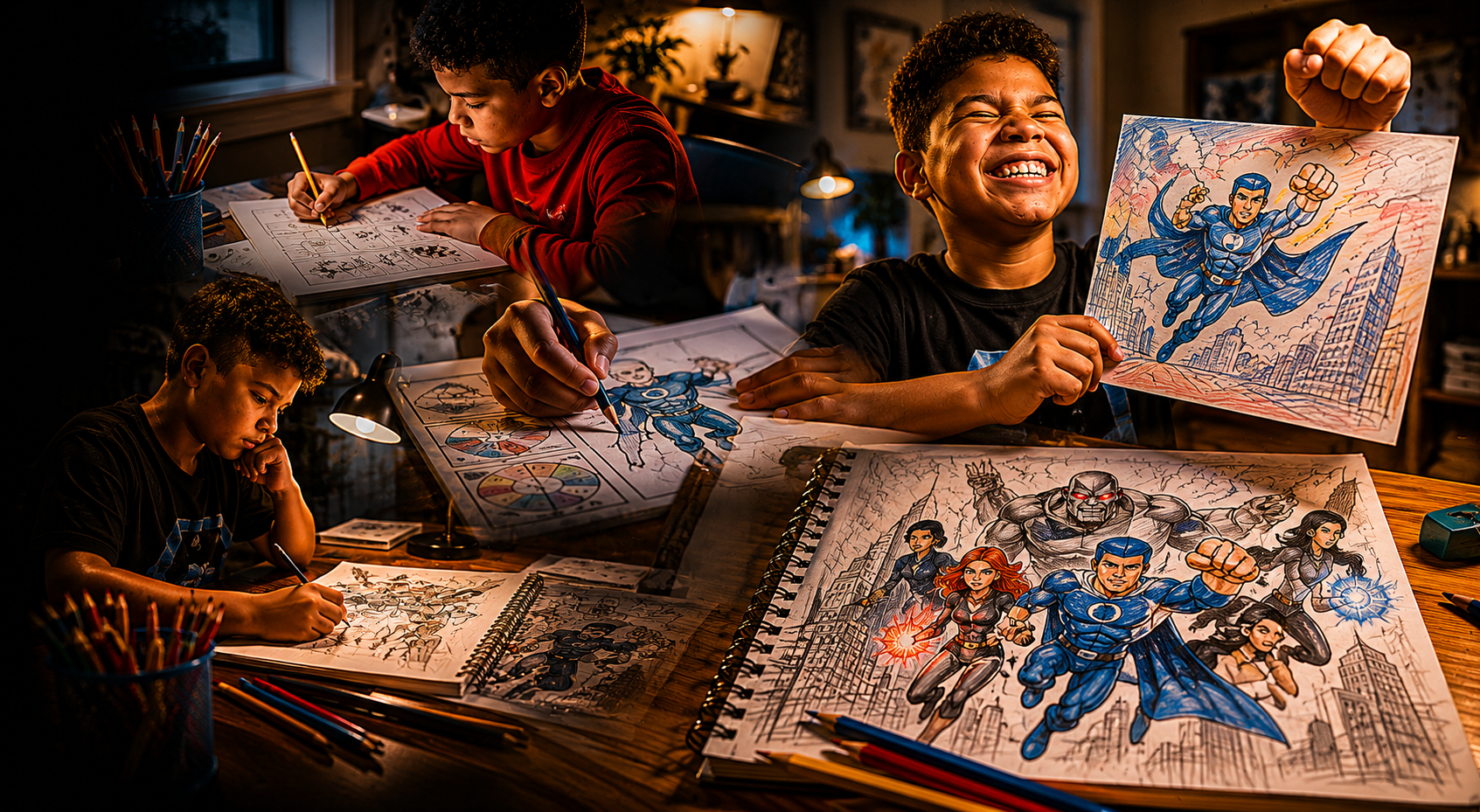
As parents, we're always looking for ways to connect with our children.
Sometimes that connection comes through conversation.
Sometimes it comes through a shared experience.
And sometimes it comes through a crayon, a piece of paper, and a child's imagination.
When my son Jake was younger, there were moments when words felt difficult. Not impossible. Just difficult. There were thoughts, feelings, and experiences happening inside his head that he couldn't always explain.
But give him a pencil and something to draw?
That was a different story.
Over the years, I learned something important.
Creativity has a way of opening doors that conversation sometimes can't.
That's one reason art therapy activities for autistic children have become so popular among parents, educators, and therapists. Creative activities can encourage communication, emotional expression, confidence building, storytelling, and social emotional learning in ways that feel natural and enjoyable.
The good news is that you don't need expensive supplies or professional training to get started.
Many of the best activities can happen right at your kitchen table.
Let's dive in.
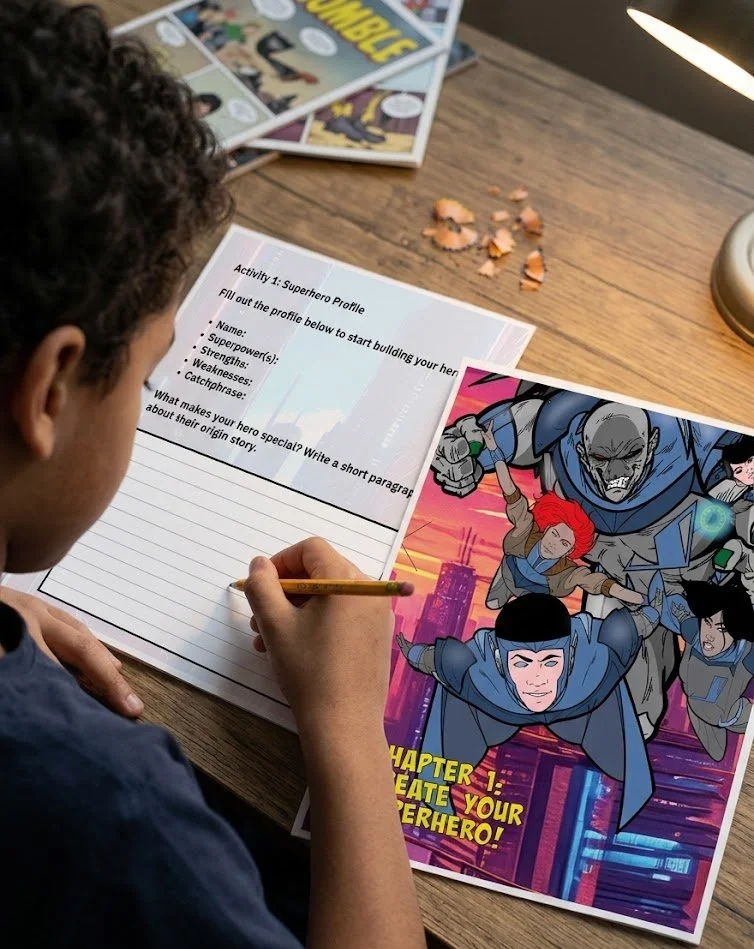
1. Create Your Own Superhero
Ask your child to create a superhero from scratch.
Give them a name.
Powers.
A costume.
A mission.
A challenge they need to overcome.
Children often reveal parts of themselves through the heroes they create.
2. Draw Your Feelings
Ask:
What does happiness look like?
What color is frustration?
What shape is worry?
This helps children begin connecting emotions with visual expression.
3. Design a Safe Place
Invite your child to draw a place where they feel calm, safe, and comfortable.
It can be real or imaginary.
The goal is helping them identify feelings of security.
4. Draw Your Perfect Day
This activity encourages communication about interests, goals, and things that bring joy.
Pay attention to recurring themes.
They often reveal what matters most to your child.
5. Create an Emotion Wheel
Draw a large circle and divide it into sections.
Each section represents a different emotion.
Your child can draw faces, colors, or symbols that represent each feeling.
6. Make a Comic Strip
Comic strips are wonderful communication tools.
Children can tell stories through pictures without feeling pressured to write long paragraphs.
Simple stick figures work perfectly.
7. Finish the Story
Start a story and let your child finish it through words or drawings.
You might begin:
"One morning a young hero woke up and discovered..."
Then let imagination take over.
8. Draw a Problem and a Solution
This activity helps develop problem-solving skills.
Ask your child to draw a challenge.
Then draw how the character solves it.
9. Create a Character Backstory
Every hero has a history.
Where did they come from?
What challenges shaped them?
What are they afraid of?
This encourages deeper thinking and emotional exploration.
10. Build a Hero Journal
Keep a notebook dedicated to character sketches, stories, and ideas.
Over time it becomes a creative record of growth and confidence.
11. Create a Strength Shield
Draw a shield divided into sections.
Each section represents a personal strength.
Kindness.
Bravery.
Creativity.
Patience.
Determination.
Children often surprise us with how much they know about themselves.

12. Design a Courage Cape
Ask your child to create symbols that represent courage.
What helps them feel brave?
Who inspires them?
What gives them strength?
13. Achievement Poster
Create a poster celebrating accomplishments.
Big accomplishments.
Small accomplishments.
Everything counts.
Success deserves to be seen.
14. Future Hero Drawing
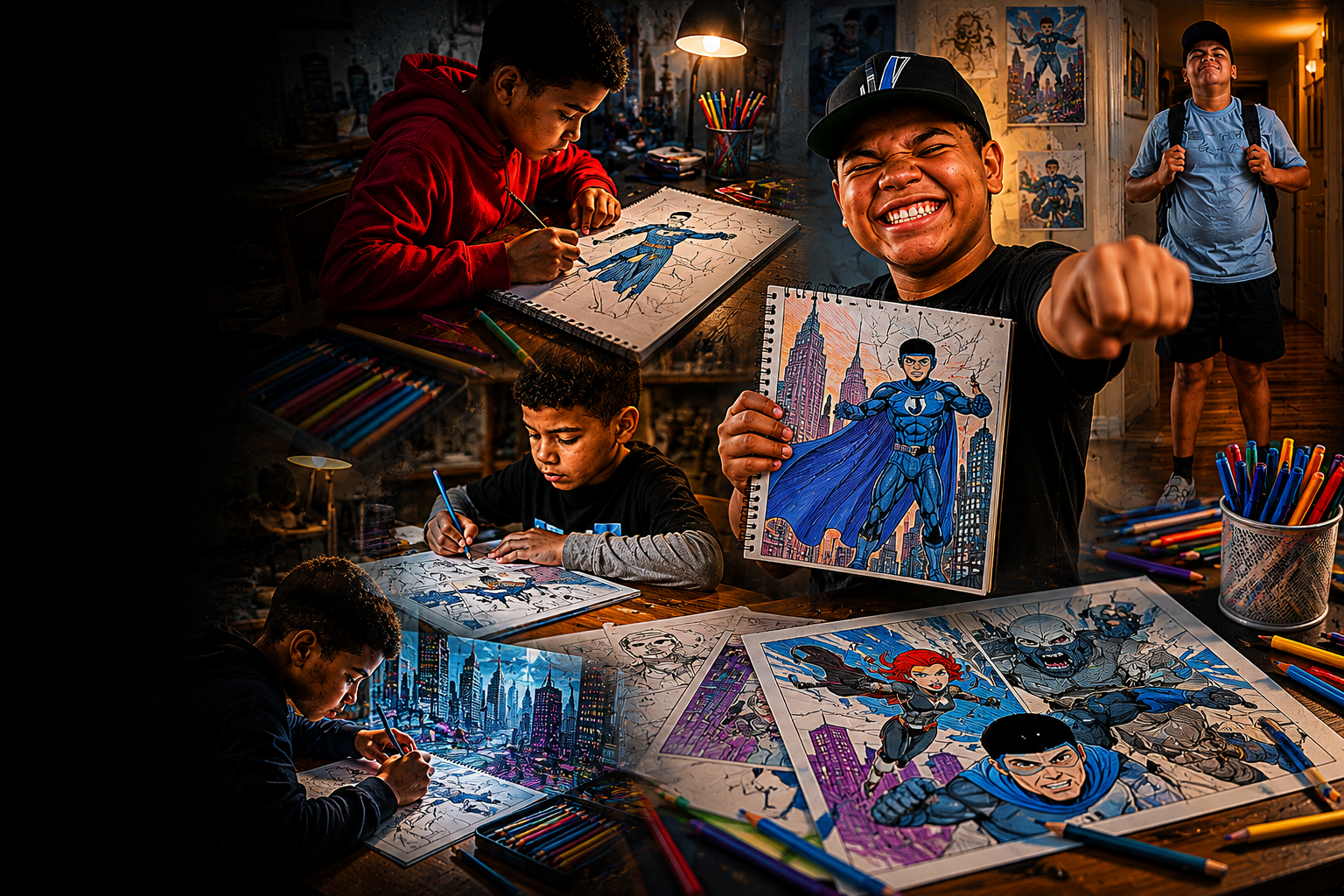
Ask your child to draw themselves as a hero five years from now.
What are they doing?
What skills have they learned?
What makes them proud?
15. Gratitude Sketchbook
Instead of writing gratitude lists, draw them.
A favorite meal.
A friend.
A pet.
A family member.
A favorite memory.
16. Finger Painting Exploration
Finger painting offers a sensory-rich experience that many children enjoy.
Focus on the process rather than the finished product.
17. Texture Collage
Collect different materials:
Fabric.
Paper.
Foam.
Leaves.
Buttons.
Create a sensory collage together.
18. Clay Character Creation
Modeling clay allows children to create three-dimensional characters and stories.
This can be especially engaging for hands-on learners.
19. Nature Art Walk
Take a walk and collect natural items.
Leaves.
Sticks.
Flowers.
Use them to create artwork at home.
20. Sand Art Creations
Sand art encourages focus, creativity, and sensory exploration.
It also introduces interesting textures and visual patterns.
21. Family Superhero Team
Create superheroes inspired by family members.
What powers would each person have?
What role would they play?
This often leads to wonderful conversations.
22. Draw a Happy Memory
Ask your child to illustrate a favorite memory.
Then talk about it together.
This helps strengthen emotional awareness and communication.
23. Create a Family Comic Book
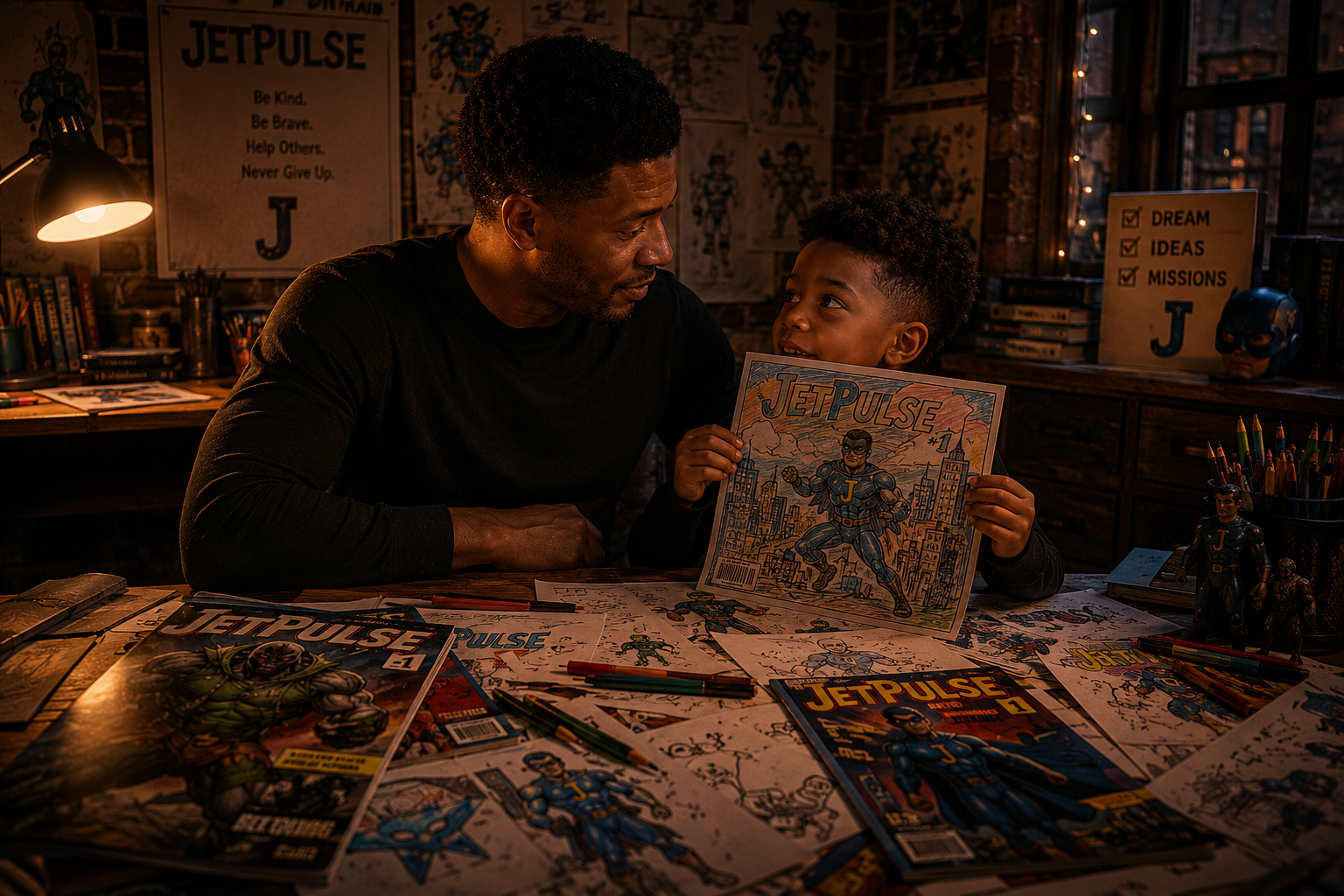
Each family member contributes a page.
Together you create a complete story.
It doesn't have to be perfect.
It only has to be yours.
24. Kindness Poster
Draw examples of kindness.
Helping others.
Sharing.
Being supportive.
Encouraging a friend.
Kindness becomes easier to recognize when children can visualize it.
25. Build a Dream World
Create an imaginary world together.
Who lives there?
What rules exist?
What adventures happen there?
This activity combines storytelling, creativity, communication, and imagination all at once.
Why These Activities Matter
At first glance, these activities may look like simple art projects.
And that's okay.
Children don't need to know they're building communication skills.
They don't need to know they're practicing emotional awareness.
They don't need to know they're developing confidence.
They just need to enjoy creating.
The magic often happens quietly.
A drawing starts a conversation.
A superhero reveals a fear.
A story uncovers a dream.
A comic strip helps explain something that felt impossible to put into words.
That's the power of creativity.
Art Therapy Is Really About Connection
One of the biggest misconceptions about art therapy is that it's about creating beautiful artwork.
It isn't.
The artwork is just the vehicle.
The real goal is connection.
Connection to emotions.
Connection to communication.
Connection to confidence.
Connection between parent and child.
Some of my favorite memories with Jake didn't happen during a major milestone.
They happened sitting side-by-side at a table, drawing characters, telling stories, and imagining worlds together.
Those moments mattered.
Not because we were creating masterpieces.
Because we were creating connection.
Final Thoughts
If you're looking for creative activities for autistic children, start small.
Grab some paper.
Pick up a pencil.
Ask a question.
Create a character.
Tell a story.
You don't need to be an artist.
You don't need special training.
You simply need to create opportunities for expression.
Because sometimes children don't need another lecture.
Sometimes they need another language.
And creativity can become that language.
Through drawing, storytelling, imagination, and art, children can discover new ways to communicate, build confidence, and share who they are with the world.
That's a lesson my son taught me years ago.
And it's one I'll never forget.
About the Author

Led Bradshaw is a writer, illustrator, autism advocate, and the founder of Jetpulse Studios. As a single father raising an autistic son, Led discovered firsthand how creativity, storytelling, drawing, and imagination could become powerful tools for building confidence, strengthening communication skills, and encouraging emotional growth.
What began as superhero sketches and stories shared with his son Jake evolved into the Hero Builder Method, a creativity-based approach that helps children explore emotions, develop self-expression, and build meaningful connections through art and storytelling.
Today, Led shares practical autism parenting insights, art therapy activities, emotional learning strategies, and creative resources designed to help parents, educators, and caregivers support children in ways that feel engaging, empowering, and authentic.
Through Jetpulse Studios, his mission is simple: help children discover that their creativity, imagination, and voice matter.