The Connection Between Superheroes, Imagination, and Emotional Growth in Autistic Children

When most people think about superheroes, they think about comic books, movies, costumes, and action figures.
They see entertainment.
Children often see something much deeper.
A superhero represents possibility.
A superhero is someone who faces challenges, overcomes obstacles, learns from mistakes, and continues moving forward despite fear, uncertainty, or setbacks.
For many autistic children, superheroes can become powerful tools for emotional growth, confidence building, creativity, and self-expression.
What may look like simple imaginative play on the surface is often something much more meaningful happening underneath.
Through stories, characters, and imaginary worlds, autistic children can safely explore emotions, relationships, problem-solving, and personal identity in ways that feel natural and engaging.
As a parent of an autistic child, I've witnessed firsthand how imagination and storytelling can open doors that traditional conversations sometimes cannot.
Why Imagination Matters
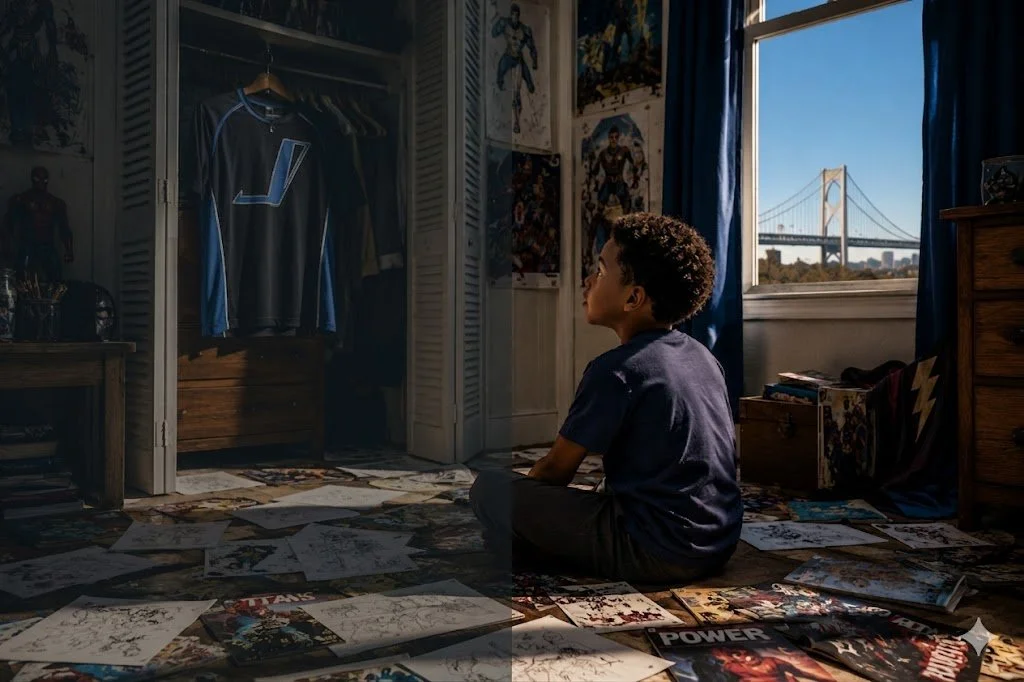
For years, imagination was often overlooked when discussing autism.
Many people assumed autistic children weren't interested in imaginative play because their play styles sometimes looked different from those of neurotypical children.
Today, we know the reality is far more complex.
Many autistic children possess incredible imaginations.
Their creativity may simply appear in unique ways.
Some children create detailed fictional worlds.
Others develop extensive stories around favorite characters.
Some design elaborate maps, vehicles, creatures, or civilizations.
Others create recurring characters with their own histories, strengths, fears, and personalities.
These imaginative experiences aren't distractions from development.
They can become important tools for growth.
Superheroes Provide Emotional Models
Children are constantly learning how to navigate life.
They're trying to understand:
Fear
Friendship
Courage
Failure
Kindness
Responsibility
Confidence
Superhero stories often place these emotional lessons front and center.
Think about the challenges heroes face.
They make mistakes.
They experience loss.
They feel scared.
They encounter rejection.
They struggle with self-doubt.
Yet they continue moving forward.
For autistic children, these stories can provide emotional roadmaps.
A child who admires a superhero may begin asking:
What would my hero do?
How would they solve this problem?
How would they handle disappointment?
How would they treat a friend?
Stories create opportunities to discuss emotions without placing direct pressure on the child.
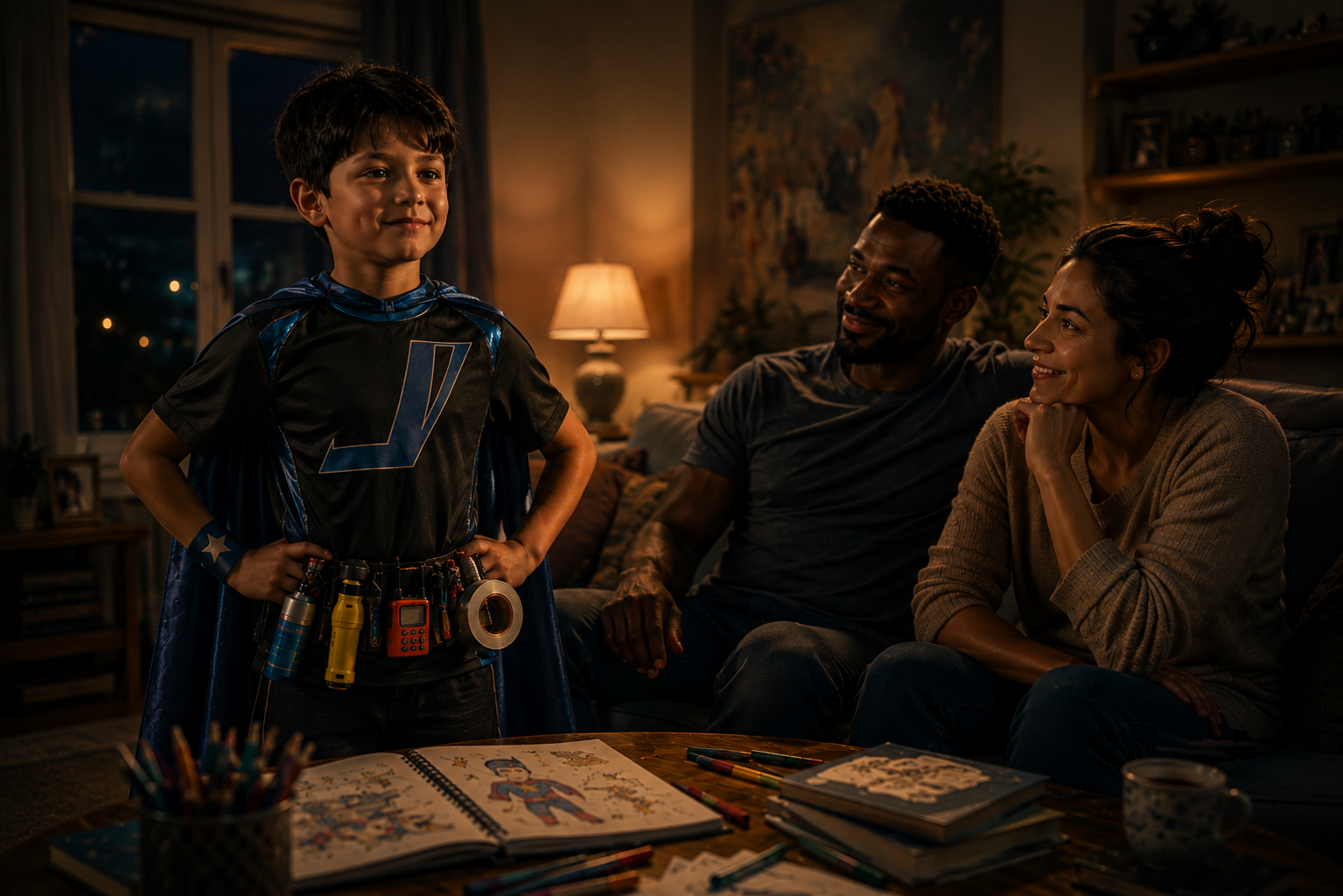
Characters Become Safe Emotional Mirrors
Sometimes discussing personal feelings can feel uncomfortable.
However, discussing the emotions of a fictional character often feels much easier.
This is where imagination becomes incredibly powerful.
A child may create a superhero who feels lonely.
A character who struggles to fit in.
A hero who feels misunderstood.
A young inventor who makes mistakes but keeps trying.
While talking about the character, the child may actually be exploring their own experiences.
The character becomes a safe mirror.
The conversation feels less threatening because it exists within the story.
Yet meaningful emotional learning is still taking place.
Storytelling Encourages Problem Solving
Every great story contains a problem.
Heroes encounter obstacles.
Villains create conflict.
Challenges must be overcome.
When autistic children create stories, they are often practicing problem-solving skills without even realizing it.
They begin asking questions such as:
How can my hero solve this?
What happens next?
How do the characters work together?
What would make things better?
These exercises strengthen flexible thinking, creativity, and resilience.
Children learn that problems have solutions.
Challenges can be overcome.
Setbacks do not have to be permanent.
Those lessons carry over into everyday life.
Building Confidence Through Hero Creation
One of the most powerful activities parents can encourage is creating original superheroes.
When children design their own heroes, something remarkable happens.
They begin making choices about:
Strengths
Weaknesses
Values
Goals
Challenges
Personal growth
In many cases, children unconsciously create heroes who reflect qualities they admire or wish to develop within themselves.
A shy child may create a courageous hero.
An anxious child may create a fearless explorer.
A child who feels different may create a character whose uniqueness becomes their greatest strength.
These creations can become powerful confidence-building tools.

Imagination Creates a Space for Emotional Practice
Life can feel overwhelming.
School can be challenging.
Friendships can be confusing.
Unexpected changes can create anxiety.
Imaginative play gives children a safe environment to rehearse real-life situations.
Inside a fictional world, children can explore:
Conflict resolution
Teamwork
Communication
Leadership
Empathy
Emotional regulation
They can experiment with solutions.
They can make mistakes.
They can try again.
All within a setting that feels safe and enjoyable.
Creativity Strengthens Parent-Child Connections
One of the greatest benefits of imaginative activities is the connection they create between parents and children.
You don't need artistic talent.
You don't need professional storytelling skills.
You simply need curiosity.
Ask questions.
Learn about the characters.
Explore the worlds your child creates.
Allow them to teach you about their imagination.
These conversations often reveal far more than parents expect.
They provide insight into what excites a child, what worries them, what inspires them, and what matters most to them.
Some of the strongest parent-child bonds are built through shared creativity.
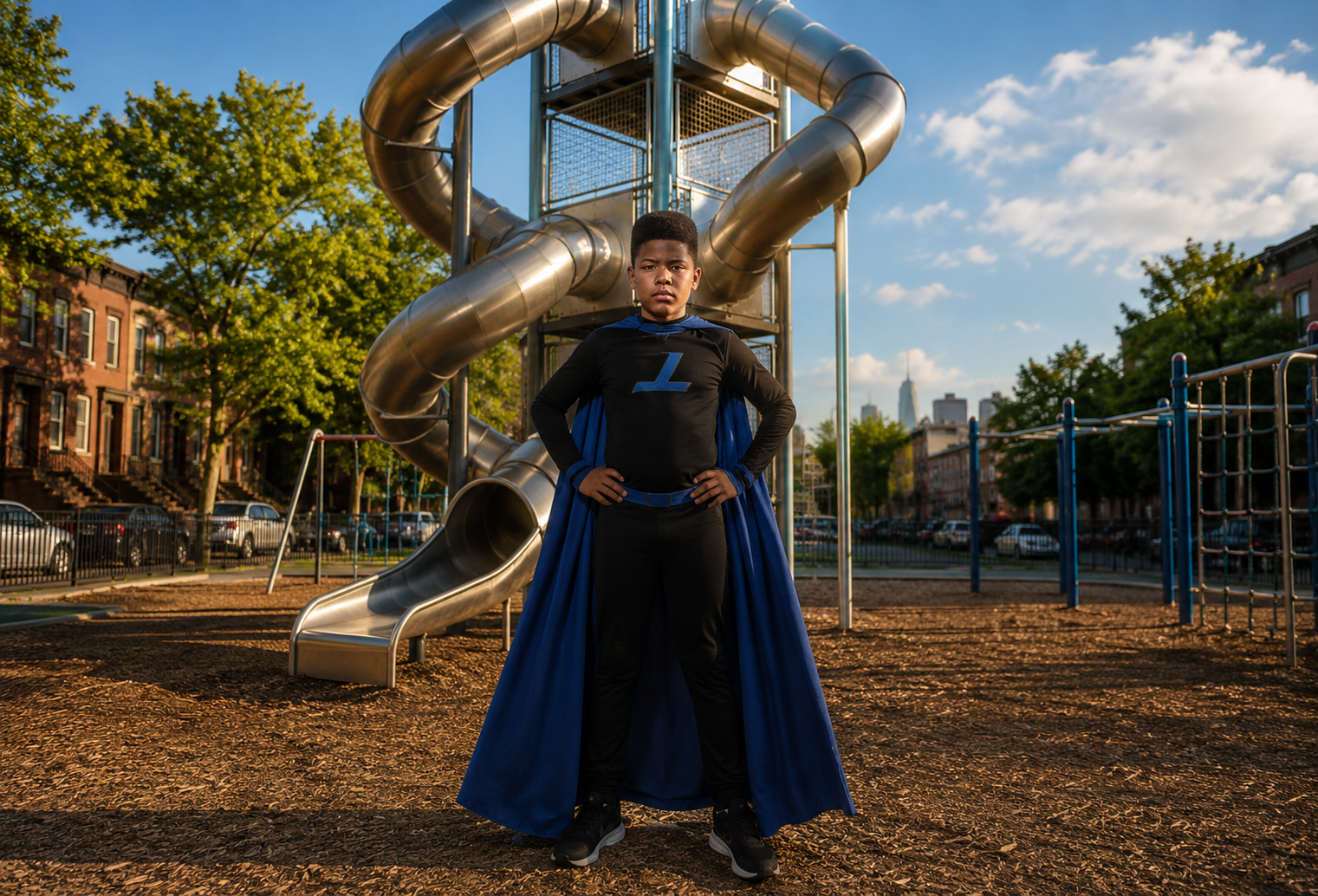
The Real Superpower
At the heart of every superhero story is a simple message.
Growth is possible.
Challenges can be overcome.
Mistakes do not define us.
We are capable of becoming stronger than we were yesterday.
That message matters for every child.
For autistic children, it can be especially meaningful.
Superheroes give children a framework for exploring courage, resilience, kindness, and self-confidence.
Imagination provides the space where those lessons can grow.
The costumes, powers, gadgets, and adventures are fun.
But they aren't the real superpower.
The real superpower is what happens inside a child when they begin to believe that their differences have value, their voice matters, and their story is worth telling.
That belief can change everything.
About the Author

Led Bradshaw is the founder of Jetpulse Studios and father to an autistic son whose love of superheroes and storytelling inspired a creative movement built around imagination, emotional growth, and confidence building. Through Jetpulse, Led helps families use art, creativity, and visual storytelling to support emotional development and self-expression in autistic children.