A father's journey discovering how a love of superheroes became a path to communication, creativity, confidence, and connection.
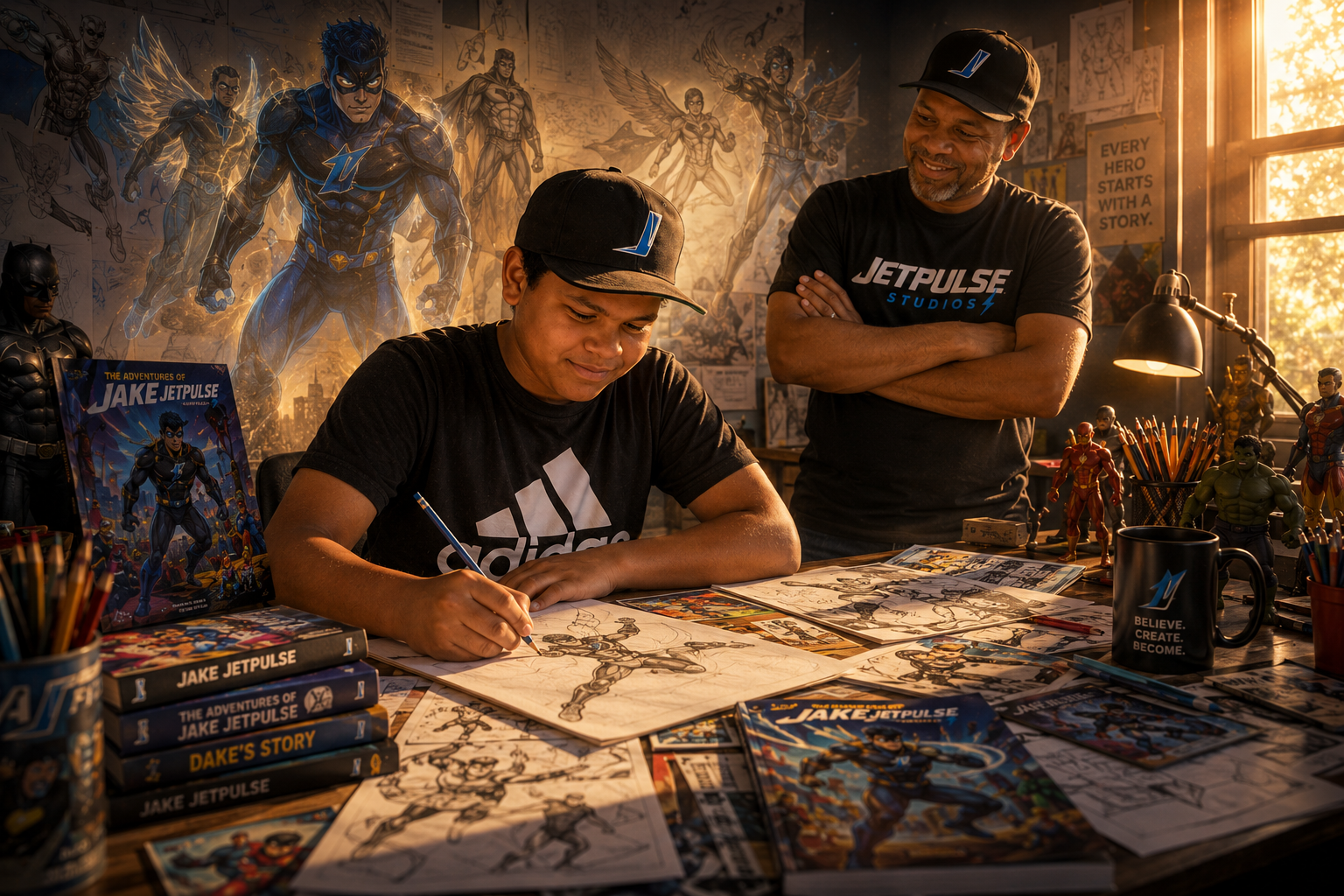
When my son Jake was diagnosed with autism at three and a half years old, I spent a lot of time focusing on what professionals told me he needed to learn.
Communication.
Social skills.
Emotional regulation.
Independence.
Like most parents, I wanted to help him succeed. I wanted to give him every opportunity possible.
But somewhere along the way, I learned one of the most important lessons of our autism journey:
Progress often begins with passion.
For Jake, that passion was superheroes.
At first, I viewed superheroes the way many parents view a child's favorite interest. They were entertaining. They were fun. They made him happy.
What I didn't realize was that superheroes would eventually become the foundation for communication, creativity, confidence, and connection.
Looking back now, I believe one of the biggest breakthroughs in our journey happened when I stopped trying to pull Jake away from his interests and started using those interests as a bridge.
That bridge changed everything.

What Are Special Interests in Autism?
Many autistic individuals develop deep interests in specific topics, activities, or subjects.
These interests are often referred to as "special interests."
Unlike casual hobbies, special interests can become incredibly meaningful.
A child may spend hours learning about a favorite topic.
They may remember details that others overlook.
They may revisit the same subject repeatedly because it provides comfort, joy, excitement, or understanding.
Common special interests can include:
Superheroes
Trains
Dinosaurs
Animals
Maps
Video games
Art
Science
History
Space
Every child is different.
The specific interest matters far less than what the interest provides.
For many autistic children, special interests create a sense of predictability, mastery, and engagement.
The Mistake Many Adults Make
When Jake was younger, I often heard advice that sounded something like this:
"Try to broaden his interests."
"Redirect him."
"Get him interested in other things."
While those suggestions were usually well-intentioned, I eventually realized something important.
Why would I ignore the very thing that motivated him?
Why would I walk away from the strongest source of engagement in his life?
Imagine trying to teach someone who loves basketball by never talking about basketball.
Or trying to teach a musician without using music.
It doesn't make sense.
Yet many parents are encouraged to move away from the very interests that naturally inspire their children.
I decided to do the opposite.
I leaned in.
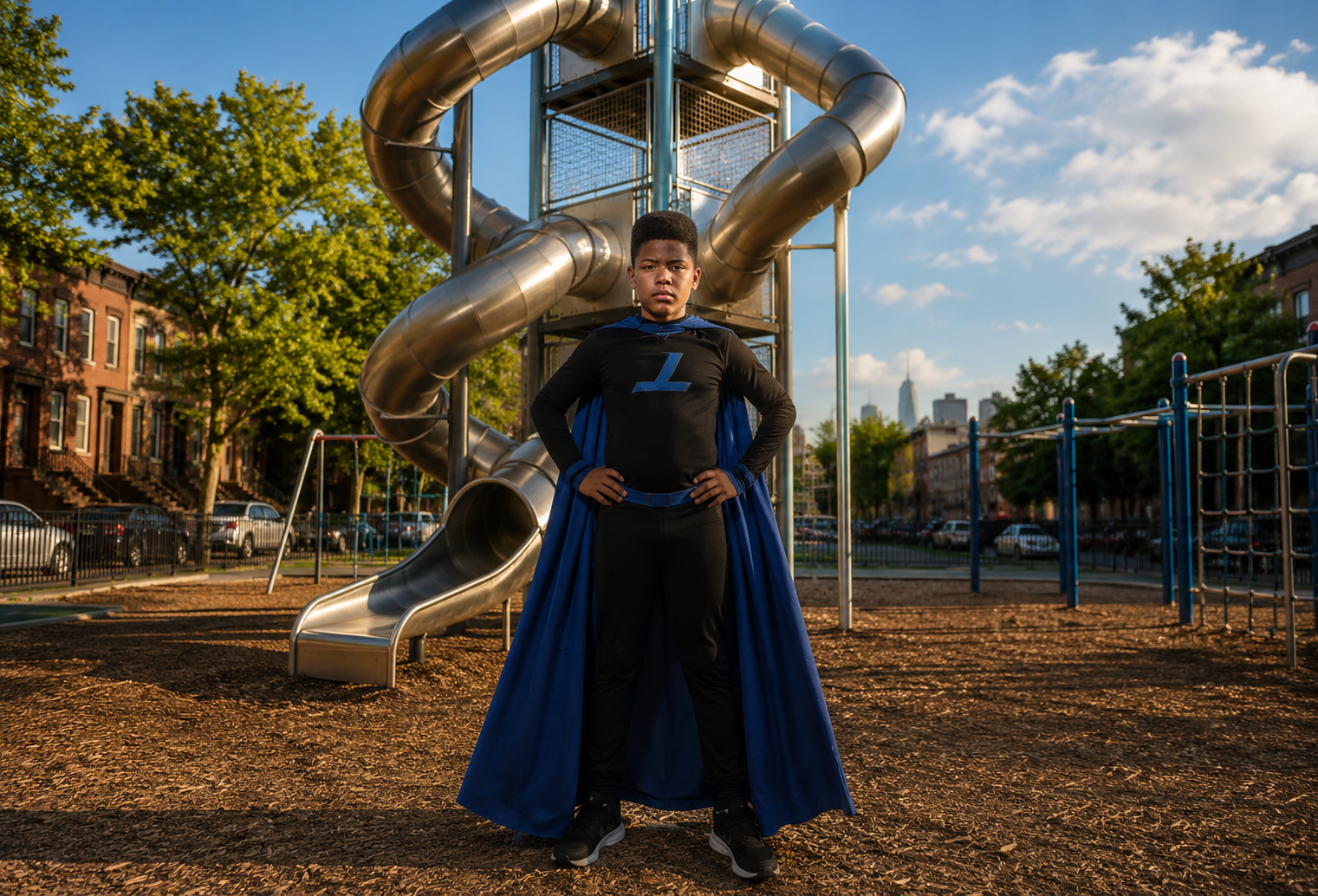
Superheroes Became Our Shared Language
Jake loved superheroes.
Not casually.
Passionately.
He knew the characters.
The powers.
The stories.
The villains.
The battles.
The worlds they inhabited.
At first, I simply enjoyed watching his excitement.
Then I began using superheroes as a way to connect.
Instead of forcing conversations about topics he didn't care about, I entered his world.
We talked about heroes.
We discussed challenges.
We explored stories.
And something remarkable happened.
The conversations became easier.
Communication became more natural.
Connection began to grow.
The superheroes weren't the goal.
They were the bridge.
Why Special Interests Can Be Powerful Learning Tools
One of the greatest strengths of special interests is motivation.
Children learn best when they're engaged.
When a child is interested in something, attention increases.
Participation increases.
Retention increases.
Curiosity increases.
For Jake, superheroes became a vehicle for learning.
Through superheroes, we practiced:
Reading
Writing
Drawing
Storytelling
Problem solving
Emotional awareness
Communication
The subject never changed.
The learning opportunities did.

Special Interests Build Confidence
Confidence grows when children experience success.
One challenge many autistic children face is that much of their day involves correction.
They're told what needs improvement.
What needs work.
What they should do differently.
Special interests create opportunities for success.
When children engage with something they genuinely love, they often demonstrate incredible knowledge, skill, creativity, and dedication.
I watched Jake become an expert in subjects that fascinated him.
I watched him create stories.
Develop characters.
Solve creative challenges.
Every success reinforced a simple message:
"I can do this."
That message matters.
Confidence is built one successful experience at a time.
How Special Interests Support Communication
Many autistic children communicate more effectively when discussing topics they care about.
I've seen this firsthand with Jake.
A child who struggles to engage in one conversation may become incredibly expressive when discussing a favorite interest.
That's because interest fuels communication.
When children are excited, they naturally want to share.
They want to explain.
They want to teach.
They want to connect.
As parents, those moments are opportunities.
Instead of redirecting the conversation, we can use it as a pathway toward deeper communication.
Superheroes Led to Storytelling
One day, something shifted.
Jake stopped simply enjoying superhero stories.
He began creating his own.
He designed heroes.
Invented powers.
Created villains.
Developed adventures.
Built entire worlds.
This wasn't just play.
This was storytelling.
And storytelling opened new doors.
Storytelling encouraged communication.
Storytelling encouraged imagination.
Storytelling encouraged emotional exploration.
What started as a special interest became a creative outlet.
That creative outlet eventually became one of the most powerful teaching tools in our home.
Storytelling Led to Art
The stories needed characters.
The characters needed designs.
The designs needed drawings.
Soon, drawing became part of the process.
Jake wasn't practicing art because someone assigned it.
He was drawing because he wanted to bring his ideas to life.
That's a powerful difference.
Motivation changes everything.
The art wasn't separate from the interest.
The art existed because of the interest.
And because the motivation was genuine, the growth was genuine too.
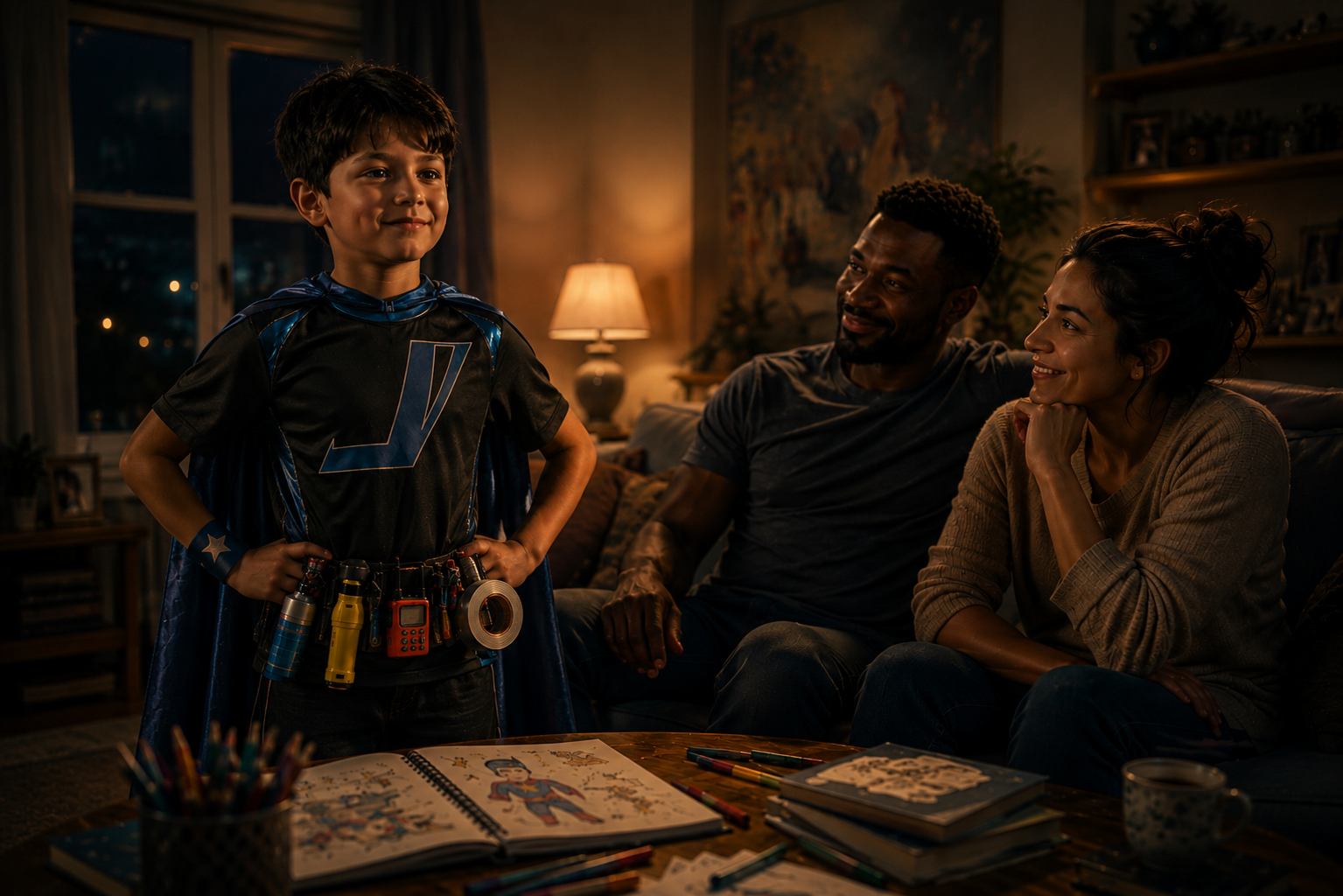
Art Led to Confidence
Every completed drawing created a sense of accomplishment.
Every new character represented a creative success.
Every finished story reinforced belief.
Over time, I began seeing confidence emerge.
Not because someone told Jake he should feel confident.
Because he earned confidence.
He created something.
He improved.
He succeeded.
Confidence grows from experience.
Creativity provided those experiences.
What Special Interests Taught Me as a Father
Perhaps the greatest lesson special interests taught me is this:
Children grow fastest when we build from strengths.
As parents, it's natural to focus on challenges.
We want to help our children overcome obstacles.
But growth doesn't always happen by attacking weaknesses.
Sometimes growth happens by expanding strengths.
Jake's love of superheroes wasn't a distraction from learning.
It became the foundation for learning.
It wasn't preventing growth.
It was driving growth.
The moment I understood that, everything changed.
How Parents Can Support Special Interests
If your child has a strong interest, consider the possibilities.
Ask yourself:
How can this interest support learning?
How can it encourage communication?
How can it build confidence?
How can it create connection?
If your child loves animals:
Read books about animals.
Draw animals.
Write animal stories.
If your child loves trains:
Practice reading train schedules.
Draw train routes.
Create train adventures.
If your child loves superheroes:
Design heroes.
Write stories.
Create comics.
The goal isn't to limit children to one interest.
The goal is to use that interest as a launchpad.
A Message to Parents
If you're raising an autistic child, I want you to know something.
The things your child loves matter.
Those interests are not obstacles.
They're opportunities.
They provide insight into how your child thinks.
What excites them.
What motivates them.
What captures their imagination.
Instead of asking how to move away from those interests, consider how you can build upon them.
You may discover that the very thing you thought was a distraction becomes one of the most powerful teaching tools available.
Final Thoughts
Looking back, I don't think Jetpulse would exist without special interests.
Jake's love of superheroes led to stories.
Stories led to art.
Art led to communication.
Communication led to confidence.
Confidence led to growth.
And growth led us here.
What started as a fascination with superheroes became something much bigger.
It became a bridge between a father and his son.
It became a way to communicate.
A way to connect.
A way to learn.
And a way to discover strengths that were there all along.
That's the power of special interests.
They're not just passions.
They're possibilities.

Led Bradshaw is a father, author, illustrator, and the founder of Jetpulse Studios, an educational media company dedicated to helping children build confidence through creativity, storytelling, and visual learning. Inspired by his son Jake's autism diagnosis, Led developed a unique approach that combines art, superhero storytelling, and character creation to support communication, emotional growth, and self-expression.
Over the past several years, Led has created comics, workbooks, and educational resources used by families, educators, and neurodivergent learners. His family's journey has been featured by Good Morning America, The Today Show, News 12, Good Day New York, and other national media outlets. He is also the recipient of an Emmy Award for his work helping share Jake's story and advocating for autism awareness.
Through The Jetpulse, Led shares practical parenting insights, creative activities, and real-world strategies drawn from his experiences raising a son with autism. His mission is simple: help families discover their strengths, build confidence, and create meaningful connections through creativity.