Why Routine Alone Wasn’t Enough for My Autistic Son

For years, I believed routine was the answer.
Like many parents raising an autistic child, I built schedules for everything:
wake-up times,
meals,
schoolwork,
transitions,
quiet time,
bedtime.
And to be fair, routines helped.
They reduced stress.
They created predictability.
They gave structure to difficult days.
But eventually, I realized something important:
Routine was helping my son function.
It wasn’t helping him believe in himself.
And those are two very different things.
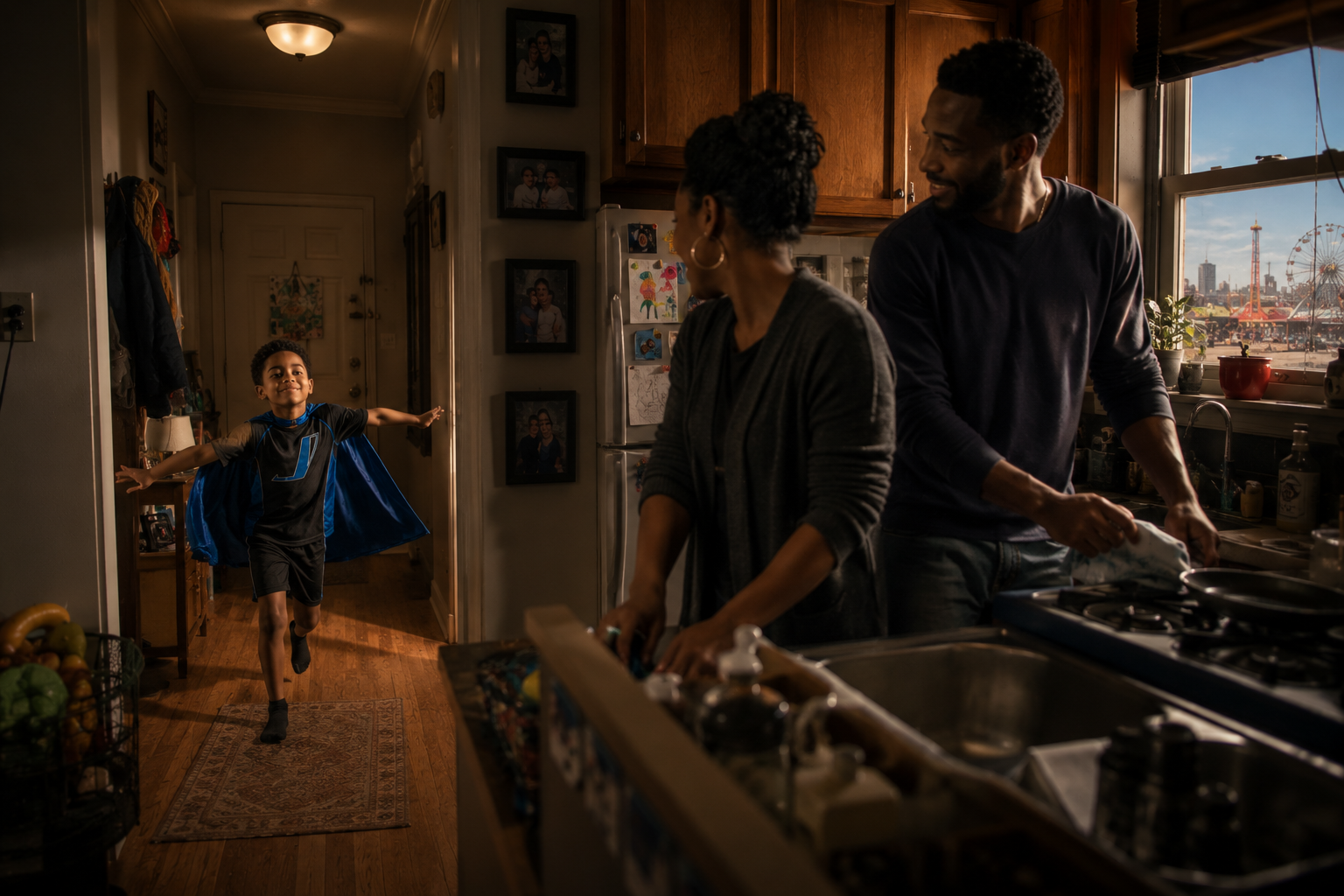
Structure Helps, But It Isn’t the Whole Picture
Children on the autism spectrum often benefit from structure and consistency. Predictability can reduce anxiety and help create emotional safety.
But there’s a hidden danger when life becomes ONLY about management.
Sometimes parents become so focused on:
preventing meltdowns,
managing transitions,
reducing sensory overload,
and keeping everything “under control”…
that emotional growth quietly gets pushed aside.
I started noticing something painful:
my son knew how to follow routines,
but he still struggled with confidence.
He still doubted himself.
Still withdrew socially.
Still felt different.
Still struggled to express emotions.
That’s when I realized:
a perfectly structured day does not automatically build self-esteem.
The Difference Between Regulation and Identity

Routine helps with regulation.
But children also need identity.
They need to feel:
capable,
creative,
important,
expressive,
and emotionally connected to who they are becoming.
And honestly?
That was the missing piece for us.
I wasn’t just trying to help my son “get through the day” anymore.
I wanted him to feel proud of himself.
Not tolerated.
Not managed.
Not constantly corrected.
Proud.
That changed how I approached everything.
What Finally Started Working
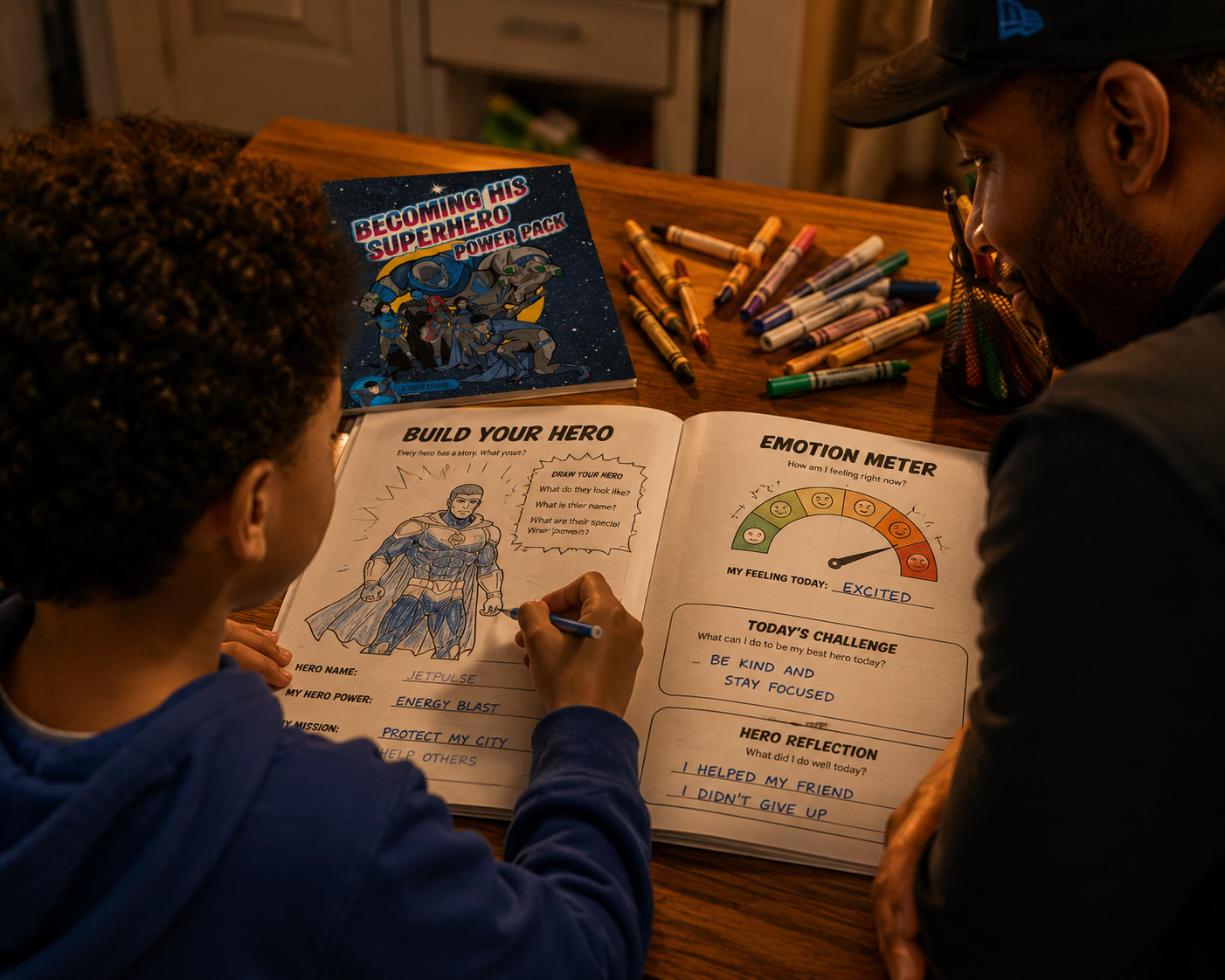
The breakthrough came through creativity.
Not therapy charts.
Not reward systems.
Not another checklist.
We started creating superheroes together.
Characters inspired by:
his emotions,
his fears,
his strengths,
his imagination,
and his personal experiences.
And suddenly, conversations became easier.
Instead of:
“Why are you upset?”
it became:
“What would your hero do in this situation?”
Instead of:
“Why do you feel anxious?”
it became:
“What challenges does your hero struggle with?”
That emotional distance mattered.
It allowed him to explore feelings without feeling exposed.
And for the first time, emotional learning felt empowering instead of stressful.
Confidence Is Built Through Ownership
One of the biggest changes happened when my son realized:
this world belonged to him.
He wasn’t following someone else’s script anymore.
He was:
creating stories,
designing heroes,
solving problems,
building worlds,
and imagining himself as capable.
That ownership transformed his engagement.
Children build confidence when they feel agency.
And many autistic children spend years feeling like they have very little control over how the world responds to them.
The Hero Builder Method changed that dynamic.
Instead of focusing entirely on behavior management, we started focusing on:
imagination,
emotional storytelling,
resilience,
communication,
and confidence-building.
That shift changed everything inside our home.
Why Emotional Learning Matters
Routine creates stability.
But emotional learning creates growth.
Children need both.
They need:
structure AND imagination,
predictability AND self-expression,
guidance AND ownership,
support AND confidence.
That’s why creative emotional learning became such a major part of our journey.
Because eventually I understood something important:
My son did not simply need systems designed to control behavior.
He needed opportunities to discover his strengths.
The Birth of the Hero Builder Method

What began at our kitchen table eventually became the foundation for the Hero Builder Method.
A creative emotional learning system designed to help neurodivergent children:
build confidence,
explore emotions,
strengthen communication,
develop resilience,
and feel empowered through storytelling and imagination.
Not from theory.
From lived experience.
From trial and error.
From hard days.
From breakthroughs.
From connection.
And most importantly:
from the belief that autistic children deserve more than survival.
They deserve to feel heroic in their own story.
Explore the Hero Builder Method
Discover creative emotional learning activities designed to help neurodivergent children build confidence, emotional awareness, communication skills, and self-esteem through superhero storytelling and imagination.
Why are routines important for autistic children?
Routines help many autistic children feel safe, reduce anxiety, and create predictability throughout the day. Consistent structure can support emotional regulation and smoother transitions.
Can routines alone build confidence in autistic children?
Not always. While routines help with stability and regulation, confidence often grows through creativity, emotional connection, communication, self-expression, and opportunities for personal success.
What is the Hero Builder Method?
The Hero Builder Method is a creative emotional learning system that uses superhero storytelling, drawing, writing, and guided activities to help neurodivergent children explore emotions, build confidence, and strengthen self-expression.
Why does creative storytelling help autistic children?
Creative storytelling provides a safe emotional bridge. Many children find it easier to express emotions, fears, and strengths through characters and imagination rather than direct conversation.
What are good confidence-building activities for autistic children?
Creative drawing, imaginative storytelling, emotional learning games, superhero identity building, journaling, and collaborative art activities can all help children strengthen confidence and communication skills.