What Parents Really Need to Know After an Autism Diagnosis
A Real Family Perspective

One of the strangest parts of an autism diagnosis is how quickly the world can begin talking about your child differently.
Suddenly:
people use labels,
statistics,
charts,
milestones,
behavioral language,
and clinical terminology.
And while some of that information can absolutely help…
it can also accidentally make parents forget something important:
Your child is still your child.
Still creative.
Still funny.
Still imaginative.
Still emotional.
Still capable of growth.
Still deserving of confidence, connection, and joy.
A diagnosis may explain certain challenges.
But it does not define your child’s humanity.
That distinction matters more than most people realize.
The Pressure to “Fix” Everything

One of the hardest parts after diagnosis is the overwhelming pressure.
Appointments.
Evaluations.
Therapies.
Schedules.
Programs.
Advice from everyone.
Fear-based information online.
Parents quickly become trapped in survival mode.
And honestly?
Many families become so focused on “fixing” behaviors that emotional connection quietly starts disappearing.
I understand why it happens.
You want to help your child.
You want to protect them.
You want to prepare them for a difficult world.
But eventually I realized something important:
My son did not need to spend every moment feeling analyzed.
He also needed:
imagination,
confidence,
creativity,
emotional safety,
and opportunities to simply feel proud of himself.
That changed our entire approach.
What Actually Helped Us
What helped us most was not trying to force my son to become someone else.
It was helping him build confidence in who he already was.
That’s where creativity became life-changing.
We started:
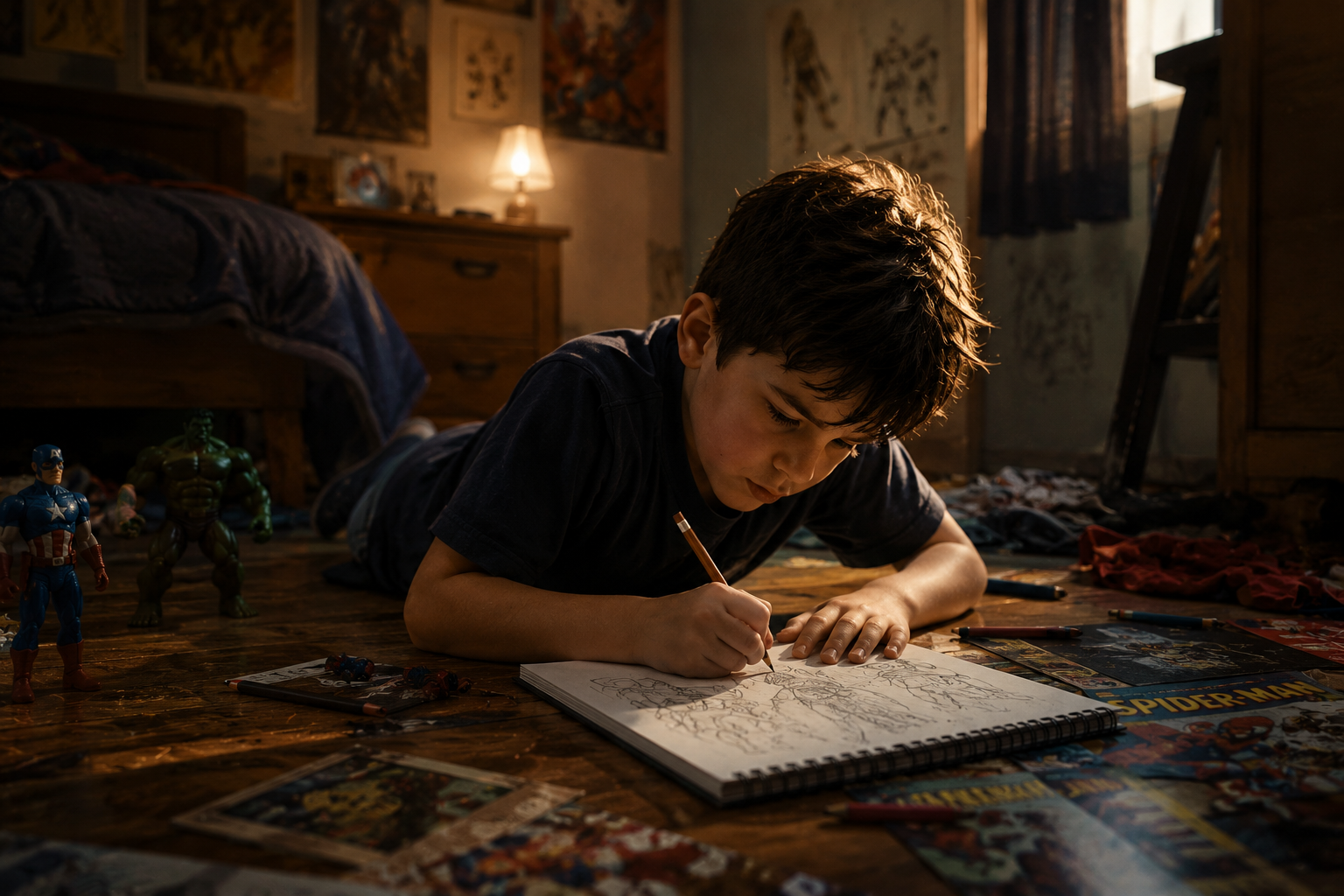
drawing together,
creating superheroes,
building stories,
imagining worlds,
and turning emotions into characters and missions.
And slowly, communication started opening naturally.
The superhero became:
a bridge,
a translator,
a safe emotional identity,
and eventually a confidence-building tool.
Instead of constantly focusing on deficits, we started focusing on:
strengths,
imagination,
resilience,
creativity,
and emotional growth.
And for the first time in a long time, I saw my son beginning to believe in himself.
Emotional Learning Matters More Than Perfection
Many autistic and neurodivergent children spend years feeling:
corrected,
redirected,
misunderstood,
overstimulated,
or emotionally exhausted.
That’s why emotional learning matters so much.
Children do not grow through shame.
They grow through:
trust,
connection,
encouragement,
emotional safety,
creativity,
and identity-building.
The goal should never be creating a “perfectly behaved child.”
The goal is helping children feel:
understood,
capable,
emotionally safe,
and confident enough to participate in the world as themselves.
That is a very different philosophy.
The Birth of the Hero Builder Method
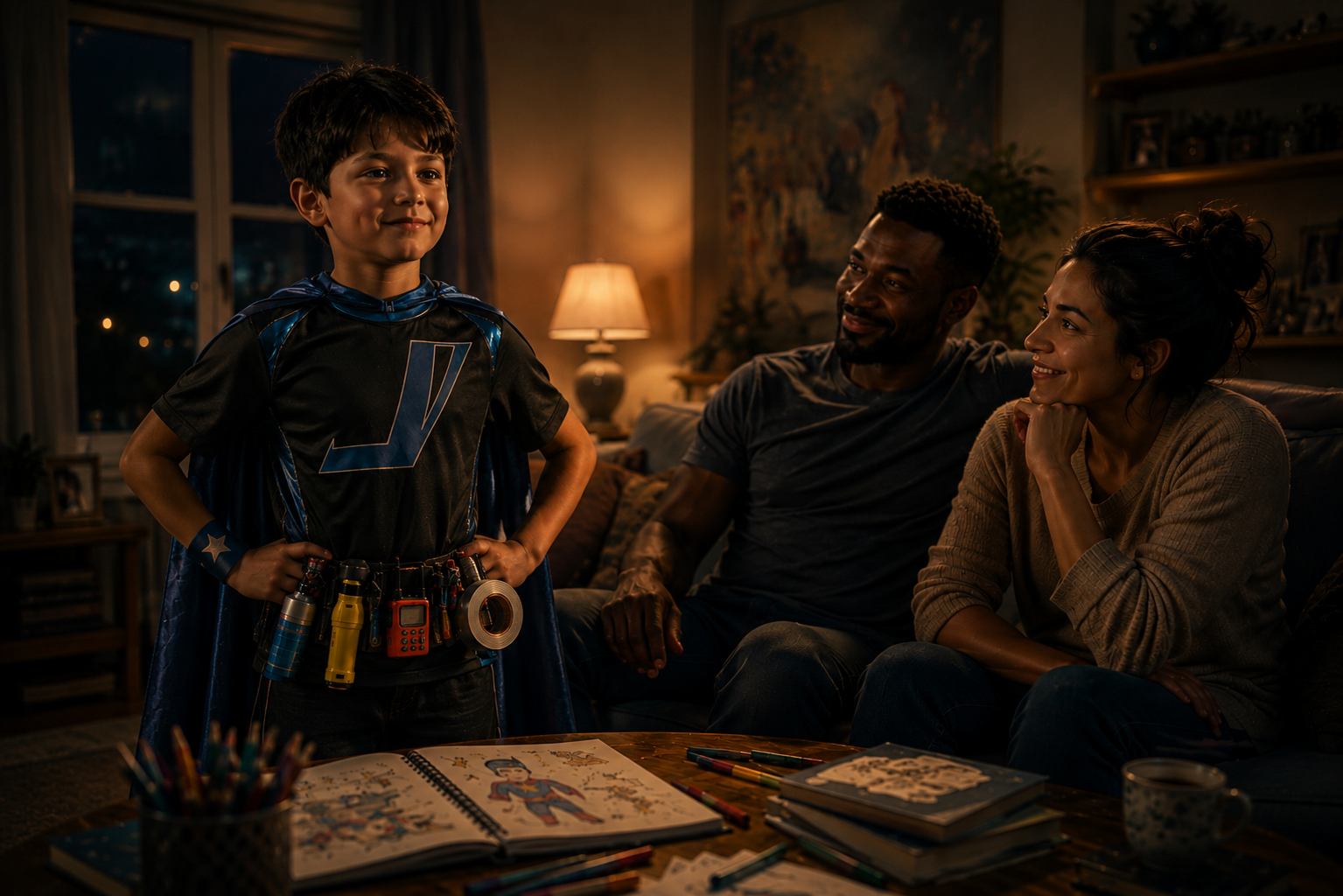
What started at our kitchen table eventually became the Hero Builder Method.
A creativity-driven emotional learning system designed to help neurodivergent children:
build confidence,
explore emotions,
strengthen communication,
practice self-expression,
and develop emotional resilience through storytelling and imagination.
Not built in a boardroom.
Not created as a corporate product.
Built inside a real family trying to navigate real life.
And honestly?
That perspective changed everything.
Because once I stopped seeing autism only through the lens of “problems to solve,” I finally started seeing the incredible human being sitting in front of me more clearly.
What Parents Really Need to Hear
If you are early in this journey, I want you to know this:
You do not need to have every answer today.
You are not failing because you feel overwhelmed.
You are not weak because you feel scared.
And your child is not broken because they experience the world differently.
There will be difficult days.
There will be uncertainty.
There will be moments of exhaustion.
But there can also be:
creativity,
connection,
laughter,
breakthroughs,
imagination,
emotional growth,
and deep pride in who your child becomes.
Sometimes the most important shift is learning to stop asking:
“How do I make my child fit the world?”
And instead asking:
“How do I help my child feel powerful inside it?”
Explore the Hero Builder Method
Discover creative emotional learning tools designed to help neurodivergent children build confidence, communication skills, emotional awareness, and self-expression through superhero storytelling and imagination.
Read More:
FAQ SECTION
What should parents do after an autism diagnosis?
Parents should focus on learning their child’s unique needs, building emotional connection, creating supportive routines, and finding approaches that strengthen confidence, communication, and emotional safety.
How can parents help autistic children build confidence?
Confidence often grows through creativity, encouragement, emotional support, imaginative play, storytelling, and helping children recognize their strengths instead of focusing only on challenges.
What is the Hero Builder Method?
The Hero Builder Method is a creative emotional learning system that uses superhero storytelling, drawing, writing, and guided activities to help neurodivergent children explore emotions and build confidence.
Why does creative learning help neurodivergent children?
Creative learning engages imagination, visual thinking, storytelling, and emotional expression in ways that often feel more natural, engaging, and emotionally safe for many neurodivergent children.
Can storytelling help autistic children communicate?
Yes. Storytelling can create emotional distance that makes it easier for children to express fears, strengths, emotions, and experiences through characters and imaginative narratives.