

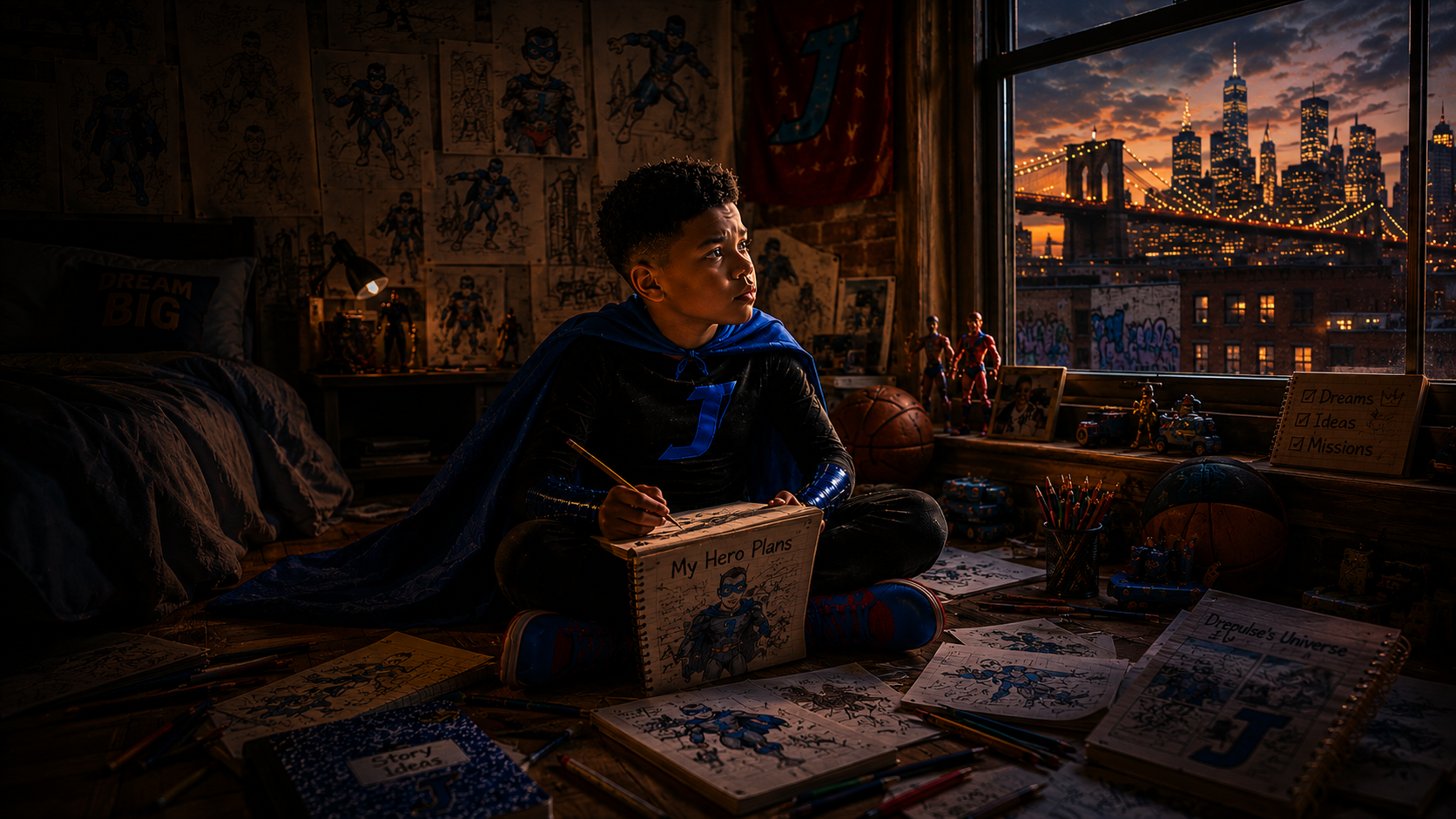
How Storytelling Helps Children With Autism Build Confidence and Social Skills
Creative storytelling gives children a safe place to explore emotions, practice communication, build confidence, and discover their voice through imagination, creativity, and play.
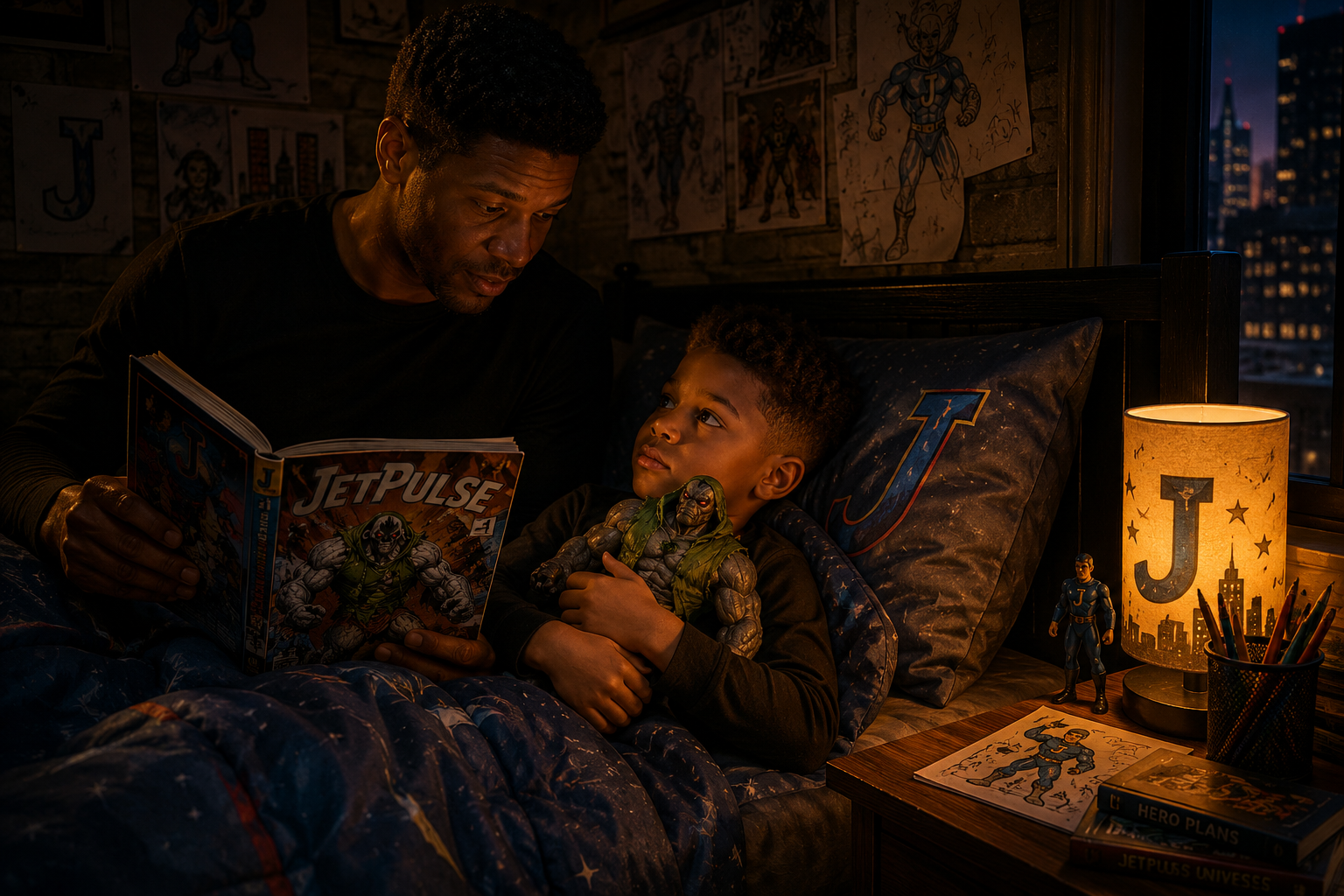
Why Storytelling Matters
or many children, storytelling is entertainment.
For neurodivergent children, storytelling can become something much deeper:
a bridge to communication, emotional expression, confidence, and identity.
Stories give children a safe framework to process feelings, practice problem-solving, and imagine themselves overcoming challenges. Through characters, adventures, and creative play, children often express emotions that are difficult to explain directly in everyday conversation.
For autistic children especially, storytelling can help transform imagination into connection. A superhero character, a drawing, or a fictional world can become a powerful emotional learning tool that helps children explore courage, empathy, friendship, boundaries, resilience, and self-confidence.
At Jetpulse, storytelling became the foundation for creativity, emotional learning, and the Hero Builder Method.
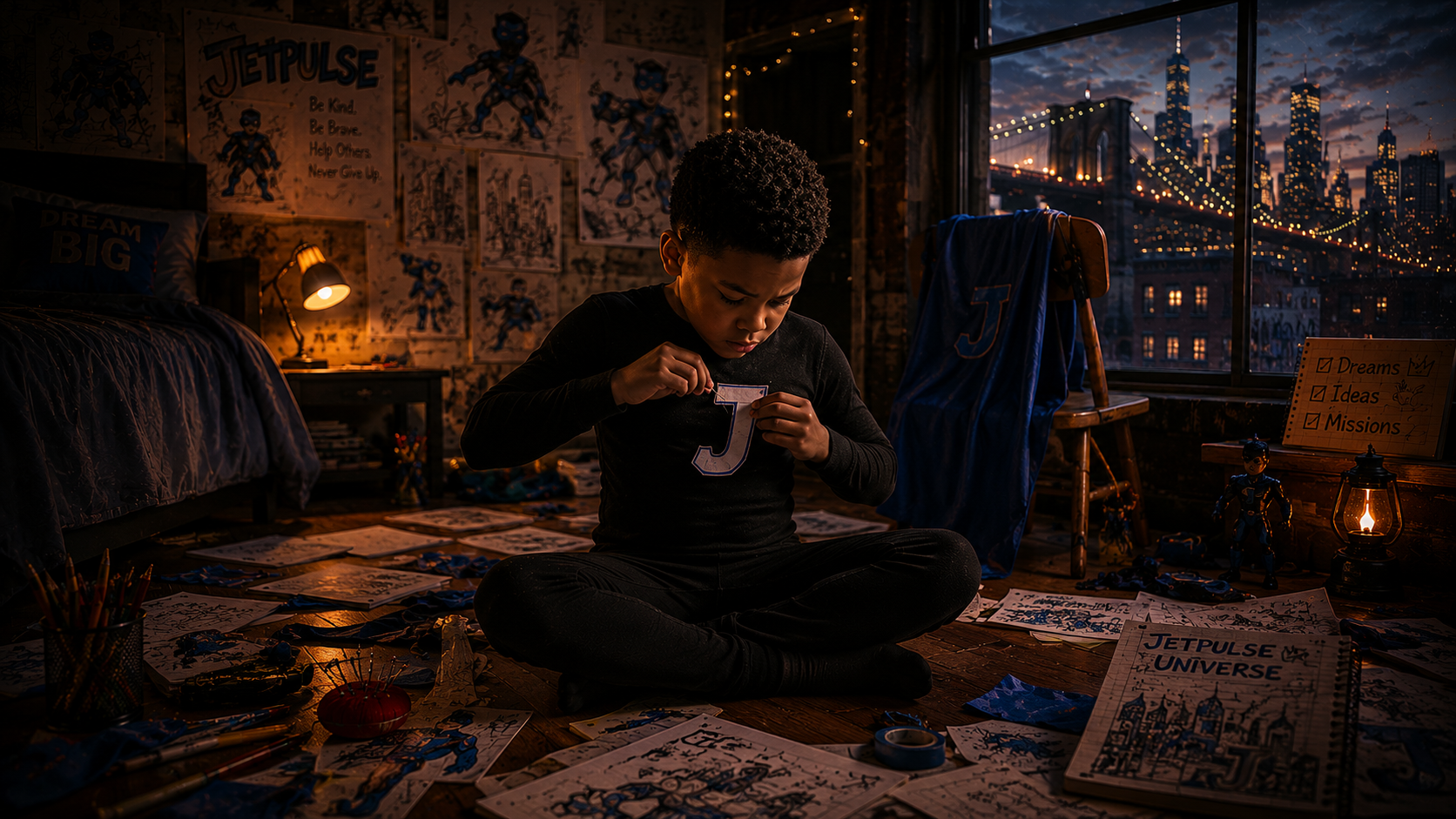
The Power of Superhero Imagination
Children naturally imagine themselves as heroes.
A blanket becomes a cape.
A cardboard box becomes a spaceship.
A drawing becomes an entire universe.
That imagination is not “just play.”
It is identity-building.
Superhero storytelling allows children to project strength, courage, creativity, and emotional growth onto characters they create themselves. In many cases, children feel safer expressing emotions through a character before expressing them openly as themselves.
This is one reason superhero books for kids and creative storytelling activities can become powerful tools for emotional development. Characters help children practice emotional regulation, empathy, confidence, and communication in ways that feel exciting instead of intimidating.
For Jake, imagination became the spark that helped create the world of Jetpulse.
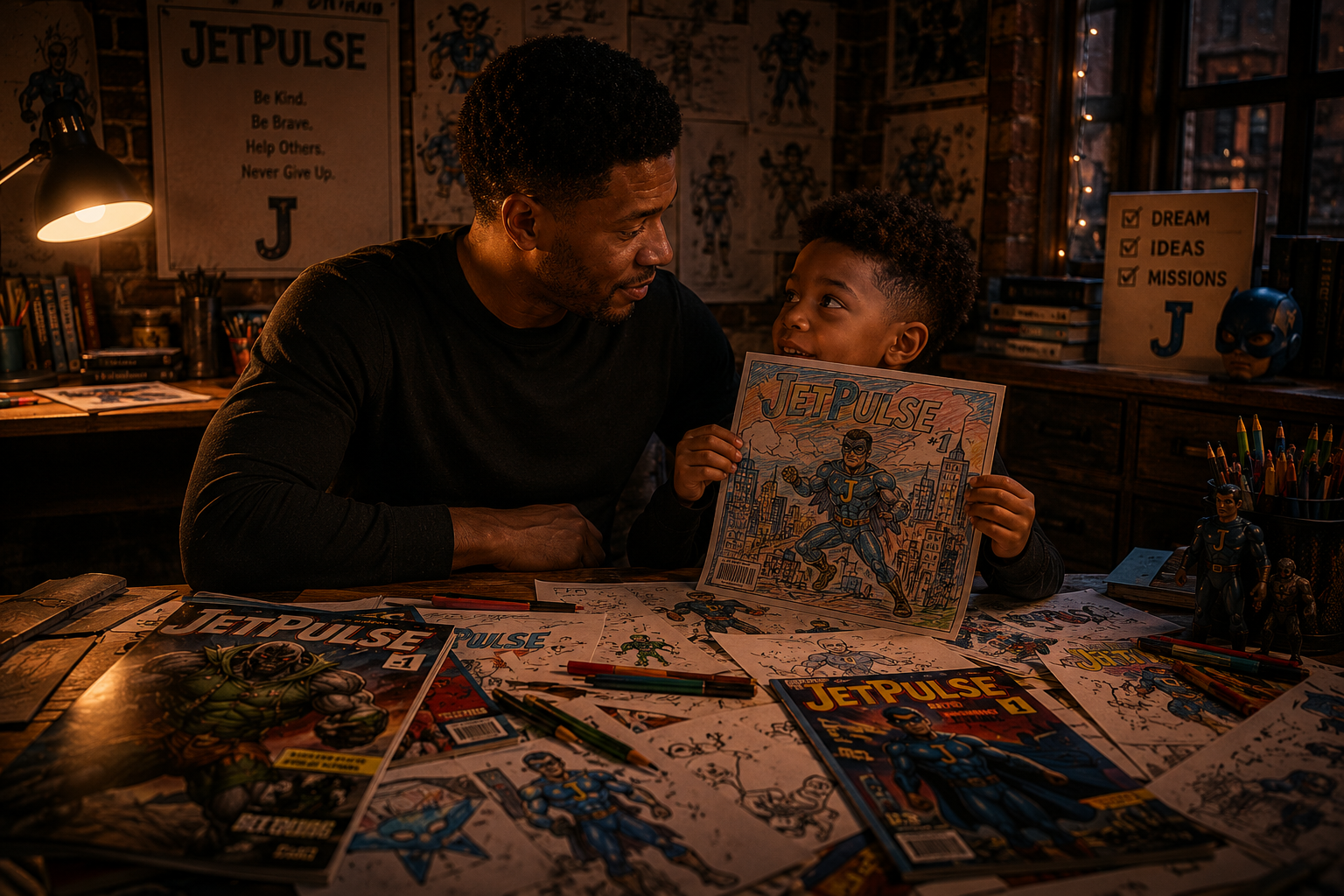
Storytelling as Emotional Learning
Social emotional learning resources are most effective when children feel emotionally connected to the experience.
That is why storytelling works so well.
Instead of asking children to memorize emotional concepts, storytelling allows them to experience emotions through characters, choices, challenges, and adventures.
Creative storytelling activities can help children:
build emotional vocabulary
practice communication skills
improve confidence
strengthen problem-solving
explore empathy
process anxiety
develop resilience
For many families, storytelling becomes more than entertainment.
It becomes a shared language.
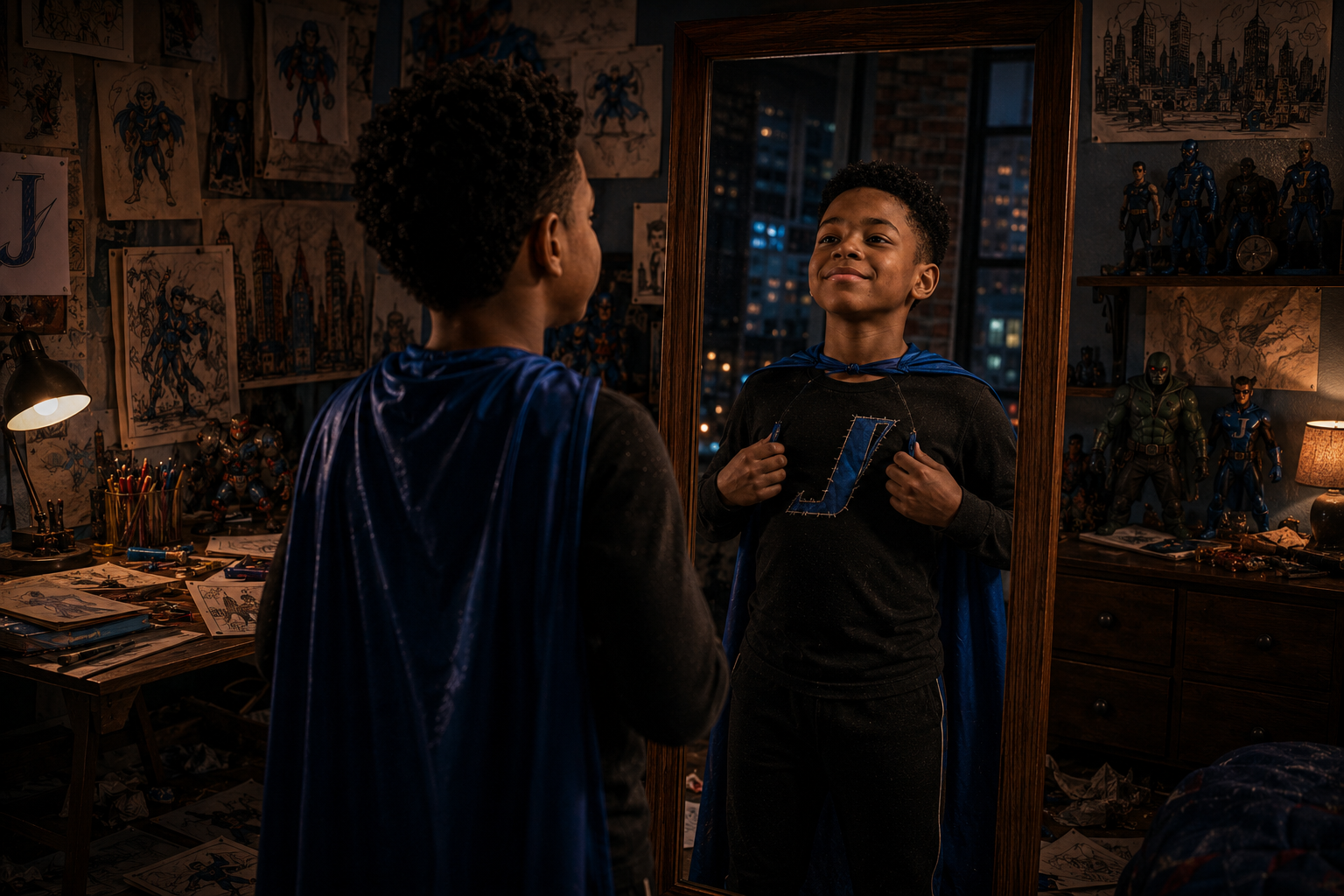
The Hero Builder Method
The Hero Builder Method was created to combine superhero storytelling, creative learning tools, emotional learning activities, worksheets, drawing exercises, and imaginative world-building into one connected system.
The goal is simple:
help children build confidence through creativity.
Through books, printable worksheets, storytelling prompts, character-building activities, and creative exercises, children are encouraged to see themselves as capable, imaginative, and emotionally strong.
This approach combines:
SEL storytelling
creativity for kids
superhero worksheets
emotional learning
imaginative play
creative confidence building
The Hero Builder Method continues to evolve through Jetpulse books, media projects, and community storytelling initiatives.